Travel connectivity guide
Apple iPad Pro 13-inch M4 cellular 256GB 5G eSIM
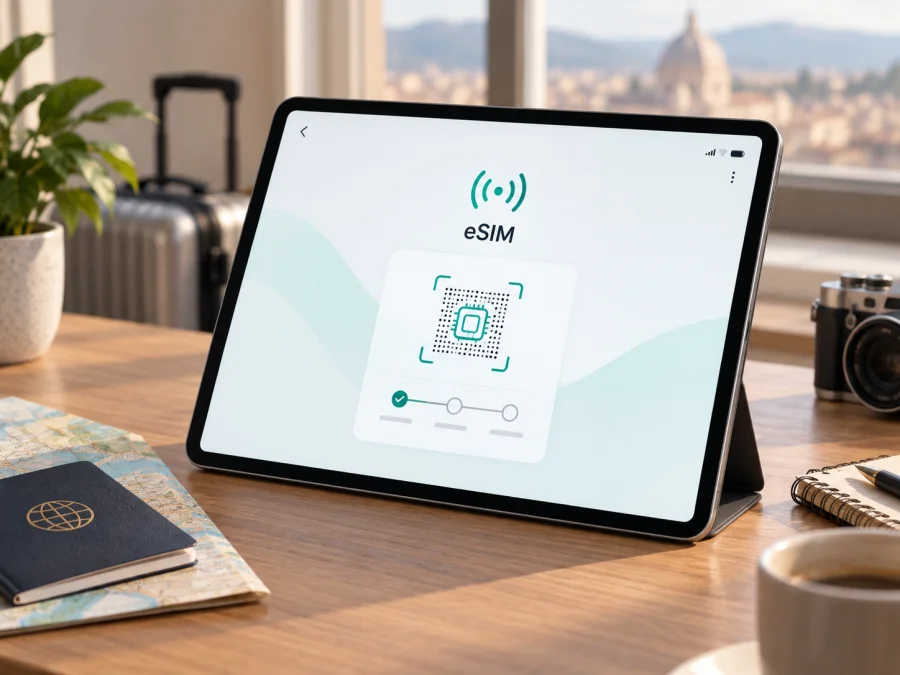
Apple iPad Pro 13-inch M4 cellular 256GB 5G eSIM compatibility
The Apple iPad Pro 13-inch M4 cellular 256GB 5G supports eSIM. Apple’s current iPad compatibility guidance includes the iPad Pro 13-inch (M4) Wi‑Fi + Cellular, and Apple specifies that M4-generation cellular iPads activate with eSIM and do not have a physical SIM card. That makes this exact 256GB storage configuration suitable for a compatible mobile-data plan, including an eSIM prepared for a trip.
There are two important limits to that answer. The 256GB capacity does not determine eSIM support; the cellular hardware and the specific regional model do. Also, an eSIM-capable iPad still needs a plan that supports iPad eSIM activation in the country or region where you want to use it. Check the model number and the provider’s terms before you buy a plan.
At a glance
| Detail | What it means for eSIM |
|---|---|
| Device variant | Apple iPad Pro 13-inch M4 cellular 256GB 5G |
| Connectivity type | Wi‑Fi + Cellular; Wi‑Fi-only iPad models cannot use mobile data eSIMs |
| eSIM support | Yes, on the cellular model, subject to regional model and provider support |
| Physical SIM | M4 cellular iPad models are eSIM-only; there is no physical SIM tray for a mobile plan |
| Storage | 256GB is device storage and does not change eSIM compatibility |
| 5G | Supported cellular technology where the model, plan, and local network support it; it does not guarantee 5G availability everywhere |
| Main use | Mobile data for browsing, maps, messaging apps, work, and other internet services |
Does this exact iPad support eSIM?
Yes. Apple lists the 13-inch iPad Pro with M4 and Wi‑Fi + Cellular as an iPad that supports eSIM. The eSIM is a digital SIM profile stored on the device, rather than a removable card. The M4 Cellular generation is designed to activate through eSIM, so you should not expect a physical SIM tray or need to insert a card to set up a mobile plan.
The term “256GB” in the name identifies storage capacity. It does not indicate how many eSIMs can be installed, how much mobile data a plan includes, or which networks will be available. Actual connection type and speed depend on the country, network coverage, compatible bands, plan, and local network conditions.
Apple’s device-level support does not mean that every carrier offers eSIM plans for every iPad model. Some providers support eSIM only for phones, some require a particular activation method, and some limit their service to certain markets. A travel eSIM must specifically be valid for the iPad and the destination. Confirm that before paying, even when the device itself supports eSIM.
Regional and carrier differences
Retail names do not always show the regional model identifier. Check it in Settings → General → About; tap the part number if needed to reveal the model number. Compare it with Apple’s information for the market where the iPad will be used, and ask the provider whether it accepts that model. A provider may support eSIM on iPads only in selected countries or through a particular activation method.
Mainland China has specific rules. Apple lists iPad Pro 13-inch (M4) Wi‑Fi + Cellular model A3007 as eSIM-compatible there and names China Unicom as the only supported iPad eSIM provider. Other iPad models cannot install eSIM profiles from mainland China providers. Apple says an iPad model supported in mainland China can install a non-mainland-China eSIM when travelling outside mainland China if Location Services is enabled. If your unit was intended for that market, verify the identifier and where you plan to activate it.
An unlocked device is also important. eSIM capability does not remove a seller or provider restriction. Confirm that the iPad can use the plan you want before purchase.
Check eSIM compatibility on your iPad
Use the following checks before choosing a data plan:
- [ ] Confirm the full device name is Apple iPad Pro 13-inch M4 cellular 256GB 5G, rather than the Wi‑Fi-only configuration.
- [ ] Open Settings → General → About and note the model number. Tap the part number if the model number is not immediately shown.
- [ ] On the same About screen, look for an EID. An EID is an identifier associated with the eSIM hardware. Its presence is a strong practical sign that the device has eSIM capability, but it does not establish plan, market, or carrier eligibility by itself.
- [ ] Open Settings → Mobile Data (called Cellular Data in some regions or versions). Look for an option such as Add eSIM, Add a New Plan, or a provider plan setup option. Wording can vary with iPadOS version and region.
- [ ] Make sure the iPad is running a current iPadOS version and is connected to Wi‑Fi during setup.
- [ ] Ask the eSIM provider whether its plan supports iPad eSIM, your model number, and your destination. Check whether a QR code, app, or another activation method is required.
- [ ] Confirm the iPad is not locked to a provider that prevents use of the intended plan.
If neither an EID nor an eSIM setup option appears, do not assume the profile will work based only on the retail title. Recheck that this is the Wi‑Fi + Cellular model, update iPadOS, restart the iPad, and verify the model identifier. If the mismatch remains, contact Apple Support or the seller with the serial and model details.
EID and Settings: what each check tells you
The EID identifies the embedded SIM component; it is not a phone number or activation code. A provider may request it during setup, so share it only through the provider’s official flow. The Add eSIM or Add a New Plan option shows that iPadOS offers a setup route, but neither check guarantees that a particular provider or destination is supported. If both are missing, recheck the model number, confirm this is the Cellular version, update iPadOS, and contact Apple or the seller if needed. For a quick starting point, check your device for eSIM compatibility.
Install and activate an eSIM
Before starting, connect the iPad to Wi‑Fi and keep the provider’s QR code or activation details available on another screen. Check whether the plan starts at installation or only when it connects in the destination. Do not delete a profile to troubleshoot unless the provider confirms it can be installed again; some QR codes are single-use.
- Choose a compatible plan. Confirm it supports iPad eSIM and your destination. Review its data allowance, validity, activation deadline, network, and hotspot terms.
- Open cellular settings. Go to Settings → Mobile Data or Settings → Cellular Data, then choose Add eSIM, Add a New Plan, or the equivalent option.
- Add the profile. Follow the provider’s activation notification or app, or scan its QR code from another screen. With iPadOS 17.4 or later, a QR code received by email or shown on a webpage can also be touched and held to choose Add eSIM. Enter a confirmation code if requested.
- Wait for installation. Keep Wi‑Fi connected until iPadOS confirms the plan is added. Review its label and status in cellular settings.
- Set up for the trip. Select the new plan for mobile data when appropriate. Enable Data Roaming for that eSIM only if its instructions require it. Follow the provider’s timing instructions so validity does not start earlier than expected.
- Check the connection. Briefly turn Wi‑Fi off and test a webpage or map. A plan for another country may remain installed without connecting until you arrive there.
Apple supports provider activation, QR codes, provider apps, and other setup paths where available. For device-specific walkthroughs, see the Android eSIM installation instructions and iOS eSIM installation instructions. An iPad runs iPadOS, so follow the iPad steps shown in Settings and by your plan provider.
Installation is not always the same as activation
Installing a profile adds it to the iPad; when the plan becomes usable depends on its terms. It may start at installation, first connection, or another stated time. Read the start conditions before setup. Do not assume you can transfer the profile to another device or reuse its QR code. If you need to erase or replace the iPad, ask the provider how to restore the plan first, and keep your confirmation details accessible.
Using the iPad for mobile data on a trip
A cellular iPad can provide a larger screen for maps, messaging apps, work documents, and browsing away from Wi‑Fi. Kaspersky eSIM Store’s app and website help you choose, arrange, and activate an eSIM with a mobile-data plan for an overseas trip. Check the plan’s destination, coverage terms, data amount, validity, and price before selecting it. Kaspersky eSIM Store is not a mobile operator and does not own or operate the networks used by a plan.
A travel data eSIM usually provides internet access, not a regular mobile number. Unless the plan explicitly includes voice and a number, do not expect standard calls or SMS. Internet-based messaging and calling apps can work over data, subject to their own requirements. Personal Hotspot may let the iPad share its connection, but check plan terms and monitor data use.
For a simple arrival scenario, install the profile while reliable Wi‑Fi is available, then turn on the line or allow it to connect when the provider says the plan should start. Select it for cellular data and enable roaming only if instructed. After returning home, switch data back to your usual plan or turn off the travel line.
For a multi-country route, check that every destination and stopover is included; a regional plan name alone does not guarantee coverage everywhere. For a short city visit, estimate use for maps, cloud files, video, and hotspot sharing, then choose an allowance and validity that suit the trip. A 5G-capable iPad may use LTE or another network where 5G is unavailable, and actual speed depends on local coverage and plan conditions.
Troubleshooting: if the eSIM will not connect
Add eSIM is missing. Verify the model number and that the device is Wi‑Fi + Cellular. Connect to Wi‑Fi, update iPadOS, restart, and check Mobile Data or Cellular Data again. If the EID is also missing, ask Apple or the seller to confirm the hardware and regional model.
The QR code will not scan or download. Brighten the screen showing the code, steady the iPad, and confirm that the code belongs to your order and has not already been used. Keep Wi‑Fi connected during download. If the code is on the iPad itself, use the long-press Add eSIM option where supported or display it on another screen. Keep the code private.
The plan installed but shows No Service. Check its activation timing and destination. Confirm that the plan is on and selected for cellular data, turn Airplane Mode off, and restart. Enable Data Roaming for the travel eSIM if required. A plan intended for another country may not register before arrival.
There is a signal but no internet. Confirm the right plan is selected and that its data allowance is valid. Toggle Airplane Mode briefly, then restart. Enter manual APN settings only when the provider supplies them.
The connection is slower than expected. 5G capability does not guarantee 5G service everywhere. Reception, network congestion, local bands, plan limits, and any speed policy can affect performance. Move to an area with better reception and review the plan terms.
Activation fails in one region. Recheck the model number, purchase market, provider eligibility, and destination rules. Mainland China has distinct iPad eSIM restrictions, including a specific M4 model and provider. If the error persists, contact the provider through its official support channel with the order reference and error message. Do not remove the profile unless support advises it.
Common questions
Can this 256GB iPad use eSIM and a physical SIM at the same time?
The Apple iPad Pro 13-inch M4 cellular 256GB 5G uses eSIM and has no physical SIM slot. Storage size does not change that. Supported iPads can store multiple eSIM plans, but only one is used for cellular data at a time.
Does eSIM support mean I can use any travel plan?
No. The provider must support iPad eSIM, your model number, and the destination. Check before purchase.
Will 5G work everywhere, and can I make ordinary phone calls?
No. A 5G connection depends on local coverage and plan support, so the iPad may use LTE instead. A data-only travel eSIM is not a phone line; use internet calling or messaging apps unless voice and a number are explicitly included.
When should I install the eSIM?
Follow the plan’s start conditions. Many travellers install over Wi‑Fi before departure and enable the line on arrival, but some plans begin validity at installation or purchase.
Conclusion: check the iPad, then choose a trip plan
The Apple iPad Pro 13-inch M4 cellular 256GB 5G supports eSIM, and the M4 Cellular model uses eSIM rather than a physical SIM. Before arranging a plan, confirm the model number, EID, and eSIM option in Settings; check that the device is unlocked; and verify iPad support, destination coverage, activation timing, data allowance, and validity with the provider. Give particular attention to regional rules if the iPad was purchased for mainland China or will be used there.
Once those checks are clear, use Kaspersky eSIM Store’s app or website to choose, arrange, and activate a suitable eSIM plan for mobile data on your overseas trip. Review its terms before purchase, install it using the instructions provided, and keep your iPad’s usual data settings easy to restore when you return.