Travel connectivity guide
Apple iPhone 13 Pro eSIM: compatibility and setup
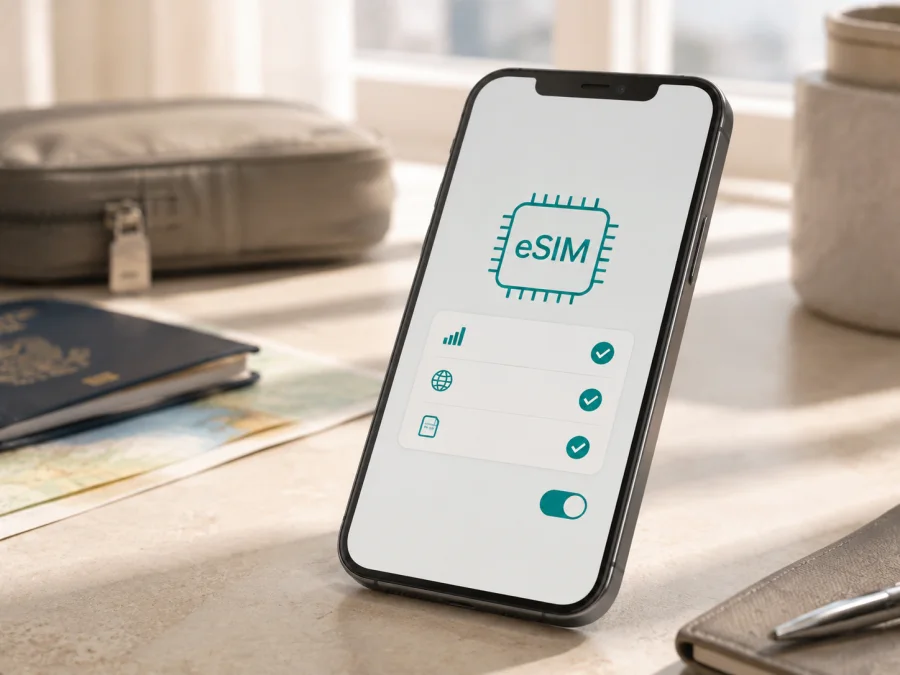
Apple iPhone 13 Pro eSIM: compatibility, setup and travel use
Apple iPhone 13 Pro generally supports eSIM for mobile internet while travelling. Apple’s current technical specifications list Dual SIM with a physical nano-SIM and eSIM, as well as Dual eSIM support. The exact unit still matters: eSIM availability can depend on the sales region, model configuration, carrier, iOS and unlock status. Check the phone itself before choosing a travel eSIM tariff.
Quick answer: does Apple iPhone 13 Pro support eSIM?
Yes, the standard international Apple iPhone 13 Pro supports eSIM. It can use a nano-SIM and an eSIM, and iPhone 13 models and later can also use two eSIMs for Dual SIM where the regional version and carrier support it. Only one cellular data line is used at a time, so you can keep a home line available while selecting a travel eSIM for data.
There is an important regional qualification. Apple states that eSIM is not supported in all regions. An iPhone 13 Pro intended for China mainland is not listed among the models that support China mainland carrier eSIM under Apple’s current guidance. Some versions sold in Hong Kong or Macao can use two physical nano-SIM cards instead of the eSIM arrangement found on other regional units. These are configuration differences, not problems with the QR code.
The practical answer for a travel eSIM is: Apple iPhone 13 Pro is compatible when the exact unit has an EID and an Add eSIM option, is not carrier-locked, and the selected provider supports eSIM activation for your destination. A model name alone is not enough.
Apple iPhone 13 Pro eSIM specifications at a glance
| Item | What to expect |
|---|---|
| Device | Apple iPhone 13 Pro |
| eSIM status | Supported for the relevant model and carrier |
| SIM combinations | Nano-SIM plus eSIM; Dual eSIM on iPhone 13 models and later where available |
| Mobile data | One selected line handles cellular data at a time |
| Regional caveat | eSIM is not supported in all regions; China mainland and some Hong Kong/Macao configurations need special attention |
| Carrier requirement | The provider must support eSIM and provide an eligible plan |
| Device lock | For another carrier’s plan, the phone should show “No SIM restrictions” |
| Before purchase | Confirm EID, Add eSIM, model region, carrier lock and destination coverage |
Why use an eSIM on this iPhone for a trip?
An eSIM is a digital SIM built into the phone. It lets you add a cellular plan without obtaining or swapping a plastic SIM card. For a trip, you can check compatibility at home, choose a destination and tariff, install the profile over Wi-Fi, and select it for data when you are ready.
Kaspersky eSIM Store is an app and website where you can choose, arrange and activate an eSIM with a suitable tariff for mobile internet on an overseas trip. It is not a mobile operator, network owner or mobile-internet provider. The cellular service depends on the selected tariff and the local operators available under its terms. A travel eSIM is often data-only and does not automatically provide a new phone number, ordinary voice calls or SMS.
Regional and carrier differences
Before relying on eSIM, check the sales market, provider support, carrier lock and iOS readiness.
Sales market and model number
Apple’s specifications warn that eSIM is not supported in all regions. A unit sold for China mainland, Hong Kong or Macao can have a different SIM arrangement from a unit sold elsewhere. Open Settings, tap General, tap About, then tap the part number next to Model Number to reveal the hardware model number, especially on an imported, refurbished or second-hand phone.
China mainland needs special care: Apple’s current list of iPhones supporting China mainland carrier eSIM does not include Apple iPhone 13 Pro. Do not assume that an iPhone 13 Pro working with eSIM abroad can install a China mainland carrier eSIM. Hong Kong and Macao also require a direct check because some regional versions use two nano-SIM cards.
Provider activation support
An EID shows that the phone has an eSIM identity, but the selected carrier or worldwide service provider must also support eSIM, the destination and the supplied activation method. A QR code, carrier link, app activation and manual entry are not interchangeable in every case.
Carrier lock
To keep a home SIM and use a travel eSIM from another provider, the iPhone must be unlocked, or both plans must be from the same carrier. Check Settings > General > About > Carrier Lock. “No SIM restrictions” is the expected status for using another carrier’s plan. If a restriction appears, contact the original carrier before buying.
iOS readiness
Install the latest iOS version available while you have reliable Wi-Fi and power. Cellular may appear as Mobile Data, and Add eSIM may appear as Add Cellular Plan. Look for the control and verify the EID.
Compatibility check before you buy
Run this check on the exact Apple iPhone 13 Pro you will carry:
- [ ] Open Settings > General > About and find an EID.
- [ ] Open Settings > Cellular or Mobile Data and look for Add eSIM, Add Cellular Plan or an equivalent option.
- [ ] Return to About and check Carrier Lock. For a different provider, it should say “No SIM restrictions”.
- [ ] Tap the part number next to Model Number and note the hardware model number.
- [ ] Check whether the phone was sold for China mainland, Hong Kong or Macao, or is an imported or refurbished unit.
- [ ] Confirm that the selected tariff covers every country or region on your route.
- [ ] Check whether the tariff is data-only, when validity starts, whether data roaming is required and what happens when traffic is used.
- [ ] Make sure you have Wi-Fi and access to the purchase profile or QR code during installation.
If the checks pass, Check your device and keep the result with your travel notes. If EID or Add eSIM is missing, pause before purchase; no model name can override a regional hardware difference.
How to install and activate an eSIM
The exact labels vary with iOS and the activation method. Keep your primary line available until the new line has connected.
1. Confirm the prerequisites
Check for EID and Add eSIM. Connect to stable Wi-Fi, charge the phone, update iOS if needed, and keep the QR code or profile accessible. Do not delete a working line before testing the new one.
2. Arrange the travel eSIM
In Kaspersky eSIM Store, use the app or website to choose the destination and a tariff whose traffic allowance and validity match the trip. Confirm the tariff rules before completing the order; the service helps arrange the eSIM but is not the cellular network.
3. Open the eSIM control
Open Settings. Tap Cellular or Mobile Data. Tap Add eSIM, Add Cellular Plan or the equivalent item shown on your iOS version.
4. Choose the activation method
Choose Use QR Code when the plan comes with a QR code. Otherwise follow the provider link or choose manual entry and use only the supplied values.
5. Add the profile
Scan the QR code or follow the link. Review the plan, tap Continue and add it. If the code is on the same iPhone, use the supported email or browser option or another screen. Do not share it or guess manual values.
6. Label the line
When iOS asks for a label, use a clear name such as Travel Data and leave the home line’s label unchanged. The label only helps you select the correct profile.
7. Select the data line
When iOS asks which line should use cellular data, select Travel Data. Keep Allow Cellular Data Switching off unless you deliberately want another line to take over. Recheck the choice in Settings > Cellular > Cellular Data.
8. Set data roaming if required
Open the travel line under Cellular settings, tap Cellular Data Options and follow its Data Roaming instruction. Some travel eSIMs need roaming through a partner network; check the selected line first.
9. Test activation
With the travel line selected for data, turn off Wi-Fi briefly and open a webpage. Restore Wi-Fi after the test. If the plan starts on arrival, install it before departure but leave the line or data roaming off until then.
For visual walkthroughs, use the Android installation instructions or the iOS installation instructions according to the device. Apple iPhone 13 Pro uses the iOS path. If the instruction wording differs from the phone, follow the current screen labels and the tariff conditions.
Using the eSIM for mobile internet while travelling
Before departure
Install after the compatibility check. Save the profile, keep activation information private, label both lines, and review your home carrier’s roaming terms.
On arrival
Turn on Travel Data, select it under Cellular Data and follow the tariff’s roaming instruction. If the phone shows No Service or SOS only, use Airplane Mode for about 30 seconds, confirm automatic Date & Time, and wait for network selection.
Short city break
Turn off automatic downloads and monitor usage under Settings > Cellular; video and photo uploads can use data quickly.
Work trip
Use the travel line for work only if company policy permits it. A data-only eSIM may not receive SMS codes; keep another verification method and check the tariff before using Personal Hotspot.
Multi-country route
Confirm whether the tariff covers one country, a region or the whole route. Do not infer coverage from the phone model.
Returning home
Select the home line for cellular data and turn off the travel line or its data roaming. Do not delete the eSIM until you have checked reuse terms.
Common problems and practical checks
There is no Add eSIM option
Check Settings > General > About for EID, update iOS, restart and review the model number. If EID is absent, investigate regional configuration. If EID is present but Add eSIM is missing, contact the original carrier or provider.
The QR code is not recognised
Connect to Wi-Fi, increase brightness, clean the lens and hold the phone steady. Confirm that the code belongs to the selected plan and has not been used. If it is on the iPhone, use the supported email or browser option or another screen. Do not edit it.
The profile downloads but will not activate
Check the EID, activation instructions, carrier lock, destination and Wi-Fi. Check the tariff before deleting or reinstalling. Record the error message for support.
The line is installed but there is no data
Open Settings > Cellular and confirm that the travel line is on and selected under Cellular Data. Follow its Data Roaming instruction, use Airplane Mode for about 30 seconds, and check that another line has not taken over.
The phone shows No Service or SOS only
Check destination support, tariff status and automatic network selection. Restart after Airplane Mode. If service still does not appear, record the error, EID and model number for support.
Calls or messages behave differently
Many travel eSIM tariffs are for data only and do not create a regular phone number. Keep the home line for calls and SMS only after checking its roaming charges. Use calling and messaging apps over the selected data line when appropriate.
Frequently asked questions
Can Apple iPhone 13 Pro use a travel eSIM?
Yes, when the exact regional model has an EID and Add eSIM, the phone is unlocked for the chosen provider, and the tariff covers the destination and activation method.
Can I keep my physical SIM and add a travel eSIM?
Usually, yes. The normal international configuration supports nano-SIM plus eSIM, and iPhone 13 models and later also support two eSIMs. Regional versions can differ, and only one line handles cellular data at a time.
Does eSIM give me a new phone number?
Not necessarily. A travel eSIM is often data-only and does not automatically include calls or SMS. Check the tariff terms.
Why is there an EID but no working eSIM?
EID confirms an eSIM identity, but activation also depends on region, carrier lock, iOS, provider, destination and plan status. Check Add eSIM and the activation method.
Can an iPhone 13 Pro from China mainland use a travel eSIM abroad?
Do not assume it. Apple’s current regional guidance does not list Apple iPhone 13 Pro as supporting China mainland carrier eSIM, and regional SIM arrangements differ. Check the exact unit’s EID and Add eSIM screen and confirm the provider’s rules for the country you will visit.
Is Kaspersky eSIM Store a mobile operator?
No. Kaspersky eSIM Store is an app and website that helps you choose, arrange and activate an eSIM with a suitable travel data tariff. The cellular service is subject to the selected tariff and available networks.
Final device check and travel eSIM plan
Before purchasing, confirm all of the following for your exact Apple iPhone 13 Pro:
- An EID appears in Settings > General > About.
- Add eSIM or an equivalent option appears in Settings > Cellular or Mobile Data.
- Carrier Lock shows “No SIM restrictions” when the plan comes from another provider.
- The sales region does not impose a different SIM configuration, especially for China mainland, Hong Kong or Macao.
- The chosen tariff covers every country or region on your route.
- You know whether the plan is data-only, when it starts, how much traffic it includes and whether Data Roaming is required.
- You have Wi-Fi, the activation profile or QR code, and time to test the line before relying on it.
When these checks pass, Kaspersky eSIM Store can help you choose and activate a suitable eSIM tariff for mobile internet on your overseas trip. Install before departure, select the travel line at the right time, and check compatibility before payment.