Travel connectivity guide
Apple iPhone SE 3 256GB eSIM: Compatibility and Setup
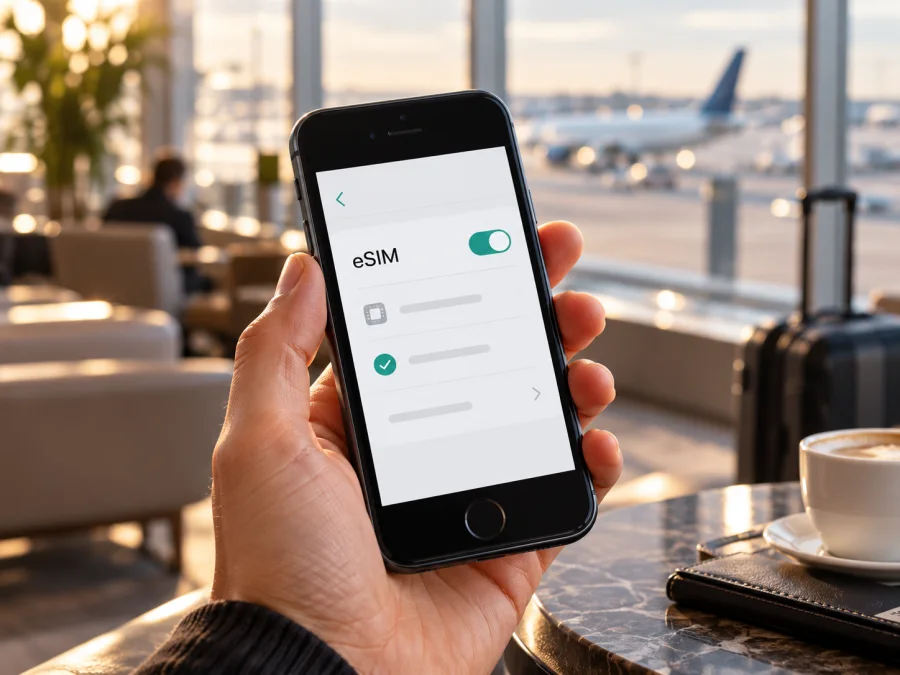
Apple iPhone SE 3 256GB eSIM compatibility and setup
Short answer: Apple iPhone SE 3 256GB supports eSIM in markets and device variants where Apple enables the feature. The 256GB storage option does not determine eSIM compatibility. The important checks are the precise regional model, whether an EID appears in Settings, support from the eSIM provider, and whether the phone is unlocked for another network.
Apple lists the iPhone SE (3rd generation) as supporting Dual SIM with a nano-SIM and eSIM, as well as Dual eSIM. That confirms the feature for the standard model, but it does not mean that every regional version can add every eSIM profile in every country. Apple notes that eSIM use may be disabled by some providers, and market-specific rules can also matter. Check the phone itself before choosing a travel plan.
Apple iPhone SE 3 256GB at a glance
| Item | What to know |
|---|---|
| Device in this guide | Apple iPhone SE 3 256GB |
| Model family | iPhone SE (3rd generation) |
| eSIM | Supported on eSIM-capable regional variants |
| Physical SIM | Nano-SIM on the standard international configuration |
| Dual SIM | Nano-SIM plus eSIM; Dual eSIM is also supported where available |
| Storage | 256GB; storage capacity does not add or remove eSIM support |
| What can vary | Market, exact model number, carrier restrictions, software and local eSIM rules |
The storage size is useful for identifying the requested configuration, but it is not the radio or SIM variant. Two phones sold as Apple iPhone SE 3 256GB can have different regional histories. If you bought the phone second-hand, imported it, or received it through a carrier, confirm its model and status directly rather than relying on the seller’s listing.
Does Apple iPhone SE 3 256GB support eSIM?
In general, yes. Apple’s technical specifications for iPhone SE (3rd generation) list both nano-SIM plus eSIM Dual SIM and Dual eSIM support. This means a compatible device can store and activate supported digital SIM profiles without inserting another physical card. Your travel eSIM can be used for mobile data while your regular line remains available, subject to the device, provider, and plan settings.
There are two separate questions to answer:
- Can this hardware use eSIM? Check the exact regional model and whether it exposes an EID and an eSIM setup option.
- Can this specific profile activate? The provider must support eSIM for the destination and the phone must meet its activation conditions. A compatible phone cannot make an unsupported plan work.
The model name and 256GB capacity alone cannot establish compatibility for an imported handset or a particular plan. A carrier may also restrict eSIM or lock the phone to its network, so confirm the checks below.
Regional versions: the detail that matters
Apple’s regular iPhone SE (3rd generation) specification includes eSIM. Regional availability still needs care. Mainland China has a separate eSIM policy: Apple’s current guidance says that only specifically named newer iPhone models support eSIM activation with mainland China providers, and that other models cannot install those providers’ eSIM profiles. The iPhone SE (3rd generation) is not in that supported list. Therefore, do not expect an Apple iPhone SE 3 256GB to activate a mainland China carrier eSIM just because the phone was purchased elsewhere or because the general iPhone SE specification lists eSIM.
Hong Kong and Macao have their own hardware and SIM arrangements. Apple’s support guidance treats some iPhone SE (3rd generation) devices sold in those markets as eSIM-capable, while other regional configurations can use two physical nano-SIM cards. The market name alone is not a reliable substitute for checking the actual device. Look up the model number shown in Settings, check for an EID, and ask the seller or carrier to confirm the exact variant before purchase.
For travel outside mainland China, distinguish the location of the phone from the network you want to use. A traveler may be in a country where a travel eSIM is available, while the handset may still be a regional configuration without eSIM capability. Conversely, an eSIM-capable phone may be physically able to install a profile while a local provider’s rules limit activation in a particular market. Geographic availability, device hardware, and operator policy are different checks.
How to identify the regional model
- Open Settings.
- Tap General, then About.
- Find Model Number. The value may first appear as a part number; tap it to reveal the model identifier beginning with “A”.
- Note the country or region where the phone was originally sold, if known.
- Compare the identifier and purchase market with Apple’s current support information and the eSIM provider’s requirements.
For a used phone, ask to see the About screen. Keep the EID, IMEI, serial number, and QR code private.
Check compatibility before choosing a plan
Use this checklist on the iPhone itself. It is more reliable than a product title or a general compatibility list because it checks the phone you will actually take on the trip.
- [ ] Find the EID. Go to Settings → General → About and scroll through the device information. An EID is a strong sign that the phone has an eSIM component. If no EID appears, do not assume the phone is compatible; confirm the exact model with Apple or the seller.
- [ ] Look for the add option. Open Settings → Cellular or Mobile Data and look for Add eSIM or Add Cellular Plan. Wording varies with iOS version and region. A missing option should prompt a model and software check.
- [ ] Check the carrier lock. In Settings → General → About, find Carrier Lock. “No SIM restrictions” indicates that the iPhone is unlocked. If a carrier name or restriction appears, ask that carrier whether it can unlock the device before you buy a plan from another provider.
- [ ] Confirm the destination and plan. Check that the eSIM plan is intended for the country or region you will visit and that its terms match your trip.
- [ ] Check activation requirements. Some profiles must be installed over Wi-Fi, and the plan’s validity may begin at a defined activation or connection point. Read the plan conditions before installation.
- [ ] Update iOS if appropriate. Install available updates while you have a stable connection and enough battery. Menu labels and activation flows can differ by iOS version.
For a simple next check, check whether your device is compatible. Do this before selecting a plan, especially if Apple iPhone SE 3 256GB was imported, bought used, or sold by a carrier.
What the EID does—and does not—tell you
The EID is an identifier associated with the embedded SIM hardware. Finding it in Settings is useful evidence that an eSIM component is present. It does not confirm that a phone is unlocked, that a specific provider accepts it, that the selected destination is covered by a plan, or that installation will succeed under the phone’s current software and network conditions. Check those points separately.
If the EID is missing, restart the exact phone and check again, then verify its model number with Apple or the seller. Never use another device’s identifier.
How to install and activate an eSIM
Before starting, connect to Wi-Fi, charge the phone, and open the activation QR code or instructions on a second screen. If the code is only on the iPhone, use the provider’s supported app or manual method. Some QR codes are single-use.
Apple iPhone SE 3 256GB uses iOS. Menu names may vary by release and language; the physical Home button does not change these steps.
QR-code setup on iPhone
- Check the plan details. Confirm the supported destination, data allowance, validity period, installation window, and whether the profile can be reinstalled. Keep the QR code private.
- Connect to Wi-Fi. Leave the connection on until the eSIM profile has finished downloading.
- Open the QR code. Use the Camera app to scan it. When the cellular plan notification appears, tap it. On supported iOS versions, a QR code received in the default email app or browser can also be pressed and held to add eSIM.
- Continue in Settings. Tap Continue, then Add Cellular Plan or the equivalent option shown on your phone.
- Enter a confirmation code if requested. Use only the code provided with your eSIM instructions.
- Label the line. Choose a label such as “Travel” so you can distinguish it from your usual line.
- Choose default services. If iOS asks which line to use for calls, messages, or mobile data, select the option that matches your needs. You can usually adjust these choices later in Settings.
- Wait for installation. Keep the device connected and follow any on-screen prompts. The profile may take a few minutes to appear or register.
- Set the travel line for data when needed. Open Settings → Cellular, tap Cellular Data, and select the travel eSIM. Keep your home line’s data roaming off if you do not want it to use roaming data.
- Enable data roaming for the travel eSIM only if required. Some travel plans need this setting. Check the plan instructions; do not switch it on for your home line by mistake.
Providers may also support activation through an app, link, manual details, or transfer. Do not delete a profile unless the provider confirms it can be reinstalled.
See the iOS eSIM installation guide for this phone and the Android eSIM installation guide for Android devices.
Using the eSIM for mobile data while travelling
You may be able to install a travel eSIM before departure, then select it for data when you are ready. Installation and plan activation are not always the same event; check when validity starts under the plan’s rules.
A practical setup for keeping a home number available is to leave the regular line enabled for calls or messages, select the travel eSIM for Cellular Data, and turn off data roaming on the home line. If you are charged by your home carrier for roaming calls, texts, or incoming activity, review those conditions separately. An eSIM data plan does not automatically replace or cancel the service on your physical SIM.
An iPhone uses one line for cellular data at a time. Choose the travel eSIM in Settings. Keep Allow Cellular Data Switching off if you want to prevent automatic changes. A data-only travel plan generally does not include calls or SMS unless its terms say otherwise; messaging apps can use data.
Kaspersky eSIM Store is an app and website where you can choose, arrange, and activate an eSIM with a suitable plan for mobile internet on an international trip. It is not a mobile operator or network owner. Check the plan’s destination, data allowance, validity, and device conditions in the app or on the site before completing your selection.
A simple trip workflow
Before departure: verify EID and unlocked status, review the destination plan’s rules, and install the profile over Wi-Fi if allowed. Keep the instructions available and protect the QR code.
After landing: turn on the travel eSIM, select it for data, and enable its data roaming only if required. Wait for registration and test a webpage.
When returning home: switch data to your regular line. Remove the travel profile only if its instructions allow it; check whether it can be reused before another trip.
Common problems and what to check
“Add eSIM” is missing
Check that the device is the intended model and that the EID appears in Settings → General → About. Confirm the iOS version, restart the phone, and check again. If the phone was sold in a market with different SIM hardware, ask Apple or the seller to verify its model identifier. Do not proceed on the assumption that a 256GB listing proves eSIM support.
The QR code will not scan
Increase screen brightness, clean the camera lens, and check that the full code is visible. If it is on the same phone, use the provider’s alternative method. Do not repeatedly retry a single-use code.
The profile downloads but will not activate
Check internet access, automatic date and time, and the provider’s activation window. Confirm whether setup is allowed before arrival and enter any confirmation code exactly as supplied. Contact the provider if activation remains pending; do not delete the profile until you know it can be reinstalled.
The eSIM is installed but there is no mobile data
Confirm the eSIM line is on and selected in Settings → Cellular → Cellular Data. Check its data-roaming requirement, toggle Airplane Mode briefly or restart, then wait for registration. Verify the destination, activation status, allowance, and any provider-supplied APN details.
The phone says “No Service” or “SOS”
Check the supported location and make sure the eSIM is enabled. Move to a clearer signal, wait, and check for carrier settings or iOS updates over Wi-Fi. A carrier-locked phone may reject another provider’s plan; the original carrier handles unlocking. A local outage can also interrupt service.
The wrong line is using data
Select the travel eSIM in Settings → Cellular → Cellular Data. Review Default Voice Line and Allow Cellular Data Switching if you use two lines, and enable roaming only on the profile that requires it.
The eSIM disappeared after an iOS update or reset
Check Settings → Cellular first. Do not rescan a code that may be single-use. If the profile is missing, ask the provider about reissue or transfer and keep your regular line available until service is restored.
Compatibility and purchase checklist
Before choosing an eSIM for Apple iPhone SE 3 256GB, confirm each point:
- The phone shows an EID and an eSIM add option.
- The exact regional model can use eSIM; mainland China rules and some imported versions require particular care.
- Carrier Lock shows “No SIM restrictions,” or the original carrier has confirmed that the phone is unlocked.
- The eSIM provider supports the device, installation method, and destination.
- The plan’s data, validity, activation rules, and any roaming requirement fit your trip.
- You have Wi-Fi or another connection for installation and access to the activation instructions.
One positive check is not enough: an EID does not override a carrier lock, and an unlocked phone does not prove that its regional model supports eSIM. Resolve any mismatch before payment.
Frequently asked questions
Does Apple iPhone SE 3 256GB have eSIM?
Yes, Apple’s iPhone SE (3rd generation) specifications list eSIM support, including Dual eSIM. Regional hardware and local rules can change what profiles it can install, so check EID, model number, and the destination before choosing a plan.
Does the 256GB version support eSIM differently from other storage sizes?
No storage-based difference is listed by Apple. The 256GB capacity is not the determining factor; regional model, carrier restrictions, software, and provider support are what you should verify.
Can I use a travel eSIM and keep my regular number?
Usually, a compatible iPhone can keep its regular line active while an eSIM provides data. Select the travel line and review roaming charges for both profiles.
Can I install an eSIM while still at home?
Often, if advance installation is supported. Check any location or activation-window requirements and when validity starts.
Will an eSIM add a phone number or include calls and SMS?
Not necessarily. A travel data plan may not include a phone number, calls, or SMS. Check its terms; messaging apps can use data when available.
What if the phone is locked to a carrier?
A carrier-locked iPhone may reject an eSIM from another provider. Check Settings → General → About → Carrier Lock. If it does not say “No SIM restrictions,” contact the original carrier; Apple cannot unlock the phone on the carrier’s behalf.
Does Apple iPhone SE 3 256GB work with a mainland China carrier eSIM?
Apple’s current mainland China guidance does not include iPhone SE (3rd generation) among the iPhone models that support mainland provider eSIM activation. Do not rely on the general eSIM specification for this market. Confirm the precise model and current local requirements with Apple or the carrier.
Final check before your trip
Apple iPhone SE 3 256GB is eSIM-capable in supported regional configurations, and the 256GB storage size does not change that feature. Verify the phone’s EID, Add eSIM option, exact model number, and carrier lock status. Then check that the selected plan supports your device and destination and that you understand its activation and roaming conditions.
Once those checks are complete, use Kaspersky eSIM Store’s app or website to choose, arrange, and activate an eSIM with a suitable plan for mobile internet on your international trip. A few minutes spent confirming compatibility before purchase can prevent setup delays after arrival.


