
Travel connectivity guide
Billund eSIM: mobile internet for your trip
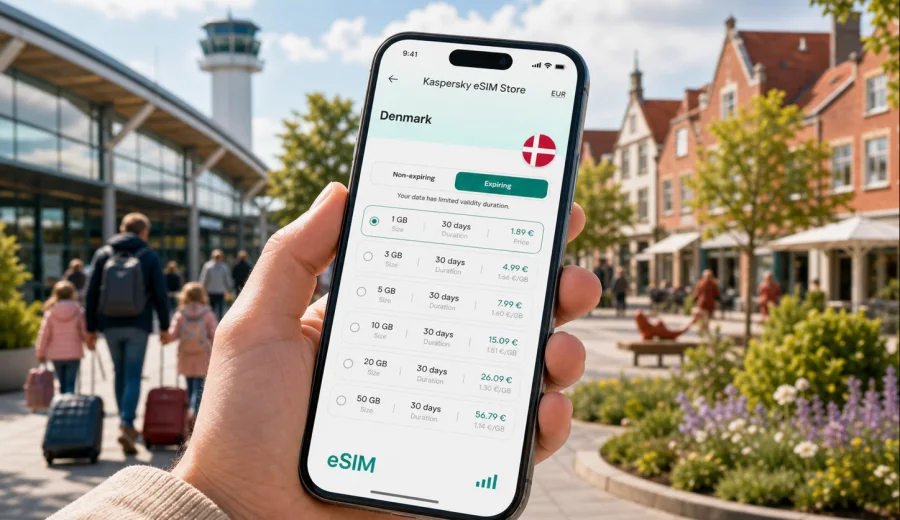
Billund eSIM: mobile connection and internet for a practical trip
Billund is a small Danish town with an unusually busy travel rhythm. Many visitors arrive for a family holiday, a short business visit, a stopover in Jutland, or a route that continues to Vejle, Aarhus, Esbjerg, Kolding, Ribe, or the Danish west coast. The town is compact, but the trip often depends on details that are easier to manage online: finding the right bus stop at the airport, checking hotel arrival instructions, using navigation between attractions, ordering a taxi, confirming restaurant hours, or keeping a child entertained while plans change.
That is why mobile internet matters in Billund from the first minutes after landing. A travel eSIM can help you prepare data access before the trip, so you do not have to look for a physical SIM card after arrival. It is especially useful if your visit is short, if you are arriving with family luggage, or if you plan to move beyond Billund by bus, train, or rental car.
This guide focuses on how to use eSIM and mobile data around Billund: airport arrival, local movement, transport, hotels, theme-park days, business trips, stopovers, and onward travel in Denmark. It also explains what to check before you choose a data plan.
Why Billund is a city where mobile data helps
Billund is not a large capital where you can simply follow crowds through a metro system. It is a travel hub built around an airport, hotels, family attractions, business visits, and road connections across Jutland. Your phone is often the tool that connects those pieces.
Typical mobile data tasks in Billund include:
- checking airport arrival information and baggage updates;
- finding the correct bus stop or taxi pickup point;
- using maps between the airport, hotels, attractions, and restaurants;
- managing digital tickets, bookings, and boarding passes;
- translating Danish signs, menus, or short messages;
- checking opening hours before walking or taking a bus;
- coordinating family members in busy attraction areas;
- joining a video call or handling work messages during a business visit;
- planning a day trip to Vejle, Aarhus, Ribe, Esbjerg, or the coast.
Public Wi-Fi can be useful in airports, hotels, and some venues, but it is not a complete travel plan. It may require registration, it may not cover the street or bus stop where you need directions, and it can be inconvenient when you need a map quickly. A mobile data plan on eSIM gives you a more independent option, provided your device supports eSIM and the selected plan is suitable for Denmark.
Arrival at Billund Airport: where eSIM becomes useful first
Billund Airport is one of the main gateways to western Denmark. For many travelers, it is not only the arrival point for Billund itself but also the start of a Jutland route. You may land, collect luggage, check a hotel message, find transport, and decide whether to go directly to your accommodation or continue to another city.
Mobile internet is useful at this stage because several small decisions happen close together:
| Arrival task | Why data helps |
|---|---|
| Checking your hotel instructions | Some hotels send door codes, shuttle details, or late-arrival notes digitally. |
| Finding transport | You may need maps, bus information, taxi apps, or rental-car details. |
| Coordinating with family or colleagues | Messaging apps are easier when everyone can connect immediately. |
| Handling delays | If a flight arrives late, you can adjust bookings and routes without waiting for Wi-Fi. |
| Continuing beyond Billund | Trips to Vejle, Aarhus, Esbjerg, Kolding, or Ribe often need route checks. |
If you install an eSIM before the trip, you can often make arrival smoother: the eSIM profile is already on the phone, and you can activate data when the conditions of the selected plan allow it. Exact activation rules depend on the plan, so read the plan details before departure.
Getting around Billund with mobile internet
Billund is easy to understand on a map, but visitors still rely on their phones because the town is spread between the airport, hotels, attractions, restaurants, and business locations. Walking routes can be simple, yet weather, luggage, children, and timing often make navigation important.
For a city trip, mobile data helps in five common movement scenarios:
1. Airport to hotel. You can check the exact hotel address, walking time, taxi pickup, or bus connection before leaving the terminal area.
2. Hotel to attraction. Maps help you avoid unnecessary detours, especially if you are staying outside the most central visitor area.
3. Attraction to restaurant. Restaurant hours and reservation messages are easier to handle with data.
4. Billund to another Jutland city. You may need transport updates, train connections from nearby stations, or rental-car navigation.
5. Evening return. If the weather changes or children are tired, you can adjust the route quickly.
Billund is also a town where trips can be highly scheduled. Families often work around attraction entry times, hotel check-in, meals, and return flights. Business travelers may have short windows between meetings and airport transfers. A stable mobile data plan cannot remove every travel delay, but it helps you react faster when plans change.
Choosing the right data volume for Billund
The best eSIM data volume depends on how you use your phone. A Billund weekend with light maps and messaging is different from a family trip with video calls, cloud photo backups, and streaming in the hotel.
Use this practical estimate:
| Trip style | Typical data needs |
|---|---|
| Short stopover | Messaging, maps, boarding passes, taxi or bus checks. A small data package may be enough. |
| Weekend in Billund | Navigation, attraction apps, restaurant searches, photos, messaging. Choose more data if you use social media heavily. |
| Family holiday | Several devices may compete for attention. Avoid relying on one phone for all entertainment and backups. |
| Business visit | Email, calendar, chat, hotspot use, and video calls can raise data use quickly. |
| Jutland route | Navigation between cities, hotel changes, and day-trip planning usually justify a more flexible package. |
Video is the main data risk. Uploading many photos, streaming cartoons, using video calls, or sharing a hotspot with a laptop can consume far more data than maps and messages. If your trip includes remote work, plan with more margin. If the eSIM plan allows top-ups, check how that works before you need it.
Billund trip scenarios and data priorities
Different visitors use Billund differently. A city article about eSIM should not treat every traveler as if they are on the same route.
Family holiday
Families often need mobile data for navigation, digital tickets, weather checks, restaurant searches, and messaging between adults. If children use video or games during waits, data can disappear quickly. Consider setting app updates, cloud backups, and video downloads to Wi-Fi only before the trip.
Business trip
Billund is practical for meetings in western Denmark because of its airport and road connections. Business travelers should think about email, calendar access, secure sign-ins, ride coordination, and possible hotspot use. If you expect video calls, choose a data plan with enough allowance and test your eSIM setup before the first meeting day.
Stopover
For a stopover, the goal is usually simple: stay reachable, check onward travel, and avoid wasting time. An eSIM can be helpful because you can prepare it before departure and use data shortly after arrival, depending on the plan’s activation rules.
Jutland route
Many travelers use Billund as a starting point for western Denmark. You may continue to Vejle for rail connections, Aarhus for city sightseeing, Esbjerg for the west coast, Ribe for historic streets, or smaller towns by rental car. In that case, choose data for the whole Denmark part of your route, not only for the hours spent in Billund.
Preparing eSIM before you fly to Billund
The best time to think about mobile internet is before you are standing in arrivals with luggage. A little preparation makes the first day easier.
Before departure, check:
- your phone supports eSIM;
- your phone is not locked to a carrier that prevents adding another mobile plan;
- your operating system is up to date enough for eSIM setup;
- you know which SIM line will be used for data after arrival;
- data roaming settings match the instructions for the selected eSIM plan;
- you have saved important booking details offline in case you need them before data starts working;
- you understand when the plan validity period begins.
Kaspersky eSIM Store is an app and website where you can choose, arrange, and activate an eSIM with a suitable data plan for mobile internet during an international trip. For Billund, use the Denmark destination rather than looking for a separate city-only plan: you can choose a data plan for a trip to Billund and Denmark before you travel, then follow the activation conditions shown for the selected plan.
How to install an eSIM for a Billund trip
The installation flow depends on your device, but the general idea is simple: you add an eSIM profile to a compatible phone, select how it should be used, and turn on mobile data when the plan is ready for use. Keep your primary SIM active if you need your usual number for calls, SMS, or bank verification messages.
Use the official setup steps for your phone platform:
- follow the Android eSIM installation guide if you use an Android device;
- follow the iOS eSIM installation guide if you use an iPhone.
Before buying or installing, check whether your model supports eSIM and whether the device can add another mobile plan. You can check your device compatibility before you prepare the eSIM for Denmark. This is important because eSIM support can vary by model, region, carrier lock status, and device configuration.
Practical setup checklist for Billund
Use this checklist before leaving for the airport:
- Install the eSIM while you still have reliable Wi-Fi.
- Save your QR code or installation details according to the instructions.
- Keep your regular SIM for calls and SMS if you need your usual number.
- Label the eSIM line clearly, for example “Denmark data”.
- Turn off automatic app updates over mobile data.
- Download offline maps for Billund and your next destination.
- Save hotel address, booking number, and late-arrival instructions.
- Check whether hotspot use is included if you plan to connect a laptop.
- Read the plan validity rules before activation.
On arrival, give the phone a few minutes to register on a local network. If data does not start immediately, check that the eSIM line is selected for mobile data, data roaming is set according to the plan instructions, airplane mode is off, and the APN settings match the provided guidance if manual settings are required.
Local movement: airport, hotels, attractions, and restaurants
Billund’s visitor geography is compact but not always walk-only. The airport, hotels, family attractions, offices, and restaurants can be close by car yet less convenient on foot with luggage or children. Mobile internet helps you choose the realistic option, not just the shortest line on a map.
For airport-to-hotel movement, use data to confirm whether walking, taxi, bus, hotel shuttle, or rental car makes sense for your arrival time. For attraction days, check opening hours, weather, digital tickets, and food options before leaving the hotel. For restaurants, make reservations or verify hours before going, because a small town can have quieter periods outside peak visitor times.
If you plan to use a rental car, mobile data is useful for navigation and parking information. Still, download offline maps as a backup. Rural roads around Jutland are straightforward, but losing data at the wrong moment can be inconvenient when you are trying to reach an address, ferry point, beach, or countryside accommodation.
Business travel in Billund
For business travelers, Billund’s strength is efficiency: airport access, road connections, and proximity to companies across western Denmark. The challenge is that a short trip leaves little room for connectivity problems. If you are landing in the morning and going straight to a meeting, set up the eSIM before travel and confirm that your email, calendar, authenticator apps, and messaging tools are ready.
If you need laptop internet, check whether tethering is permitted in the selected data plan. Video meetings can use a large amount of data, and hotel Wi-Fi quality can vary. A sensible approach is to use mobile data for urgent work and rely on trusted Wi-Fi for large downloads, cloud backups, and long video calls when available.
Stopovers and short stays
A Billund stopover may be only a few hours, but it can still require reliable mobile data. You might need to check luggage storage, confirm a transfer, navigate to a hotel, contact a colleague, or decide whether there is enough time for a quick visit in town.
For short stays, avoid overcomplicating the setup. Install the eSIM before travel, keep the plan details accessible, and choose a data amount that matches maps, messages, and travel apps. If you will only use data lightly, a smaller plan may be reasonable. If the stopover is part of a longer Denmark trip, choose based on the full route.
Trips from Billund: planning beyond the town
Billund works well as a base or starting point for western Denmark. With mobile internet, you can adapt routes without returning to a hotel desk or relying only on saved screenshots.
Common onward trip patterns include:
| Route idea | Mobile data use |
|---|---|
| Billund to Vejle | Checking bus connections, rail options, and onward trains. |
| Billund to Aarhus | Navigation, ticket management, and city arrival planning. |
| Billund to Esbjerg or the west coast | Road navigation, weather checks, and accommodation messages. |
| Billund to Ribe | Maps, parking, restaurant hours, and return planning. |
| Billund to Kolding | Meeting logistics, hotel check-in, and transport updates. |
If you are driving, remember that navigation and music streaming together can use more data than expected. Download maps and playlists before the journey. If several people share one phone’s hotspot in the car, data use can rise quickly.
Common eSIM mistakes to avoid in Billund
Some problems are easy to prevent:
- Waiting until arrival to check device compatibility.
- Installing the eSIM only when airport Wi-Fi is unstable.
- Forgetting to select the eSIM line for mobile data.
- Leaving cloud photo backup enabled over mobile data.
- Assuming a data-only eSIM includes a local phone number.
- Using video streaming on mobile data during long waits.
- Not reading when plan validity starts.
- Deleting an eSIM profile before the trip is finished.
The safest approach is to prepare early, read the plan conditions, and keep essential travel details offline. eSIM is convenient, but it still depends on a compatible device, correct installation, and the rules of the selected plan.
FAQ: eSIM and mobile internet in Billund
Do I need an eSIM specifically for Billund?
Usually you choose a Denmark data plan rather than a separate city plan. Billund is the city context for your trip, but mobile data should cover the destination rules shown in the selected Denmark plan.
Can I install eSIM before arriving in Denmark?
In many cases, yes. Installing the eSIM profile before departure is practical because you can use home Wi-Fi and avoid setup stress after landing. Activation timing and validity depend on the selected plan, so read those details before travel.
Will eSIM give me a Danish phone number?
Travel eSIM plans for mobile internet are often data-only. They may not include a regular phone number, voice calls, or SMS unless the plan conditions say otherwise. You can usually use messaging and calling apps over mobile data.
Is eSIM useful if my hotel has Wi-Fi?
Yes, because hotel Wi-Fi does not help at the airport, bus stop, taxi pickup, attraction entrance, or on a road trip. Use Wi-Fi for large downloads when it is available, and keep mobile data for movement.
What should I do if mobile data does not work after landing?
Check that the eSIM is installed, selected for mobile data, and allowed to use roaming if the plan requires it. Restarting the phone or toggling airplane mode can also help. If manual APN settings are provided with your plan, verify them carefully.
Final travel checklist for Billund
Before your flight, prepare three things: connectivity, movement, and backup access. Connectivity means your eSIM is installed, your device is compatible, and your plan rules are clear. Movement means you know how to get from Billund Airport to your hotel or first stop. Backup access means you have saved key information offline: address, booking number, flight details, and emergency contacts.
For a compact city like Billund, good mobile internet is less about constant screen time and more about removing friction. It helps when luggage is heavy, children are tired, a meeting time changes, or the next bus is not obvious. It also supports a wider Denmark route if Billund is only the first stop.
If you want to prepare mobile data before the trip, use Kaspersky eSIM Store to choose an eSIM data plan for Denmark and set it up before you arrive in Billund. Check compatibility first, install the eSIM with reliable Wi-Fi, read the activation rules, and keep your travel details offline as a backup.