Travel connectivity guide
Bitė eSIM in Latvia: activation and travel guide
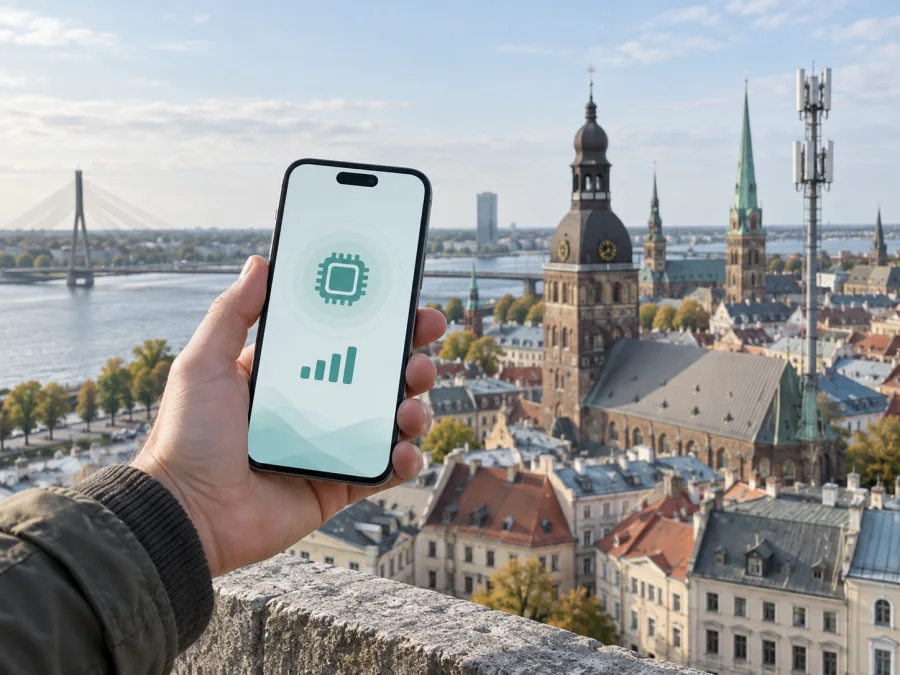
Bitė eSIM in Latvia: activation, coverage and travel considerations
If you are travelling to Latvia or need a local mobile connection there, Bitė eSIM is an option worth checking. An eSIM is a digital SIM profile built into a compatible device. It can replace a physical SIM or support a second connection while travelling. An eSIM is not automatically a travel product: the operator, device, roaming settings, registration rules and current service conditions all matter.
This guide covers Bitė in Latvia: public eSIM support, activation, device compatibility, prepaid and roaming restrictions, network technologies, and the difference between a local operator connection and a travel eSIM. It is informational and independent. Kaspersky eSIM Store is not affiliated with Bitė, is not its official partner or distributor, and does not represent the operator.
What Bitė eSIM means in Latvia
Bitė is a mobile communications operator serving customers in Latvia. Its public Latvian eSIM page describes eSIM for smartphones and smartwatches and presents it as a digital form of a mobile connection normally provided through a physical SIM. The page states that the operator’s mobile plans that work with a conventional SIM also work with eSIM. This is a general description of the service structure, not a recommendation of a particular plan.
Bitė’s public material says that an existing SIM can be changed to eSIM. Depending on the customer situation and current procedure, the request may be handled at a Bitė service location or through customer support. After the change or a new connection, Bitė sends a QR code and activation instructions. Its activation guide says that the phone needs internet access during setup, for example through Wi-Fi or another SIM.
The eSIM page names newer Apple, Samsung and Xiaomi smartphones among compatible families and also refers to smartwatches from several manufacturers. This does not mean that every model or regional variant is supported. Software version, carrier lock and the number of profiles already stored can matter. Check the exact model in the phone settings and confirm the current Bitė procedure before ordering or changing a SIM. A smartwatch eSIM is a separate use case with its own device and service requirements.
What current public information confirms
The following points are supported by Bitė’s current public pages checked on 20 September 2026. The “eSIM card for phone and smartwatch” page confirms eSIM for phones and wearables, SIM replacement, QR-code delivery and internet access during activation. The separate “How to activate eSIM?” help page repeats those requirements and points to instructions for iOS, Android and smartwatches.
The article stays at this level because Bitė’s commercial conditions can change. Review the current commercial details with the operator.
How to activate Bitė eSIM
Preparation matters more than speed. You need a compatible and unlocked device, the QR code, a reliable internet connection and enough battery power. Keep an active home SIM available until the new profile has been tested.
Before the QR code arrives
- Check the exact phone model for eSIM support. Look for “Add eSIM” or “Add mobile plan” in cellular settings.
- Confirm that the phone is not locked to another operator. eSIM hardware alone does not remove a carrier lock.
- Install recommended operating-system updates and restart the device if the eSIM option is missing.
- Decide which line should handle mobile data, calls and messages. On a dual-SIM phone, keep the home line as the default until Bitė is tested.
- Arrange to display the QR code on another screen or on paper if the camera is needed for scanning.
During installation
Open cellular or mobile-network settings and choose the option to add a mobile plan or eSIM. Scan the QR code supplied by Bitė and follow the device instructions. Give the profile a clear label and keep Wi-Fi or the other SIM active until the download is complete.
After installation, choose the Bitė profile for mobile data, calls and messages according to your purpose. If it is used alongside another line, review the default calling line and automatic data switching. A phone can change the active data line without making the change obvious.
Bitė’s activation page has separate guidance for iOS, Android and smartwatches. Screen labels vary by manufacturer and software version, so use instructions for the exact device. If data does not work, first check the selected data line, network registration and roaming settings rather than deleting the profile.
If activation does not complete
Reconnect to Wi-Fi, restart the device, verify that it is unlocked, and scan the QR code again only if Bitė allows it. Check that the profile appears in the SIM manager and that mobile data is enabled. If the error remains, contact Bitė support or visit a service location. Do not publish or forward a QR code: it is an eSIM credential.
Use current support details from Bitė’s help centre or customer account. If you are abroad, provide your location, device model, profile status and whether calls, messages or data are affected. This helps separate an installation issue from roaming or coverage limitations.
Bitė prepaid use and travel restrictions
Bitė publicly offers prepaid mobile services in Latvia. Prepaid is a general service category, not a guarantee that every prepaid connection can be converted to eSIM or used while roaming. Bitė’s travel guidance says that its named prepaid services do not provide use abroad. A visitor should confirm the current rule for the exact connection before relying on it outside Latvia.
Registration and account access can also matter. Bitė’s help materials describe different checks for registered and unregistered prepaid SIMs, including the phone number, customer password, PIN or PUK and, in some procedures, a valid identity document. Keep account details and recovery codes, and ask Bitė what identification is required before visiting a shop.
For a regular Bitė connection, roaming availability depends on the service and account settings. Bitė recommends checking whether roaming is enabled, whether roaming data is blocked, and whether data roaming is switched on in the phone. On Android this is generally under mobile-network settings; on iPhone it is under Mobile Data and Mobile Data Options. Exact labels vary.
Travelling to Latvia with Bitė and using Bitė as a local connection inside Latvia are different scenarios. A visitor obtains and activates a local connection; an existing Bitė customer travelling elsewhere needs roaming. Check the conditions separately.
Coverage and supported mobile technologies
Bitė’s public network page describes 4G and 5G coverage in Latvia and provides a coverage map. The page currently reports 5G availability for a stated share of the country’s population and territory and shows categories for 5G and 4G. These are operator-reported figures and a theoretical outdoor map, not a promise that a particular room, road, building or campsite will have the same service.
The same page warns that terrain and other external factors affect availability and quality. That matters when travelling between Riga, coastal areas, towns, forests and rural roads. Buildings, congestion, device bands and phone position can change the result. A map helps with planning but cannot replace a check at the destination.
Bitė refers to both 4G and 5G services. The device must support the relevant technology and frequencies used in the area. An eSIM profile does not turn a 4G phone into a 5G phone. A 5G-capable model may still connect through 4G when 5G is unavailable, disabled, restricted by the account or affected by local conditions.
Latvia’s Public Utilities Commission also describes ongoing work around radio-frequency resources for future 5G development. Its notice of 16 July 2026 discusses reorganising the 3600 MHz band and notes Bitė’s participation. This shows that network planning develops over time; it does not establish a guaranteed speed or indoor signal.
When testing service, confirm that the Bitė profile is active, select it for data, check network registration and test a web page or messaging app. If data fails, review access-point settings only when Bitė support instructs you. If there is no service, try another location and use the coverage map as a reference. One measurement is not a general rating of the operator.
Local Bitė service versus a travel eSIM
A local operator connection and a travel eSIM solve related but different problems. A local Bitė service is tied to the operator’s customer process, network and account conditions in Latvia and may support ordinary mobile-number functions. It can suit residents, longer stays or visitors who need a local number and accept the operator’s verification steps.
A travel eSIM is usually designed around mobile data for a destination or region. It can be arranged online before departure, so the traveller does not need to search for a shop immediately after landing. The trade-off is that a travel eSIM may not provide a local phone number, ordinary voice calls or SMS. Messaging and internet calls can work through apps when the device has data, but check the product conditions.
| Consideration | Local Bitė | Travel eSIM |
|---|---|---|
| Relationship | Direct Latvian operator account. | Digital purchase and activation. |
| Preparation | May involve a shop, support or registration. | Usually arranged online. |
| Number and voice | Depends on the Bitė service. | Often data-only; check conditions. |
| Network | Bitė’s local service and coverage. | Network specified for the destination. |
The choice depends on the trip. A visitor who needs a local number and local support may prefer to discuss Bitė’s current options directly with the operator. Someone who only needs data for maps, transport, translation, messaging and work may prepare a travel eSIM in advance. Check device and service compatibility before mixing profiles.
Kaspersky eSIM Store as a travel-data alternative
Kaspersky eSIM Store is an app and website for choosing, arranging and activating an eSIM with a mobile-data option for an international trip. It is not a mobile operator, does not own Bitė’s network, and does not provide Bitė service. It may be considered when the main requirement is data for a journey and the traveller wants to prepare digitally rather than begin with a local shop visit.
Kaspersky’s official travel material and Latvia page, checked on 20 September 2026, describe a flow in which a user checks device compatibility, selects a destination, completes the purchase and installs the eSIM using in-app or email instructions. The material also explains that the travel eSIM is intended for data and does not automatically supply a phone number, ordinary calls or SMS. Before purchase, read the current Latvia conditions and confirm that the phone is unlocked and eSIM-compatible.
For a Latvia trip, the Kaspersky eSIM Store Latvia page is a starting point for checking current travel-data options. Treat that page as the source of current commercial conditions.
Prepare a travel eSIM while you still have dependable Wi-Fi. Keep the home SIM active if you need calls or messages, set the travel profile as the data line when ready, and disable automatic data switching if you want manual control. Enable data roaming only as the product instructions require.
Frequently asked questions
Does Bitė eSIM work in Latvia?
Bitė’s current Latvian public pages document eSIM for smartphones and smartwatches in Latvia. Exact availability still depends on the customer account, device, service type and current procedure. Confirm those points with Bitė before relying on the profile.
Is Bitė prepaid suitable for a foreign visitor?
Bitė has prepaid services in Latvia, but its travel guidance says the named prepaid services do not provide use abroad. Confirm current eligibility, registration and intended geography directly with Bitė. Prepaid in Latvia does not automatically mean roaming outside Latvia.
Does eSIM guarantee 5G?
No. 5G depends on the phone, supported frequencies, account and local coverage. Bitė publishes a coverage map and describes both 4G and 5G, but notes that the map is theoretical and external factors affect service. Use the exact location and device as the reference.
Conclusion
Bitė eSIM in Latvia is a documented option for compatible smartphones and smartwatches. The operator’s public pages provide a high-level activation path: request or change the service, receive a QR code and instructions, use Wi-Fi or another SIM during setup, and check the profile and mobile-data settings afterwards. The main travel cautions are equally important: prepaid availability does not automatically mean roaming, identity or account checks may apply, and a coverage map cannot guarantee service at every indoor or rural location.
If a local Latvian account and operator support are important, verify the current Bitė conditions directly. If the trip only requires mobile data and you want to arrange it digitally, a travel eSIM can be considered as a separate option. Check the current Latvia travel-data options in Kaspersky eSIM Store and review the device, activation and data-only conditions before purchase.
This article was checked on 20 September 2026. Operator services, coverage information, device support, roaming rules and travel-eSIM conditions can change. Bitė and Kaspersky eSIM Store are separate services; Kaspersky eSIM Store is not affiliated with Bitė and is not its official partner or distributor. Verify the current terms with the relevant service before travelling.


