Travel connectivity guide
Bled eSIM: Mobile Internet for Your Slovenia Trip
Bled eSIM: Mobile Connection and Internet for a Lake Escape
Bled is compact, but a visit rarely stays in one place. You may arrive by bus or train, walk between the lakefront and your accommodation, follow a trail above the water, then plan a day trip into the Julian Alps. A reliable mobile connection makes those small transitions easier: check a route, confirm a meeting point, message your host, or look up a return journey while you are out.
An eSIM can give your phone mobile data during a trip to Bled without replacing your physical SIM. Set it up before travelling, then use maps, transport information and messaging apps as needed. The best choice depends on how long you are staying, how much data you expect to use, and whether your route includes places beyond the lakeside settlement.
Plan for Bled’s shape, not just the lake view
Bled is a small town around a lake, with places to stay and points of interest spread around the shore and on the slopes above it. The bus station is close to the lake and central visitor areas. Railway stations are outside the core or on the opposite side of the lake, so the last part of a rail journey can still require a bus, taxi, bicycle or walk. Check the exact station and your lodging address before you set off; “Bled” on a ticket or map does not always mean the same final stop.
The lakeside path is one of the simplest ways to understand the layout. The full circuit is about six kilometres, though your own route may be shorter if you turn back, pause at a viewpoint or take a boat. A map helps you see which shore you are on and how far you are from the bus station, your hotel or the next trail entrance. Save your accommodation’s address and entrance details before arrival, especially if you expect to reach Bled after dark.
From the airport or railway to your stay
Many international visitors reach Bled through Ljubljana Jože Pučnik Airport or Ljubljana, then continue by road or rail. The airport is not in Bled, and journey options depend on the date, season and time of arrival. A direct-looking route may involve a connection, so verify the current itinerary rather than relying on an old screenshot. If you arrive by bus, the central bus station is a useful reference point for the lakefront and many stays.
Rail travellers should check whether their itinerary ends at Lesce-Bled or Bled Jezero. Lesce-Bled is several kilometres from the lake; official railway guidance describes the walk to the lake as roughly four kilometres, with local transport or a bicycle as alternatives. Bled Jezero is closer to the western lakeside, but your accommodation may be on the other side. A mobile map helps compare the station exit with the actual address instead of treating both stations as interchangeable.
Before leaving the airport or a larger station, make a short arrival checklist:
- Confirm the final stop and any transfer in your current itinerary.
- Save your lodging address in the map app and note its check-in instructions.
- Check whether the host recommends a particular station or bus stop.
- Keep the booking confirmation and essential details available offline.
- If you have luggage, compare the walking distance with the local transport option before choosing on the spot.
Moving around the lake and nearby districts
For the central lakeside, walking is often the most direct way to move between viewpoints, cafés, boat landings and the main visitor areas. Distances look short on a map, but paths can be busy and there are slopes around the lake. If you are staying farther from the shore, a bicycle, local bus, taxi or seasonal shuttle may make more sense. Bled promotes walking and cycling, and local transport services can change across the year; check what is running during your dates rather than assuming a summer service operates in winter.
Think of the main areas as practical zones:
| Area or landmark | What it helps you orient around | When mobile data is useful |
|---|---|---|
| Central bus station and lakefront | Arrival, visitor services and the eastern side of the lake | Finding your lodging, checking onward transport or sharing a meeting point |
| Bled Castle and the northern shore | A high viewpoint and routes above the water | Comparing walking approaches and checking the descent back to town |
| Mlino and the southern shore | Boat departures and lakeside stays | Confirming the right landing or finding your way back after a walk |
| Bled Jezero station and western shore | Rail access and the quieter end of the lake | Matching the station to your accommodation and planning the final leg |
| Lesce-Bled station | A rail approach beyond the immediate lakeside | Checking a bus, taxi or cycling connection for the remaining distance |
Bled also works as a base for excursions. Visitors commonly plan journeys toward Vintgar Gorge, Radovljica, Bohinj or mountain areas, but these are separate outings with their own transport and opening conditions. Leave room in the plan for connections, weather and the return journey. If you are going beyond the town, download route details in advance and keep the name of your intended stop handy; a place name alone may not distinguish a trailhead from a village or a visitor entrance.
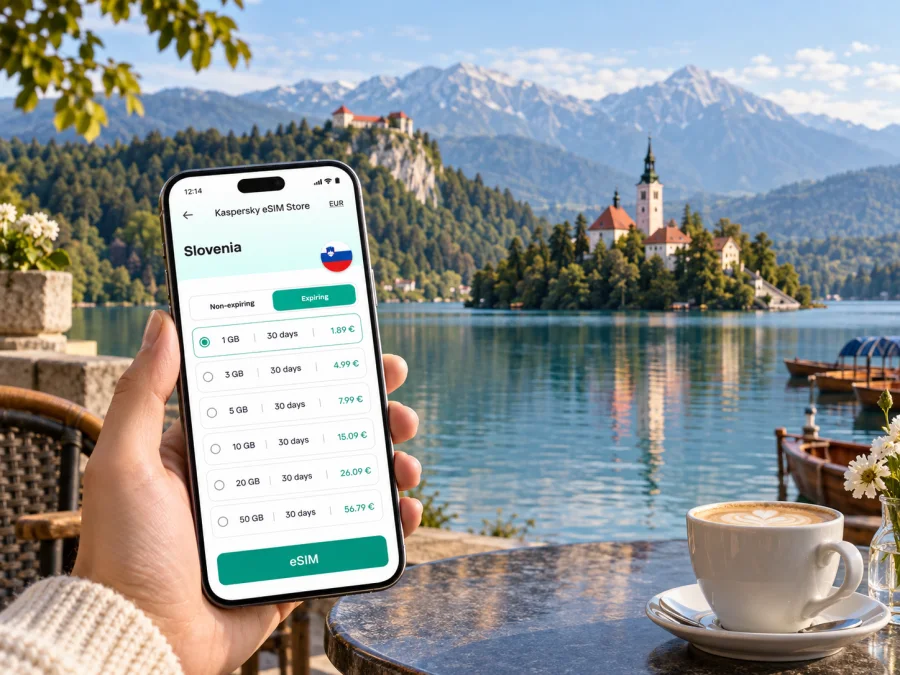
If you want to compare data options for your itinerary, you can choose an eSIM plan for travel in Slovenia. Consider the full route, including arrival in Ljubljana and any day trips, rather than choosing only for the hours spent beside Lake Bled.
Choose a data allowance for the way you travel
A short city break and a week of day trips create different data needs. Navigation uses data when maps and route details load; messaging and email may use little, while video calls, photo backups and streaming can consume much more. Hotel Wi-Fi may help with larger downloads, but it should not be your only plan for arrival and movement around town.
A simple estimate is more useful than a generic “best” package. Ask yourself how often you will use maps, whether you will upload photos over mobile data, and whether you need to work while away from Wi-Fi. Then review the package’s data volume, validity period and destination coverage before completing a purchase. Terms vary by plan, and no single allowance fits every traveller.
| Your travel pattern | Likely data habits | A sensible planning step |
|---|---|---|
| One night near the lake | Maps, messages, transport checks | Keep downloads small and check whether your accommodation has Wi-Fi |
| Several days on foot | Frequent mapping, weather checks, photos | Estimate daily use and avoid automatic photo or video uploads over mobile data |
| Bled plus regional day trips | Navigation and connection checks beyond town | Review the destination terms for the entire route and save offline maps |
| Remote work or video calls | Meetings, email, cloud documents | Estimate call time, confirm your workplace needs, and arrange a Wi-Fi backup |
A travel data eSIM is generally intended for mobile internet. Unless a specific plan says otherwise, do not assume it includes a local phone number, conventional voice calls or SMS. You can keep your usual SIM active for services that depend on your number, subject to your home operator’s roaming settings and charges. Messaging and calls through internet apps use data and require the other person to be reachable in that app.
Prepare your phone before departure
Before choosing a plan, confirm that your device supports eSIM and is not locked in a way that prevents another profile from being used. Check whether your device supports eSIM before purchase. Device support can vary by model, region and carrier, so use the compatibility information for your exact phone rather than relying only on a product family name.
Kaspersky eSIM Store is an app and website where you can choose, arrange and activate an eSIM with a suitable plan for mobile internet during an international trip. Review the destination, data allowance, validity and plan conditions in the product details. If you travel with more than one device, make sure the eSIM is installed on the phone you intend to use for data; moving profiles between devices may not be possible under every plan.
A practical setup sequence:
- Choose the destination and plan. Check that the plan suits Slovenia and your travel dates, then review its data volume and validity.
- Use a stable connection for setup. Install the eSIM while you have dependable Wi-Fi and follow the on-screen instructions.
- Label the new line. A label such as “Travel data” makes it easier to distinguish from your primary SIM in phone settings.
- Choose mobile data settings deliberately. Before departure, understand which line is selected for data and how data roaming is controlled for each line. Follow the plan instructions; settings differ between devices.
- Keep the installation instructions accessible. Use the Android eSIM installation guide or the iOS eSIM installation guide for the relevant device.
- Check activation timing. Plans can differ in when validity begins. Read the terms so you know whether to install before travel and when to enable the profile.
Do not delete an installed eSIM simply to troubleshoot unless the plan instructions or support team advise you to do so. Some profiles cannot be installed again after removal. If the connection does not work, first check that the correct line is enabled for data, that the selected plan is active, and that the device settings match the instructions.
Stay oriented when the trip changes
Before heading out, consider this compact checklist:
- Save the accommodation address, host contact and check-in details.
- Download the local map area and any route you expect to follow.
- Keep transport tickets or confirmations accessible offline where possible.
- Charge your phone and carry a compact power bank for a long walking day.
- Check the day’s forecast and trail or attraction updates before leaving Wi-Fi.
- Share a clear meeting point with companions, such as a named station or lakeside landmark.
- When going beyond Bled, note the planned return connection as well as the outward journey.
Frequently asked questions
Is an eSIM useful for a short visit to Bled?
It can be useful if you want mobile data for arrival, maps and messages without relying only on public Wi-Fi. Whether it is worthwhile depends on your current roaming arrangement, trip length and expected data use. Check the terms and total cost of the plan before choosing.
Can I use an eSIM for the walk around Lake Bled?
A compatible, correctly configured eSIM can provide mobile data where the plan’s network partner has service. The lakeside circuit is about six kilometres, and downloadable maps are a helpful backup. Coverage and performance can vary with location, device and conditions, so do not treat live navigation as a substitute for basic route preparation.
Which railway station should I use for Bled?
It depends on your route and accommodation. Lesce-Bled is several kilometres from the lake; Bled Jezero is on the western side. Compare the station shown on your itinerary with the exact lodging address and check onward transport for your travel date.
Does a travel eSIM include ordinary calls and text messages?
A data-focused eSIM normally provides mobile data rather than a separate phone number. Check the individual plan details. Internet messaging and calling apps can work over data, while your regular SIM may continue to handle your number according to its settings and your home operator’s terms.
Should I install the eSIM before arriving?
Many travellers prefer to complete installation over a reliable connection before departure, then enable the profile according to the plan’s instructions. Check when the plan’s validity starts and follow the device-specific guide. Keep the QR code or installation details available until setup is complete.
Will mobile data work on every excursion from Bled?
No plan should be assumed to work at every location. Service depends on the plan, local network availability, device and terrain. For walks or outings beyond the town, download maps and route information beforehand and check current local guidance.
Make the connection part of your arrival plan
Bled is easiest to enjoy when the practical details are settled early: know which station or bus stop you are reaching, save the route to your stay, and keep a map available for the lakeside and nearby excursions. A travel eSIM can help with those tasks while leaving your usual number available if your phone supports dual SIM use and your home plan allows it.
Before departure, compare the Slovenia options in Kaspersky eSIM Store and select an eSIM plan for your Bled trip. Check device compatibility, data allowance, validity and activation conditions, then install the profile using the instructions for your phone. With that preparation done, you can spend less time sorting out the first connection and more time looking up from the screen at the lake.