Travel connectivity guide
Cascais eSIM: Mobile Internet for Your Trip
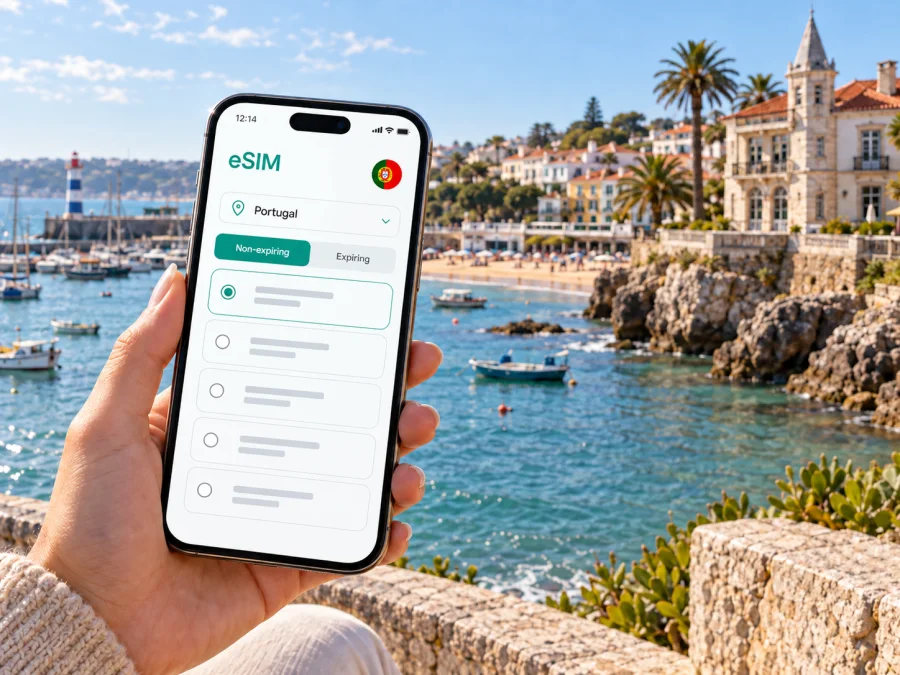
Cascais eSIM: Mobile Connection and Internet for Your Trip
Cascais is a coastal town west of Lisbon, with a compact historic center, a busy waterfront and beaches that stretch toward the Atlantic. A trip here can mean a few unhurried days by the water, a work stay with meetings in Lisbon, or a short stop between the capital and the coast. In each case, mobile internet is useful for checking the route, coordinating a transfer, finding a hotel entrance and keeping plans flexible when the weather or timetable changes.
An eSIM can make that preparation simpler. It is a digital SIM profile for mobile data, installed on a compatible device without inserting a plastic card. Before your trip, you can choose a plan for Portugal through Kaspersky eSIM Store, review its data allowance and validity, and set up the eSIM at a convenient time. The details that matter most are practical: where you will go, how often you will use maps and messaging, and whether the plan remains active for your full stay.
Why mobile internet helps in Cascais
Cascais is easy to enjoy at a relaxed pace, but a coastal itinerary often involves more than one kind of journey. You may walk from the station to accommodation, take a train toward Lisbon, arrange a ride to a beach farther from the center, or look up a return option after dinner. A data connection gives you one place to check maps, messages, digital tickets and updated travel information.
It is especially useful when your day crosses several areas:
- The historic center and bay: Find a hotel, café, small shop or meeting point among the streets near the waterfront.
- The station and Lisbon-bound rail route: Check current departures and service notices before you set off.
- The coast west of town: Use a map to understand where a beach access point or walking route begins, then confirm local conditions before leaving.
- Estoril and nearby stops: Keep the next leg of a coastal outing clear when you are combining places in one day.
- A day trip inland: Check the onward journey and meeting details rather than relying on a screenshot saved earlier.
A phone connection does not replace planning. It gives you a way to make small decisions as the day unfolds, especially when a saved address is incomplete or a departure time has changed.
Arriving and getting oriented
Many visitors reach Cascais after landing in the Lisbon area. The first part of the journey may involve a transfer, public transport, a taxi or a combination of options. The best choice depends on your arrival time, luggage, accommodation location and current service conditions. Avoid assuming that one route will always be quickest: check the journey on the day and allow a margin if you have a timed check-in or appointment.
Before leaving the airport, make sure you can access the address of your accommodation and any arrival instructions. A useful arrival note includes the full property name, street address, check-in contact and a nearby landmark. If your booking app needs an internet connection, open the relevant details while you still have airport Wi-Fi, and save a screenshot as a backup. A saved map area can also help if coverage is temporarily weak in a station, underground passage or crowded place.
The Cascais Line links the town with Lisbon’s Cais do Sodré station and passes coastal stops including Estoril and Carcavelos. Planned works can affect how parts of the route operate, including replacement road services. Check current operator information before setting out, then confirm departure details at the station. If you are carrying larger bags, travelling late, or arriving with children, compare the full door-to-door journey rather than just the time spent on the train.
Once you arrive, orient yourself around the station, historic center and bay. The center is easy to explore on foot, although slopes, cobbled surfaces, heat and luggage can make a short route feel longer. Check the route before deciding whether to walk or arrange a ride.
First-hour checklist
- Open your accommodation address and check-in instructions; save the essentials offline.
- Confirm the route using current transport information and note a nearby landmark.
- Check that your phone uses the intended data line. A data eSIM does not automatically replace voice or SMS service on your regular number.
Choosing a Portugal eSIM for a Cascais itinerary
A city name can help you picture the trip, but the relevant destination for a travel data plan is the country or region where the plan is valid. For Cascais, check the Portugal option and read the conditions shown for the specific plan. Kaspersky eSIM Store is an app and website where you can choose, arrange and activate an eSIM with a suitable plan for mobile internet while travelling abroad.
Compare plans against your actual schedule rather than choosing by the largest data allowance alone. A visitor who mainly checks maps and messages may have a different need from someone who joins video meetings, uploads large files or uses a phone as a hotspot. Think about how many days you will spend in Cascais, whether you will also visit Lisbon or Sintra, and whether the plan’s validity covers the whole itinerary.
| Your travel pattern | What to consider when choosing |
|---|---|
| A weekend centered on Cascais | Estimate map, messaging and booking use; check that validity covers arrival and departure days. |
| A longer stay with work calls | Allow for video and file use, and check whether tethering is permitted by the selected plan. |
| Cascais plus Lisbon and nearby towns | Confirm that the plan applies throughout Portugal and review its validity dates. |
| A brief coastal stopover | Prioritize the activation timing and enough data for directions, transport checks and messages. |
Plan names, allowances, prices and validity can vary. Read the current details before completing a purchase, including any notes about activation, data use and supported devices. A plan that suits a short visit may be too limited for a longer stay with frequent video use; a larger allowance may be unnecessary if most of your day is offline.
Review eSIM options for a trip to Portugal
Getting around: station, center and coast
Cascais has a clear central reference point: the railway station sits close to the historic center and waterfront. From there, walking is a convenient way to connect many central sights, cafés and accommodation. A map is still helpful because an address can be on a narrow side street, and similar-looking lanes are easy to mix up when you are tired after a journey.
The coastal setting creates different kinds of movement. A promenade stroll, a trip toward Estoril and an excursion to an exposed beach are not interchangeable walks. Check distance, route surface, return options and weather before leaving. For longer coastal stretches, carry enough battery and know where you can pause or turn back. Follow local rules and do not use your phone while cycling or driving.
Mobile internet is most useful as a planning aid at the start and end of a leg: confirm the destination, see whether your route is still appropriate, and send an update if you are running late. Avoid staring at a map continuously in busy streets. Step aside to check directions, then navigate by visible landmarks and signs.
Small habits that make navigation easier
- Save the accommodation pin, written address and a return option before leaving.
- Check for steep stretches and use place names carefully when selecting a beach or viewpoint.
- Carry a charger on longer days and agree on a recognizable meeting point with companions.
A day by the Atlantic
A day in Cascais can center on the historic streets, bay and coastline. Choose one main destination and keep a nearby alternative; wind and surf can affect exposed walks, so check local conditions before setting out.
The dramatic shoreline at Boca do Inferno lies west of the center and can fit a walk or short ride, depending on your base and pace. Check the route, follow marked paths and safety instructions, and keep your attention on the ground and sea rather than your screen.
Farther west, Guincho has an open Atlantic setting. Check transport in both directions, confirm where the route ends, and take water and sun protection appropriate to the day. Save the location and return plan before leaving, particularly if you expect limited connectivity.
For a slower day, stay near the bay and leave time for a meal. For an active outing, decide how far you want to walk and where you can shorten the route. Download reference information on Wi-Fi, then use mobile data for changes and messages.
Cascais as a base for nearby places
Cascais is connected by rail with Lisbon and sits near other coastal destinations. Some visitors also plan an inland excursion to Sintra. Treat each as a separate leg: check current service information, confirm the return route and leave a buffer if you have a fixed appointment or check-in.
For Lisbon, decide whether you need to be back at a particular time and keep an alternative in mind. For Sintra, check the route from your actual starting point and remember that attractions may require additional travel beyond the station. A map and mobile data can help compare options and update companions if plans change, but neither guarantees a particular service will be available or on time.
Three useful trip patterns
- Short Cascais break: Base yourself near the center, walk between the station, bay and central streets, and plan one coastal outing.
- Coast and capital: Combine Cascais with Lisbon while checking rail information each day and leaving a transfer buffer.
- Business visit: Save meeting and hotel addresses offline; use mobile data for route updates and messages between appointments.
eSIM preparation before you travel
An eSIM is convenient only when your device and plan are ready. Before purchase, check that your phone supports eSIM, is not restricted by a carrier, and can install another profile. Device support can depend on the model and region in which it was sold, so use the manufacturer’s specifications or your device settings to confirm.
Check whether your device supports eSIM before choosing a plan. Then review the Portugal plan’s data amount, validity, activation instructions and other conditions. Keep your regular SIM active if you need its phone number for calls or verification messages, and confirm the roaming settings for that line separately.
Installation and activation sequence
- Prepare while connected to Wi-Fi. Sign in to the app or website and select the destination and plan that match your trip.
- Read the plan details. Check when validity starts, how the eSIM is installed, and whether any device-specific steps are listed.
- Install the profile. Follow the instructions for your phone: installation guide for Android or installation guide for iOS.
- Label your lines. Give the travel eSIM a clear name, such as “Portugal data,” so you can distinguish it from your usual SIM.
- Choose the data line at the right time. Follow the plan’s activation guidance and select the eSIM for mobile data when appropriate for your itinerary.
- Check the connection. Once you are ready to use it, confirm that mobile data is assigned to the intended line. Some devices may require data roaming to be enabled for the travel eSIM; follow the plan instructions.
The exact screens differ by device and operating-system version. Keep the installation instructions available until setup is complete. Avoid deleting an eSIM profile to troubleshoot unless the plan guidance says to do so, because reinstalling may not be possible under every plan’s conditions.
Questions travelers ask
Is Cascais a city or a separate destination from Lisbon?
Cascais is a coastal town in Portugal, west of Lisbon. Visitors commonly combine the two, but the journey between them should be planned as a separate leg with current transport information.
Can I use a Portugal eSIM while staying in Cascais?
Check the coverage area and terms shown for the selected Portugal plan. The plan is tied to its stated destination and conditions; local signal and service can vary by place and network.
Should I install the eSIM before I arrive?
You can prepare the eSIM before departure while you have a reliable Wi-Fi connection, then follow the plan’s guidance for activation. Check when validity begins so the timing suits your travel dates.
Will a data eSIM give me a Portuguese phone number?
Not necessarily. Travel eSIM plans in this context are intended for mobile data unless voice and SMS are expressly included in the selected plan’s terms. Messaging and internet calls can work through apps that use data.
Do I need mobile data all day?
No. You can use Wi-Fi where suitable and reserve mobile data for navigation, messages, transport checks and other tasks on the move. Consider disabling automatic backups or large updates if you want to manage data use.
What should I check before buying?
Confirm device compatibility and carrier-unlock status, destination, data allowance, validity, activation timing and any restrictions shown for the plan. Make sure the validity fits the full trip, including arrival and departure.
Choose an eSIM plan for Cascais
Use Kaspersky eSIM Store to review the available options for Portugal, compare the allowance and validity with your itinerary, and choose a plan that fits your trip. Prepare the eSIM on a compatible device and follow its activation instructions when you are ready to travel.