Travel connectivity guide
Claro eSIM in Chile: what to check
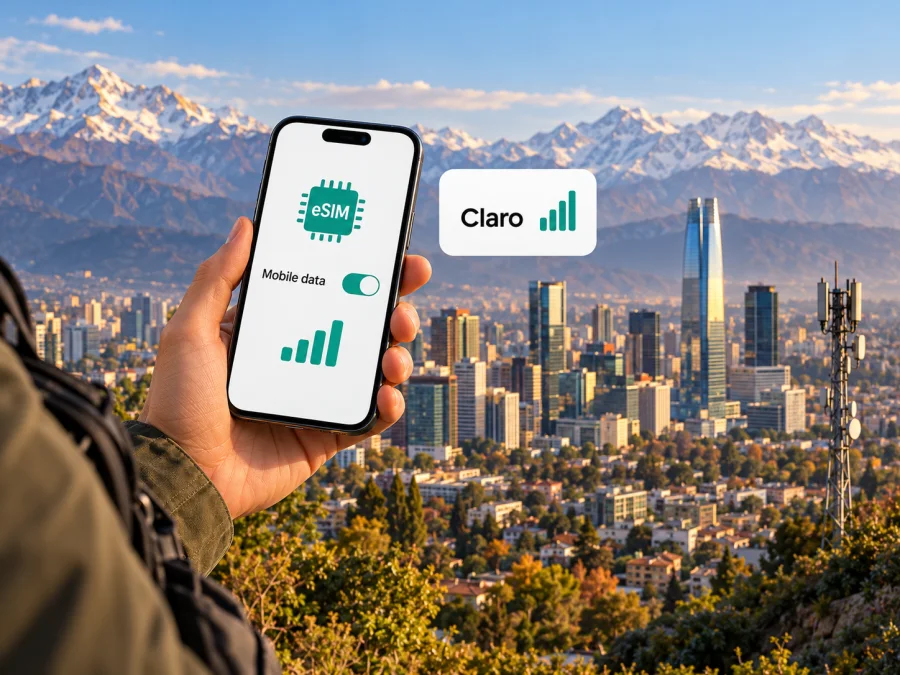
Claro eSIM in Chile: what travelers should know
Planning a trip to Chile and considering a Claro eSIM? Confirm both that your phone supports eSIM and that Claro can activate your specific line and device. Claro Chile has published a QR-based activation explainer, but current eligibility should be checked with the operator before travel.
This guide separates documented information from details travelers still need to confirm. It does not list mobile plans or prices. Claro is a mobile service provider in Chile; Kaspersky eSIM Store is a separate app and website for choosing, purchasing and activating travel eSIM data plans. Kaspersky is not Claro or a mobile network operator.
What is confirmed about Claro eSIM in Chile?
Claro Chile’s public article, “Aprende qué es eSIM Claro y cómo funciona,” describes eSIM profile setup by requesting a QR code from Claro, scanning it with a compatible phone and downloading the profile over an internet connection. This confirms that Claro has published a QR-based eSIM process for Chile, but it does not establish that every current customer, prepaid line, visitor or device is eligible.
There is a qualification for iPhone users. Apple’s current carrier-features page for Latin America and the Caribbean lists Claro for Chile and several features, but does not mark eSIM for Claro Chile. That table does not settle Android support or every carrier arrangement, yet the difference means iPhone owners should confirm eSIM provisioning for their exact model, software region and line type with Claro before relying on it.
The careful answer is: Claro has described eSIM activation, while present-day eligibility and the activation path are not clear enough to assume universal support. A phone’s eSIM capability or an eSIM-capable handset listing does not by itself prove that Claro can activate the line. Ask whether your specific device and account qualify and whether registration must happen in Chile.
Sources checked on October 17, 2026 include Claro Chile’s eSIM explainer, Apple Support’s “Wireless carrier support and features for iPhone in Latin America and the Caribbean,” Claro Chile’s prepaid and international roaming information, and Chile’s National Connectivity Registry maintained by SUBTEL. The sources do not confirm every current customer path. SUBTEL says its coverage map is informational and uses operator-supplied data.
Claro’s place in Chile’s mobile market
Claro is an established mobile operator in Chile. Service features, activation, customer verification, device support and roaming depend on the operator managing the line. Travelers considering a local Claro connection should confirm the current process with Claro instead of assuming that a general eSIM explainer applies to a visitor or prepaid account.
Chile spans varied travel environments, from urban centers to desert, mountain and sparsely populated southern areas. National operator status does not mean continuous service on every road, in every building or at every remote destination. Check coverage for the actual towns and routes you plan to visit. SUBTEL’s National Connectivity Registry displays reported service by area, company and technology, but describes its map as informational and based on operator-supplied data. Use it as a planning reference, not a promise of reception; download maps and essential travel details before leaving a connected area.
Does Claro eSIM work for prepaid or tourists?
The public Claro Chile material reviewed for this article does not clearly establish an eSIM option for every prepaid customer or for short-term visitors arriving from abroad. Claro’s prepaid information describes prepaid service and a physical-chip activation process, including identity verification steps, but it does not prove that the same onboarding route is offered as eSIM. Likewise, a generic eSIM explainer is not a guarantee of a visitor-focused product, immediate activation, or eligibility without local documents.
Before choosing a local Claro eSIM, ask the operator these questions in one conversation:
- Is eSIM currently available for new activations in Chile, or only for a change from an existing Claro line?
- Can a visitor activate it, and which identity documents or local account details are required?
- Does eligibility differ between prepaid and subscription lines?
- Can the profile be issued remotely, or must the customer visit a Claro service location?
- Is the exact phone model and regional variant supported, and must the device be unlocked?
- Can the profile be transferred or reissued if the phone is replaced or reset?
- Which mobile services are included, and which need separate activation?
Ask for the current instructions in writing or save the official instructions shown in your account. This is especially useful if activation depends on visiting a store, presenting identity documents, or using a local account. Do not share a QR code or activation details with another person; an eSIM profile is intended for installation on the device associated with the activation process.
Check your phone before choosing an eSIM
A phone can support eSIM in one country or model variant and lack it in another. Some devices are sold with different hardware or software configurations by market. Before purchase, check the manufacturer’s specifications for the full model number, confirm that the phone is carrier-unlocked, and look in the device settings for an option to add an eSIM or mobile plan. A menu option is a helpful clue, but it does not confirm Claro’s acceptance of that device or line.
Dual-SIM behavior also varies. Many phones can keep a physical SIM and an eSIM profile installed, but the number of active lines, data-line selection and switching behavior depend on the model. If you keep your home SIM active for calls or verification messages, confirm which line is selected for mobile data and whether your home operator may charge for roaming. Disabling data roaming on the home line can help avoid accidental use, but do not change settings you need for emergency or account access without understanding the effects.
For a travel data eSIM through Kaspersky eSIM Store, check device compatibility before selecting a destination. The compatibility check is separate from Claro’s rules. A phone that can install a travel eSIM may still need operator confirmation to install Claro’s profile, and the reverse is also possible.
How Claro eSIM activation is described
Claro’s eSIM explainer describes requesting a QR code and scanning it on a compatible device connected to the internet. Screen names vary by phone, so follow Claro’s current instructions. Do not delete an installed profile to troubleshoot unless Claro explains how to replace it; an activation code may not be reusable.
A practical setup sequence is:
- Confirm your line type and exact phone variant are eligible.
- Check that the device supports eSIM and is unlocked where required.
- Ask Claro how it issues the QR code and whether identity verification is needed.
- Connect to reliable Wi-Fi and open the phone’s mobile-network settings.
- Choose “Add eSIM” or the equivalent, scan Claro’s code and follow the prompts.
- Label the profile, select the intended data line and apply Claro’s roaming instructions.
- Test the connection before depending on it for travel arrangements.
If setup fails, check the internet connection and follow Claro’s support guidance instead of repeatedly attempting a one-time code. Keep the error message available and ask whether a profile can be issued or restored while you are outside Chile.
Coverage, 4G and 5G: what a traveler can reasonably expect
Apple’s carrier-feature listing associates Claro Chile with LTE and 5G support on iPhone, among other listed features. This supports the availability of those technologies in the operator’s service context; it does not mean every Claro eSIM is provisioned for every generation, that a phone will always connect to 5G, or that coverage exists at every destination. A compatible handset, a suitable plan, network availability at the location and the operator’s current configuration all matter.
The country’s geography makes route-level planning particularly important. A city itinerary may involve dense buildings and indoor locations; a road trip can pass through open countryside, valleys, mountain terrain and long stretches between settlements. In the north, desert travel may involve remote routes. In the south, weather, terrain and distance can make backup planning useful. Islands and territories such as Rapa Nui are geographically distinct from the mainland; do not assume a mainland coverage map or a generic “Chile” product label settles service availability there. Confirm each destination separately with the operator or travel eSIM provider.
Technology names describe radio-network capabilities, not a quality ranking. The useful checks are practical: whether the places you plan to visit appear in the operator’s current coverage information, whether your phone supports the relevant bands and network features, and what fallback you have if signal is unavailable. Keep offline navigation and reservation details available, and let someone know your route when traveling beyond reliable service areas.
Local Claro service or a travel eSIM?
A local operator account may suit travelers who need a Chilean number or local account services. Eligibility, identity requirements and activation steps depend on Claro’s current rules, so confirm them before choosing this route.
A travel eSIM is generally designed to provide trip data without replacing your primary number. It can be prepared before departure on a compatible, unlocked device, subject to the product’s coverage and activation terms. Data-only eSIMs do not automatically include a conventional local number, voice calls or SMS. Internet calling and messaging apps may work over data, but do not replace a local number when one is required.
Decide based on your needs: whether you need a Chilean number or data only, can complete any local registration, will travel beyond urban areas, and need your home SIM for calls or verification. Check the selected service’s terms, destination coverage, activation timing and support. No country-level coverage statement guarantees reception everywhere.
Kaspersky eSIM Store is an app and website where travelers can choose, purchase and activate a travel eSIM data plan. Its Chile destination page can be used to review current travel options; it is not a Claro tariff page and does not mean Claro provides the service. The product page identifies technology partner BNESIM Limited as the provider of eSIM products and related services. Terms and availability may change, so review them at the time of purchase.
A travel eSIM can be a primary data connection or backup depending on its terms and the coverage available. Check tethering support and whether data roaming must be enabled for that profile. Make sure the correct line is selected for mobile data to avoid unintended use of your home SIM. Kaspersky eSIM Store helps manage travel eSIMs; it does not own or operate Chile’s mobile network.
Frequently asked questions
Is Claro eSIM available in Chile?
Claro Chile has published a QR-based eSIM guide, but current eligibility by customer type and device is not fully clear. Confirm directly with Claro. Apple’s current iPhone carrier-features page does not list eSIM under Claro Chile, so iPhone users should verify the exact route.
Can a tourist activate a Claro eSIM?
The public information reviewed does not clearly confirm a tourist-specific offer or universal visitor activation. Ask about identity requirements, prepaid eligibility and whether activation can be completed remotely.
Does any eSIM phone work with Claro?
No. Support depends on the exact model and regional variant, the device’s lock status and Claro’s activation rules. Confirm the full model number with Claro and the manufacturer.
Can I keep my regular SIM active?
Many dual-SIM phones can keep multiple lines available, but behavior differs. Select the intended data line and check roaming settings and charges for your home line.
Will service cover all of Chile?
No country-level label guarantees reception at every location. Check your route and prepare offline essentials, especially for remote areas and islands.
Does Kaspersky eSIM Store provide Claro service?
No. It is a separate travel eSIM app and website for choosing, purchasing and activating data plans. It is not Claro or a Chilean network operator.
A practical decision
Claro Chile’s own public eSIM explainer gives travelers a starting point: it describes QR-based profile installation. The gap is current eligibility. Because Apple’s carrier feature list does not show eSIM for Claro Chile, and public information does not settle every prepaid or visitor scenario, confirm your exact phone, line type and activation method with Claro before relying on the service.
For a trip focused on mobile data, a travel eSIM can be a separate route when its destination coverage and device compatibility are confirmed. Explore eSIM options for Chile to review the current travel destination page, or check back with Claro for local activation details. The Chile page is a general travel eSIM destination, not a listing of Claro plans. Claro and Kaspersky eSIM Store are not affiliated; the names are used only to identify the services discussed.


