Travel connectivity guide
Etisalat Afghanistan eSIM: what to check before travel
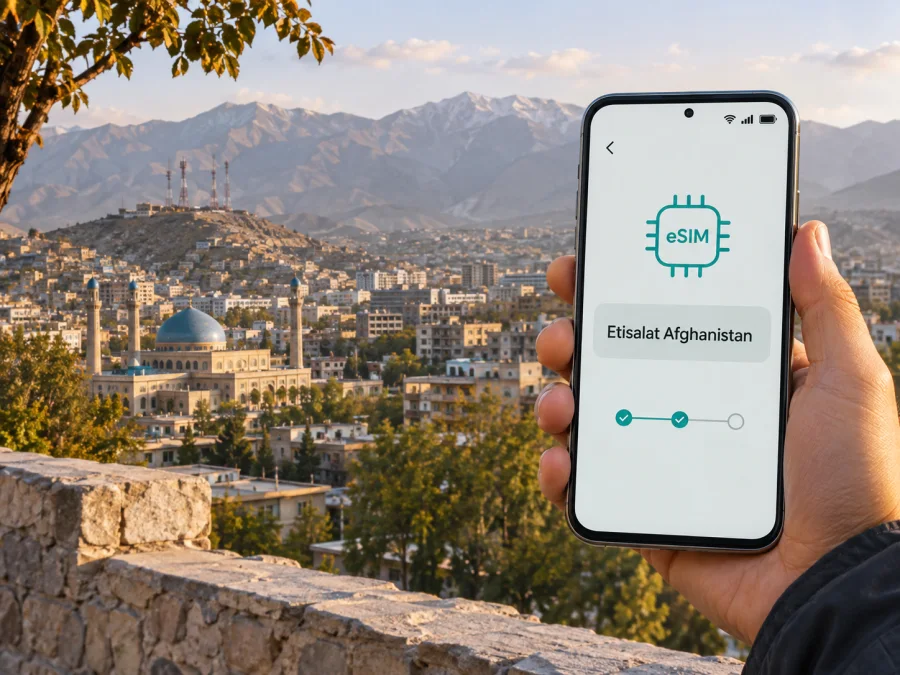
Etisalat Afghanistan eSIM: what travellers should check before a trip
If you are travelling to Afghanistan and considering an Etisalat Afghanistan eSIM, start by separating three questions: whether the operator currently issues eSIM profiles, where you can obtain and activate one, and whether your particular phone can use that profile. These checks matter because eSIM support depends on both the operator’s current process and the exact device variant you own. A phone sold under the same model name can differ by market, and a profile issued for one country is not automatically a substitute for service in another.
As of 3 November 2026, Etisalat Afghanistan’s English eSIM page confirms that the company offers eSIM and instructs customers to visit an Etisalat Afghanistan flagship to receive a QR code and activate it. The page names outlets in Kabul and several other cities. It does not provide a remote sign-up flow, list every eligible customer category, explain all documentation requirements, or publish a device compatibility list. Treat those details as questions to confirm directly with the operator before making a trip to a shop. Its current sales-points page says SIM registration in the customer’s own name is mandatory under rules it attributes to ATRA. This is a local service and registration process, not a universal description of every travel eSIM.
This guide separates confirmed information from questions to verify before you travel. Recheck the operator’s guidance before travelling because procedures can change.
What Etisalat Afghanistan’s eSIM information confirms
Etisalat Afghanistan maintains a dedicated personal eSIM page. It describes eSIM as a way to use a mobile account without physically replacing a SIM card and says customers should visit a nearby flagship to obtain a QR code and activate the profile. The listed eSIM flagships include several in Kabul and one each in Herat, Jalalabad, Mazar and Kandahar. That list is useful for planning, but it should not be read as a promise that every outlet in those cities provides eSIM service or that a listed location’s hours and stock are unchanged.
The company’s about page identifies Etisalat Afghanistan as a wholly owned subsidiary of Etisalat UAE and says its Afghanistan operations began in August 2007. The same page states that the operator provides voice and data services across 34 provinces and more than 400 districts, and that it offers 4G coverage in 33 provinces. These are company-published descriptions of its footprint. They are not a live coverage map, an independent measurement, or a guarantee of indoor reception, consistent performance, or service in every settlement and along every road.
The eSIM page does not state which prepaid or postpaid accounts can be converted or newly issued as eSIM, whether a visitor can register, whether a passport is accepted, whether the account holder must be present, or whether eSIM activation can be completed outside the listed flagships. It also does not confirm support for any named phone model or regional hardware variant. Do not infer these conditions from the word “eSIM” alone. Ask Etisalat Afghanistan which documents and account type are accepted, whether the QR code is issued to a visitor, and what steps are required to activate it.
Is an Etisalat Afghanistan eSIM available to visitors?
The official page confirms the eSIM service and says customers should visit a flagship for a QR code and activation. It does not describe tourist eSIM, online visitor registration or eligibility for a short-term account. A local eSIM may require a domestic subscriber relationship and identity registration; do not treat it as a travel-only data offer without the operator’s confirmation.
Before relying on a local profile, contact Etisalat Afghanistan through a current official channel and ask:
- Can a visitor open an account or convert an existing account to eSIM?
- Which identity document is accepted, and must registration be in the traveller’s name?
- Is an in-person visit required, and which current outlet issues the QR code?
- Does the exact phone variant work, and is it unlocked?
- Is service available at the specific places on the itinerary?
The operator’s sales directory lists many general retail points, but that does not prove each one can issue an eSIM QR code. Confirm the exact branch before travelling there.
How to obtain and activate the local profile
Etisalat Afghanistan’s published process is to visit a listed flagship, receive a QR code and activate the profile. The page does not describe each identity check or every phone menu, so follow the operator’s and device maker’s instructions. Keep the QR code private: it is used to download a mobile subscription profile.
- Confirm eligibility and documents. Ask whether a visitor can register, what identity document is accepted and whether the SIM must be registered in your name. The operator’s current sales page says registration in the customer’s own name is mandatory.
- Verify the exact handset. Check eSIM support for the full regional model identifier and confirm that the phone is unlocked. Ask whether the selected flagship currently handles eSIM.
- Prepare connectivity. Keep internet available during setup and ask whether the QR code is scanned at the shop. Keep your primary number and support details accessible.
- Add the profile. Follow the phone prompts and staff guidance. Avoid deleting another profile or resetting network settings unless the operator directs you to.
- Select and test the line. Set the intended SIM as the mobile-data line and review roaming settings. Test registration before leaving the shop; if it fails, ask staff to check the account and profile.
If a QR code appears used, invalid or unreadable, ask the operator whether it needs reissue rather than scanning it repeatedly. Do not leave the shop until you understand how to reach support if activation fails.
Phone compatibility: verify the regional variant
An eSIM-capable product line does not mean every device sold under that name supports eSIM. Manufacturers can release different hardware or software configurations for different countries and carriers. Some models use a physical SIM tray only; others support one or more eSIM profiles, and the available combinations can differ. A carrier lock, an unsupported software version, or a restriction on eSIM transfers can also affect setup.
Check the exact model identifier in the phone’s settings, on its original packaging or in the manufacturer’s support information. Look for an option such as “Add eSIM” or “Add mobile plan” in the cellular settings, but do not rely on a menu alone: availability can vary by software build and carrier configuration. The operator’s public page does not name supported models, so ask Etisalat Afghanistan to confirm the exact identifier before travelling to an outlet. You can also check your device’s eSIM compatibility. If you are buying a phone for the trip, have the seller confirm the regional SKU and unlocked status in writing.
A phone purchased in one country may not have the same radio configuration or eSIM support as a visually identical version sold elsewhere. This is a device-market variation, not a difference in Afghanistan’s geographic borders or a separate Etisalat network. The destination remains Afghanistan; the practical question is whether this exact handset variant can download and use the operator’s profile and connect on the available local network.
Device compatibility checklist
- Identify the full model number and regional variant.
- Confirm eSIM support with the device maker and Etisalat Afghanistan.
- Check that the phone is carrier-unlocked.
- Update the operating system before travel, while you still have reliable internet.
- Make sure you can access the email, account or support channel used for activation.
- Keep a second connectivity option available until the new profile has been tested.
If the handset does not support eSIM, ask Etisalat Afghanistan whether a physical SIM is suitable for your situation and what registration it requires. A compatible unlocked second phone, a local physical SIM, or a travel eSIM may be alternatives, depending on availability and the trip’s needs. Do not buy a particular device solely on the assumption that its name guarantees eSIM support in every market.
Coverage and network technology in Afghanistan
Etisalat Afghanistan’s company profile describes voice and data service across 34 provinces and more than 400 districts, and reports 4G coverage in 33 provinces. That is the operator’s own published summary. It indicates that 4G is part of its Afghan network, but it does not establish coverage on a specific route, inside a building, in a remote valley, or at a border crossing. The company’s public profile does not provide detailed location-by-location coverage evidence in the page reviewed for this article.
For trip planning, check the service in each place you expect to visit rather than treating a province-level statement as universal. A provincial capital, a rural road and an indoor location can have different conditions. Network availability can also depend on power, terrain, congestion, handset bands, local configuration and temporary outages. No public summary can promise uninterrupted service in every circumstance, and this guide makes no independent assessment of network speed or quality.
Ask Etisalat Afghanistan whether 4G service is available at the specific destinations you plan to visit and whether the handset supports the relevant local network configuration. If you will rely on maps, translation or tickets while travelling between towns, download essential information for offline use and keep important addresses and contact details accessible without mobile data. A second SIM or another permitted means of communication can be useful where reliable connectivity is essential.
Local Etisalat service and a travel eSIM are different choices
An Etisalat Afghanistan eSIM is a profile issued for an account on the operator’s local network. The published process involves visiting a flagship for a QR code. It may suit someone eligible for local registration who can reach an issuing outlet, but visitor eligibility and account requirements must be checked directly.
A travel eSIM is arranged for a destination or route through a digital storefront and is intended to provide mobile data while abroad. Kaspersky eSIM Store is an app and website that helps travellers choose, arrange and activate an eSIM for mobile internet. It is not a mobile operator, network owner or provider of cellular coverage; the service depends on the telecommunications provider and conditions shown for the selected option. Check current destination availability and terms before purchase.
The approaches serve different needs. Local service may matter if you need a domestic line or local account, subject to registration. A travel eSIM can be considered when you want to prepare data digitally without first finding a local sales point. It may be data-only and may not include a local number, ordinary calls or SMS, so check the terms and keep your home number available if needed.
There is no universal best option. Consider your route, need for a local number, registration eligibility, device compatibility and support access. Do not assume two eSIMs use the same network or have identical coverage just because both are usable in Afghanistan.
For a digital travel option, you can check current eSIM options for Afghanistan. This destination page is for browsing travel eSIM availability; it is not an Etisalat Afghanistan tariff page and does not establish that an offer uses Etisalat Afghanistan. Review the listed provider, coverage notes, device requirements and current terms.
How to set up a travel eSIM on a compatible phone
The exact menu names depend on the manufacturer and operating system. Start while you have a stable internet connection and the account or QR code needed for installation. If the phone supports in-app installation, follow the steps shown by that service; if you use a QR code, keep it available on another screen or printed copy.
- Confirm the phone is compatible and unlocked. Review the full regional model identifier.
- Check the destination and terms. Confirm Afghanistan, provider information, activation timing and whether the offer is data-only.
- Install the profile. Use guided installation or scan the QR code from mobile-network settings; follow the prompts.
- Select the data line. Label the eSIM, set it for mobile data when appropriate and check that your home SIM is not selected by mistake.
- Apply required settings and test. Enable data roaming on the travel profile only if instructed. Allow network registration, then test a webpage. Troubleshoot before deleting the profile.
For device-specific help, use the current installation instructions for your phone’s operating system and the guidance supplied with the selected eSIM. Menu names vary by software version. Do not remove an installed profile unless the provider confirms you can reinstall it.
If setup or connection fails
For a QR-code error, check whether the code was already used or needs reissue; contact its issuer instead of repeatedly scanning it. If the profile installed but data does not work, confirm that the eSIM is switched on and selected for mobile data, then check whether its instructions require data roaming on that line. Restarting can prompt a fresh network registration, but avoid deleting a profile or changing advanced settings without provider guidance.
For an Etisalat Afghanistan profile, contact the operator or return to the issuing flagship with the device and registration details. For a travel eSIM, use the support contact shown with the order. Keep a screenshot of the error with personal details hidden, and never share an eSIM QR code or identity document publicly.
Common questions
Does Etisalat Afghanistan offer eSIM?
Yes. Its current English eSIM page says customers can visit an Etisalat Afghanistan flagship to receive a QR code and activate a profile. The page does not list all eligibility or document requirements.
Can a tourist buy it online?
The page reviewed does not confirm online tourist registration or a separate tourist eSIM. It describes an in-person flagship visit. Ask the operator whether visitors can register and which documents are accepted.
Must I register the SIM in my own name?
Etisalat Afghanistan’s sales-points page says registration in the customer’s own name is mandatory under rules it attributes to ATRA. Confirm which identity documents apply to your account.
Is 4G available everywhere in Afghanistan?
The company profile reports 4G coverage in 33 provinces. This does not guarantee service at every address or route; check your specific destinations.
Will every eSIM phone work?
The operator’s public eSIM page does not list compatible models. Confirm the exact regional model identifier and unlocked status with the operator and device maker.
What does Kaspersky eSIM Store provide?
It is an app and website that helps travellers choose, arrange and activate an eSIM for mobile data abroad. It does not operate Etisalat Afghanistan’s network or provide cellular coverage. Check the current provider and conditions for any travel option.
A practical decision for your trip
Etisalat Afghanistan publicly documents eSIM and a QR-code activation process through named flagships. Its website also states that SIM registration in the customer’s own name is required. What the available public information does not settle is whether a short-term visitor can register, which exact identity documents qualify, which device variants are supported, or whether a particular route has dependable service. Confirm those points with the operator before relying on a local profile.
If you qualify for local service and can visit an issuing shop, a domestic Etisalat Afghanistan account may fit your needs. If you want to arrange mobile data digitally for travel, review the current destination options in Kaspersky eSIM Store and check their network, coverage and device conditions. Either way, keep your important maps, addresses and booking details available offline, and test the connection before depending on it for navigation or urgent communication.
Etisalat Afghanistan and its marks belong to their respective owner. Kaspersky eSIM Store is independent and is not affiliated with, endorsed by or an official representative of Etisalat Afghanistan. To explore a travel option, review current eSIM availability for Afghanistan; the page should be checked for its current terms and provider details.