Travel connectivity guide
Google Pixel 10 Pro Fold 12GB RAM eSIM
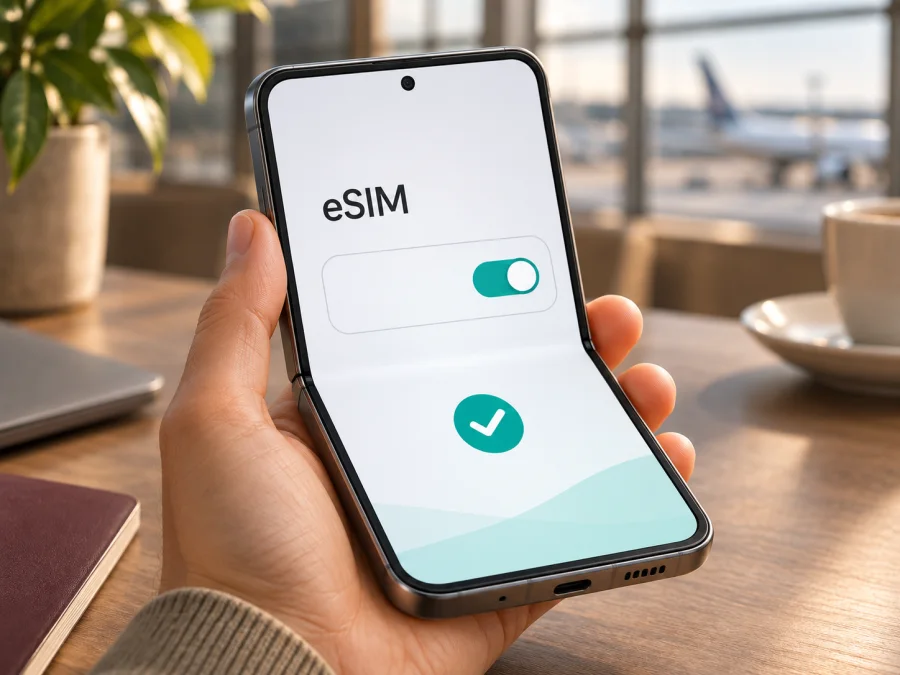
Google Pixel 10 Pro Fold 12GB RAM eSIM compatibility and setup
If you are checking whether a Google Pixel 10 Pro Fold 12GB RAM can use eSIM, there are two details to verify before you buy a travel plan. Google’s current Pixel 10 Pro Fold specifications list 16 GB of RAM for its 256 GB, 512 GB and 1 TB configurations; they do not identify a 12 GB RAM configuration. Google’s Pixel help also says Pixel 4 and later phones support eSIM, while carrier support and the phone’s regional configuration still matter. That means the eSIM capability is documented for the Pixel family, but the exact “12GB RAM” variant in your listing is not verified as an official Pixel 10 Pro Fold configuration. Check the phone itself before relying on the listing.
For a genuine, eSIM-capable Pixel 10 Pro Fold, look for an EID in Android settings and an option to add or download an eSIM. Then confirm that the device is unlocked and that the travel plan supports your country and route. The steps below help you make those checks without assuming that a RAM label alone proves the model or its cellular capabilities.
Quick facts
| Item | What you should know |
|---|---|
| Name in this guide | Google Pixel 10 Pro Fold 12GB RAM, kept exactly as provided |
| Official RAM configurations | Google’s current product specifications list 16 GB RAM with 256 GB, 512 GB or 1 TB storage; no 12 GB RAM configuration is listed |
| eSIM family guidance | Google says Pixel 4 and later phones work with eSIM, subject to carrier support |
| Exact 12GB RAM variant | Not confirmed by Google’s current specification page; verify the model identity and EID on the device |
| Regional and operator differences | SIM type, carrier provisioning, network bands and SIM lock can vary by sales market and seller |
| Best pre-purchase check | Confirm the EID, the “Add eSIM” menu, the precise model number and unlock status |
| OS family | Pixel 10 Pro Fold launched with Android 16, according to Google’s product specifications |
Google’s specifications page for Pixel 10 Pro Fold, checked on November 4, 2026, lists 16 GB RAM across its stated storage configurations. Google’s Pixel Phone Help page, checked the same day, says all Pixel 4 and later phones work with eSIM and that carrier support is required. They establish Google’s published product facts, not the seller’s “12GB RAM” listing or an individual phone’s readiness for every eSIM plan.
Does Google Pixel 10 Pro Fold 12GB RAM support eSIM?
The careful answer is conditional. Google documents eSIM support for Pixel 4 and later, which includes the Pixel 10 generation. Its Pixel dual-SIM guidance specifically states that in the United States Pixel 10 phones are eSIM-only except Pixel 10 Pro Fold. This exception means you should not assume that the Fold uses the same SIM arrangement as the non-folding Pixel 10 models. Google’s help also says that depending on the device and carrier, a Pixel may use two eSIMs or one eSIM plus a physical SIM.
However, the 12 GB RAM modifier is not confirmed in Google’s present Pixel 10 Pro Fold specification. Officially listed configurations have 16 GB RAM. A retailer description could be a typographical error, a mismatched product page, an unofficial modified device, or a different model. Do not use the RAM figure to infer eSIM support, region, storage, or authenticity. Ask the seller for the exact model number and a photo of Settings → About phone, and compare the details with Google’s product documentation. If the seller cannot identify the device precisely, treat support for this exact named variant as unverified until you can inspect it.
An EID and an available eSIM setup menu are useful evidence that the handset includes eSIM hardware and software. They do not establish that a particular operator will activate it, that the device is unlocked, or that it supports every network band or travel plan. Confirm all of those separately.
Regional versions, operator versions and the SIM arrangement
A device name can be shared by phones sold in different markets. Those phones can differ in supported network frequencies, SIM tray configuration, carrier software, provisioning and eligibility for particular services. Google’s current help specifically describes US-only eSIM-only behavior for Pixel 10 and later, and excludes the Pixel 10 Pro Fold from that rule. It does not give this named 12 GB configuration a separate regional eSIM guarantee. Therefore, apply the instructions to the handset in front of you, not to a generic statement about “Pixel 10.”
A carrier-branded or carrier-sold phone may also be SIM-locked. Google explains that phones can be locked or unlocked depending on where they were purchased; a locked phone may accept service only from the selling carrier until that carrier removes the restriction or the relevant terms are met. An eSIM profile can install successfully and still fail to connect if the phone is locked to a different network. Ask the seller or original carrier to confirm the lock status before purchase, especially for a used or imported device.
The United States exception is important but narrow: Google says Pixel 10, Pixel 10 Pro and Pixel 10 Pro XL phones sold in the US do not use physical SIM cards and are eSIM-only; its dual-SIM help expressly excludes Pixel 10 Pro Fold from that statement. Do not transfer the non-Fold rule to this model. On the Fold, check the actual tray, EID and network settings, then ask the carrier to confirm the intended SIM combination. That combination depends on the device and carrier.
Check compatibility before buying a plan
Use this checklist on the actual handset, or ask the seller to provide the information before you pay:
- [ ] Confirm the identity. In Settings, open About phone and note the displayed model and model number. Compare it with the name on the box and the seller’s invoice. The 12 GB RAM description does not match Google’s current listed Pixel 10 Pro Fold configurations.
- [ ] Find the EID. Open Settings → About phone → SIM status and look for EID. Depending on the Android build, you may also find it on the original packaging. Google identifies EID as the device number used for eSIM.
- [ ] Look for eSIM setup. Open Settings → Network & internet → SIMs and look for Add SIM, Add eSIM or Download a SIM instead? Labels can vary with Android version, region and carrier setup.
- [ ] Check for a lock. Ask the selling carrier or seller to confirm in writing that the device is SIM-unlocked. A visible eSIM menu does not remove a carrier lock.
- [ ] Check the operator or plan. Confirm that the provider supports eSIM activation for this specific Pixel and that the plan covers your destination. Google notes that eSIM and dual-SIM support depend partly on the carrier.
- [ ] Check the route and conditions. Review the destination, coverage statement, data allowance, validity period, activation timing and any restrictions for the plan you intend to use.
- [ ] Have internet available for setup. Keep Wi-Fi or another working connection available while downloading the eSIM profile.
If the EID or setup option is missing, do not proceed on the assumption that the listing is correct. Restart the phone, install available Android updates, check the model number again, and ask Google support or the seller to confirm the exact regional SKU. A missing menu could indicate a software, carrier or model issue; it does not by itself prove which one. Check whether your device is compatible before completing a purchase.
How to install and activate an eSIM
These steps describe the usual Pixel workflow. The exact wording can change with Android updates and carrier setup. Keep the QR code or activation details available on another screen or printed page if the phone cannot scan its own display. Follow the plan’s instructions about when service begins: downloading a profile, turning it on and starting the plan’s validity are not always the same event.
- Check the plan and device first. Confirm the Pixel is unlocked, eSIM is available, the destination is included and the plan is compatible with this model and market.
- Connect to Wi-Fi. Leave Wi-Fi on during setup so the phone can reach the activation service. Do not delete an existing working SIM profile to make room unless the phone explicitly requires it and you understand the consequences.
- Open SIM settings. On Pixel, go to Settings → Network & internet → SIMs. Choose Add SIM or the eSIM setup option shown on the device.
- Select the activation method. Choose the provider or scan the QR code supplied with the plan. If your plan offers manual activation details, use the manual option and enter them exactly as supplied.
- Download the profile. Read the on-screen confirmation and wait for installation to finish. Keep the phone connected and do not close the setup screen while the profile is downloading.
- Name the line. Give the profile a clear label such as “Travel data” so you can distinguish it from your everyday SIM. This name is only for your own settings.
- Choose what the line does. In SIMs, enable the new profile and select it for Mobile data when you want to use it. Keep your regular line selected for calls or messages if that suits your needs and the carrier allows it.
- Set data roaming only if required. Some travel eSIM profiles require data roaming to be enabled on that profile. Follow the plan’s instructions; this setting does not make an incompatible profile compatible. If you keep your home SIM active, check its roaming setting as well to avoid unexpected charges.
- Activate according to the plan. Some plans connect at the destination or when the profile first registers on a supported network. Others require a separate activation step. Use the activation timing shown in your plan details.
- Test the connection. Turn off Wi-Fi briefly, confirm mobile data is selected for the travel profile, and open a simple webpage. If service is not expected to begin until arrival, wait until you reach the covered destination before judging the connection.
For further guidance, see Kaspersky eSIM Store’s Android installation instructions; that page says its walkthrough is Samsung-specific, so use the Pixel menu names above. The iOS installation instructions are for an iPhone or iPad, not this Pixel. Kaspersky eSIM Store is an app and website where you can choose, arrange and activate an eSIM with a plan for mobile internet while travelling abroad; the actual service depends on the selected plan, local network and device compatibility.
Find the EID on the phone
Google’s Pixel instructions place the EID under Settings → About phone → SIM status; it may also appear on the box. The EID identifies the eSIM hardware and can be requested during activation. Keep it private and share it only with the seller, carrier or plan support when needed. If you cannot find it, check the model number and ask Google or the seller to verify the regional version before purchasing a plan.
Use Google Pixel 10 Pro Fold 12GB RAM for mobile data on a trip
A travel eSIM is useful when you want mobile data for maps, booking details, messaging, translation or a ride after landing without swapping a physical card. Before departure, compare the plan’s country or regional coverage with every stop on your itinerary. A country-specific plan may not cover a neighboring country, and a regional plan may have its own exclusions. Read the plan details rather than inferring coverage from the device name or the phrase “global.”
If the plan allows pre-installation, add the profile over reliable Wi-Fi before departure, then follow its activation timing. At the destination, enable the travel profile, assign it to mobile data and turn on data roaming for that profile only if required by the plan. If your home SIM stays active, review its roaming settings and charges; you can keep it for calls or messages while using the travel profile for data.
The eSIM plan in this context is for mobile internet. It may not include a regular phone number, voice calls or SMS unless the specific plan says so. Internet-based messaging and calling apps can work over the data connection, but conventional calls and texts continue to depend on the line and service you select. If you need banking codes or calls to your usual number, confirm that your home carrier’s roaming conditions are acceptable before leaving.
Practical travel scenarios
- Short city break: Install over Wi-Fi before departure if the plan permits. On arrival, select the travel eSIM for mobile data and test a webpage.
- Multi-country route: Compare every stop with the plan’s coverage list; do not assume a country plan also covers neighboring destinations.
Common eSIM problems and checks
The phone does not show “Add eSIM”
First confirm that you are looking under Settings → Network & internet → SIMs, rather than a similarly named menu. Install pending system updates and restart the handset. Check for an EID under About phone → SIM status. If neither the EID nor setup menu appears, reconfirm the model number and regional version with the seller or Google. Since the requested 12 GB RAM configuration is not listed in Google’s specification, ask for clarification before concluding that the device is an official Pixel 10 Pro Fold variant.
The QR code will not scan
Increase screen brightness on the device displaying the QR code, clean the Pixel camera lens and hold the phone steady. If scanning from another device is not practical, check whether the provider supplied manual activation details or an in-app installation path. A QR code may be single-use, already consumed or expired; ask the plan provider to confirm its status before requesting a replacement. Avoid repeatedly scanning if the provider’s instructions say the code can only be used once.
The profile downloads but there is no signal
Check that the profile is turned on and selected for mobile data. Confirm that airplane mode is off, mobile data is enabled and the destination is within the plan’s coverage. If the plan requires roaming, enable data roaming on the travel profile, not automatically on every SIM. Restart the phone after changing settings. If you are still outside the destination or before the plan’s activation window, service may not be available yet.
The phone reports that the SIM is unsupported
A SIM lock, carrier provisioning issue, incompatible plan or incorrect device identification can cause an activation failure. Ask the original seller or carrier to verify that the Pixel is unlocked and ask the plan provider to verify compatibility with the exact model and region. Google notes that Pixel phones purchased from a carrier can be locked, while phones bought directly from Google Store are sold unlocked. Do not erase the profile or factory-reset the phone as a first step; contact the relevant support team with the error text and the device’s model details.
Mobile data uses the wrong SIM
Open Settings → Network & internet → SIMs and explicitly set Mobile data to the travel eSIM. On dual-SIM phones, only one line is the default for mobile data at a time. If both a home SIM and travel eSIM remain active, double-check which line is selected before opening apps that use background data.
Frequently asked questions
Is eSIM definitely supported on the Google Pixel 10 Pro Fold 12GB RAM?
Google documents eSIM for Pixel 4 and later, which includes the Pixel 10 generation, and its US-only eSIM-only guidance expressly excludes Pixel 10 Pro Fold. But Google’s current specifications list the Fold with 16 GB RAM, not 12 GB. So eSIM support is documented for the genuine Pixel 10 Pro Fold family, while the exact “12GB RAM” variant has not been verified. Check the actual handset’s EID, eSIM menu, model number and carrier status before buying a plan.
Does a travel eSIM replace my phone number?
Usually a travel data plan is intended for mobile internet and may not include an ordinary number, calls or SMS. Keep your regular line if you need those services, and review its roaming terms. Check the specific plan conditions because included services can differ.
What if I cannot find an EID?
Check Settings → About phone → SIM status, install available system updates and restart the phone. If EID remains absent, verify the model and regional SKU with the seller or Google before buying a plan. The absence of an EID is a reason to pause and confirm, not a reason to assume that every Pixel 10 Pro Fold lacks eSIM.
Before you travel: verify the phone and plan
For Google Pixel 10 Pro Fold 12GB RAM, the central point is that Google’s published Pixel 10 Pro Fold configurations show 16 GB RAM, while Google’s support guidance documents eSIM for Pixel 4 and later and makes carrier support part of the compatibility check. The exact 12 GB configuration in the task wording remains unverified. Confirm the phone’s model number, EID, eSIM setup menu, SIM unlock status and regional details on the unit you will actually use.
Once the handset checks out, compare the plan with your destination and travel dates, read its data and validity terms, and note when activation begins. Kaspersky eSIM Store is an app and website that helps you choose, arrange and activate an eSIM with a mobile-data plan for an international trip. Browse available travel plans after confirming that the device is compatible and unlocked. Set the travel eSIM as your mobile-data line when appropriate, and keep your usual SIM settings aligned with the calls and messages you need.


