Travel connectivity guide
Google Pixel 10 Pro Fold 512GB eSIM: Compatibility
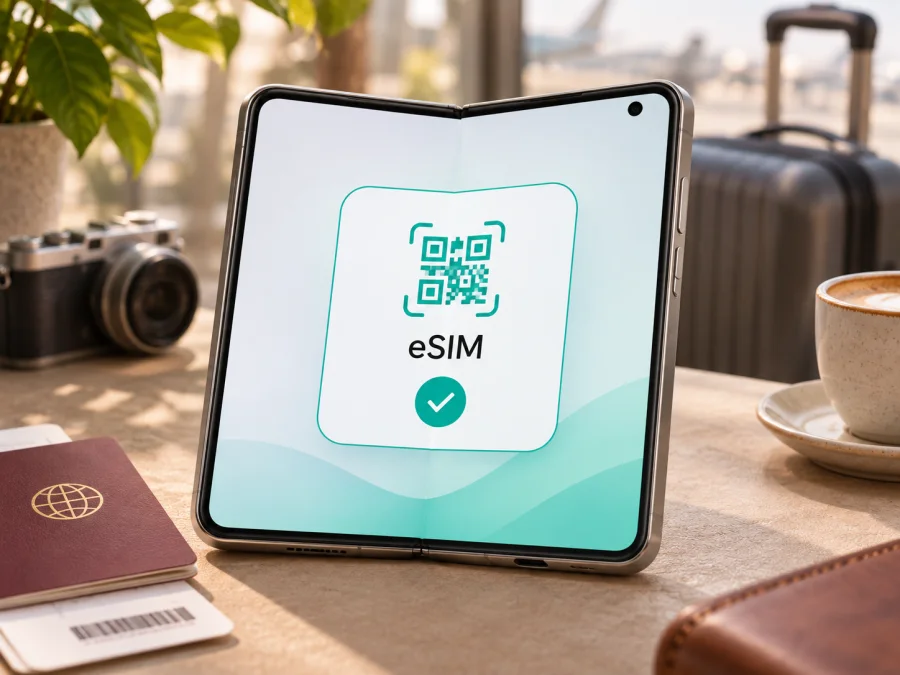
Google Pixel 10 Pro Fold 512GB eSIM: compatibility and setup
Quick answer: Google Pixel 10 Pro Fold 512GB supports eSIM. Google’s published specifications list the Pixel 10 Pro Fold with dual SIM: one nano-SIM and one eSIM; Google also lists 512 GB as a storage option. The storage capacity does not change eSIM capability. You can add a travel eSIM for mobile data, subject to the phone being unlocked, the eSIM provider supporting the device and destination, and the exact regional version being eligible.
A device can support eSIM yet still be unable to activate a particular plan because of a carrier lock, operator restrictions, local network compatibility, or account requirements. Check your exact handset and plan before purchase.
Does Google Pixel 10 Pro Fold 512GB support eSIM?
Yes. Google’s official specifications for Pixel 10 Pro Fold identify the SIM configuration as Dual SIM (Single Nano SIM and eSIM). Google also lists 512 GB as one of the available storage capacities for this model. That confirms eSIM capability for the named 512GB configuration: “512GB” describes internal storage; it does not indicate a different SIM type.
The practical answer is therefore yes, the Google Pixel 10 Pro Fold 512GB has eSIM support, with an important qualification: mobile operators decide whether they support eSIM activation on a particular phone and whether the phone can register on their network. A seller may also supply a carrier-locked unit. Check the device in Settings and confirm its lock status before relying on it for a trip.
| Item | What to know |
|---|---|
| Device variant | Google Pixel 10 Pro Fold 512GB |
| eSIM | Supported according to Google’s Pixel 10 Pro Fold specifications |
| Physical SIM | Google lists one nano-SIM alongside eSIM for the Fold |
| Storage | 512 GB; this is a storage configuration, not a separate eSIM edition |
| SIM use | Dual SIM features depend on device software and operator support |
| Travel data | A compatible travel eSIM can be selected for mobile data if the phone is unlocked and the plan supports it |
| Main checks | EID, “Add SIM” / “Set up an eSIM” in Settings, carrier lock, destination and plan conditions |
Regional and carrier versions
The Pixel 10 family does not have one identical SIM arrangement in every market. Google’s guidance for US Pixel 10 devices says the Pixel 10, Pixel 10 Pro, and Pixel 10 Pro XL are eSIM-only, while explicitly excluding the Pixel 10 Pro Fold from that restriction. Google’s Fold specifications list one nano-SIM and eSIM. This distinction matters: do not assume that a SIM rule for another Pixel 10 model applies to the Fold.
The model name and 512 GB capacity alone do not identify the exact country SKU, carrier firmware, or lock status. Network bands and 5G availability also vary by model and operator. Before buying a used, imported, or carrier-sold device, ask the seller for the exact model number and sales region, and check whether it is SIM-unlocked. Google explains that a phone bought from a mobile operator may be locked to that operator until it is unlocked or the contract conditions are met. An eSIM profile cannot bypass such a lock.
An unlocked phone may still need operator-side eSIM provisioning. Some operators require an eligible account, an activation through their own app or support team, or a specific device identifier. Dual SIM behavior, including whether two eSIM profiles can be active together, can depend on the operator and software. For a trip, the useful question is not only “Does this phone have eSIM?” but also “Can this exact phone activate this plan and use a supported network where I am going?”
Check the EID and eSIM settings before you buy
An EID is an identifier associated with the phone’s eSIM hardware. Google documents a direct way to find it on a Pixel. The presence of an EID is a useful compatibility check, but it does not prove that a particular carrier or travel plan will activate. Confirm both the identifier and the add-eSIM menu, then verify that the phone is unlocked.
- Open Settings. Use the Settings app on the Pixel.
- Find the EID. Tap About phone, then SIM status, and look for EID. Menu labels can vary slightly with Android version or language.
- Check the box if needed. Google notes that the EID may also be printed on the phone’s box. Keep the number private and share it only with a provider that needs it for activation.
- Look for eSIM setup. Go to Network & internet → SIMs → Add SIM. The available flow may be labelled Set up an eSIM or similar.
- Check the lock status. If the phone came from an operator, ask that operator or the seller whether it is unlocked and whether third-party eSIMs are allowed.
- Confirm plan eligibility. Check that the provider supports Pixel eSIM activation, that the plan covers your destination, and that your phone’s model and network bands are suitable.
Use this quick checklist before selecting a package:
- [ ] The device shown in Settings is Google Pixel 10 Pro Fold 512GB or the exact Pixel 10 Pro Fold variant you own.
- [ ] An EID is visible under Settings → About phone → SIM status.
- [ ] Add SIM or Set up an eSIM appears under Settings → Network & internet → SIMs.
- [ ] The phone is SIM-unlocked, or the selling operator confirms that it will accept your intended eSIM.
- [ ] The provider confirms compatibility with this phone and the eSIM is available for your destination.
- [ ] You have Wi-Fi or another internet connection available while installing the profile.
- [ ] You understand the plan’s coverage area, data amount, validity period, activation timing, and any restrictions.
Keep in mind that compatibility has several layers. The EID and setup menu help confirm that the phone can store an eSIM profile. They do not confirm that the handset is unlocked, that a provider accepts its IMEI, or that a network in your destination supports the phone’s bands. If you are buying an imported or second-hand device, ask the seller to show these settings on the actual handset rather than relying on a generic product listing. Check the written return or unlock conditions before purchase, too.
Check your device compatibility before you choose a plan. The checks above are especially important for imported and carrier-sold phones, even when the general model specification confirms eSIM support.
How to install and activate an eSIM
Install the profile while you have reliable Wi-Fi. Keep your confirmation email, QR code, or in-app installation details available on another screen if you need to scan the code. Many QR activation codes are single-use; do not delete an installed profile or scan the same code repeatedly unless the provider says it can be reissued. If your phone offers direct installation from a provider app, follow that provider’s on-screen flow.
For a step-by-step visual walkthrough, see the Android eSIM installation instructions. The iOS eSIM installation instructions are for iPhone users; they are included for readers setting up another device, not as the steps for this Pixel.
Add the eSIM from Android Settings
- Connect to Wi-Fi. Keep the phone online during profile download and activation.
- Open the SIM settings. Go to Settings → Network & internet → SIMs.
- Start adding a SIM. Tap Add SIM, then choose Set up an eSIM or the available download option.
- Choose the provider flow. Follow the instructions shown on the phone. If asked, select the provider for the eSIM you are adding.
- Scan the QR code or enter details. Hold the code on another device in the camera frame. If QR scanning is unavailable, use the manual activation details supplied by the provider.
- Download the profile. Confirm the plan details and let Android complete the installation. Do not close Settings or disconnect from Wi-Fi during download.
- Name the SIM. Choose a label such as “Travel data” so you can distinguish it from your home SIM.
- Choose defaults carefully. When prompted, decide which SIM should handle calls, messages, and mobile data. Keep your home line selected for calls or texts if you need it, and select the travel eSIM for data when you are ready to use the plan.
- Wait for activation. Follow any provider instructions and allow a few minutes for the profile to register. The phone may need to refresh its connection or restart.
Pixel menu names can change between Android releases, carrier builds, or languages. If the settings offer a provider-assisted installation instead of a QR scan, use that supported route. Do not select a random operator from a list if it does not match the provider that issued the plan.
Installation and first use are separate decisions
Adding a profile to the phone does not always mean that you need to use it immediately. Read the plan’s activation terms before installation: an eSIM may begin its validity period at purchase, at installation, on a scheduled date, or when it first connects to a supported network. These rules depend on the selected plan. If you want to install at home but use data only after arrival, disable the travel line or leave it off for mobile data until the plan’s instructions say to turn it on.
Use Google Pixel 10 Pro Fold 512GB for data while travelling
A travel eSIM is a digital SIM profile that can provide mobile data through a supported local network. It is useful when you want to prepare connectivity before departure or avoid searching for a physical SIM after arrival. It does not automatically replace your usual phone number. Unless the individual plan specifically says otherwise, assume that a travel data plan does not include ordinary voice calls or SMS. You can continue to use messaging and calling apps over data, subject to their own account and service requirements.
Before you set off, compare the plan’s destination coverage with your itinerary. A single-country plan may not cover a border crossing, layover, or every territory on a multi-stop trip. A regional plan may be more convenient for several destinations, but read the list of covered places rather than relying on the plan name alone. Also compare the data amount and validity with how you actually use maps, transport apps, messaging, video calls, and uploads.
Kaspersky eSIM Store is an app and website where you can choose, arrange, and activate an eSIM with a mobile-data plan for an overseas trip. To review currently available destinations and plan terms, browse the Kaspersky eSIM Store. Check the plan’s specific coverage, data allowance, validity, and activation rules before purchase; availability and terms can change.
At your destination:
- Turn on the travel eSIM line in Settings → Network & internet → SIMs.
- Choose that line as the SIM for mobile data.
- Enable data roaming for the travel line only if its instructions require it.
- Keep the home SIM’s data roaming off if you do not want it to use mobile data abroad; confirm any call, text, or roaming charges with your home operator.
- Turn Airplane mode off, then wait for the eSIM to connect to an available supported network.
- Open a simple webpage or messaging app to confirm data works, and check the plan’s account page for usage details.
Common eSIM problems and checks
The QR code will not scan
Increase the brightness on the screen showing the code and move it until the Pixel camera can focus. Check that the full code is visible and that it belongs to the plan you selected. If it is shown on the Pixel itself, open it on another screen. If scanning continues to fail, use the provider’s manual setup details or ask for help; do not repeatedly retry a single-use activation code.
Android cannot add or download the profile
Check that Wi-Fi is working and that the phone has the latest available system update. Confirm that the EID appears, the profile has not already been installed, and the operator or provider permits activation on this device. If Android shows an error, note the wording and time, then contact the provider that issued the plan. Do not remove a working eSIM as an initial troubleshooting step; deleting it may require a new activation code.
The eSIM appears installed but has no service
Confirm that the travel SIM is switched on and selected for mobile data. Check that Airplane mode is off, restart the phone, and wait for network registration. In the travel eSIM’s settings, enable data roaming only if the provider requires it. Verify that the plan has started, is valid for the country you are in, and has data remaining. If available, use automatic network selection first. If the provider gives manual network instructions, follow them exactly.
Mobile data works on the wrong SIM
Open Settings → Network & internet → SIMs and review the setting for mobile data. Android can keep the home SIM as the default even after a travel eSIM has been installed. Select the travel profile for mobile data, and check that the home line’s data roaming is off if that is your preference. Calls and SMS can remain assigned to another SIM; changing the data SIM does not necessarily change call or message defaults.
The phone says the SIM or plan is unsupported
Check whether the phone is locked to the original operator and ask that operator about unlocking eligibility. Confirm that the plan provider accepts your model and that the local carrier supports eSIM activation for it. A phone can have an EID and still be rejected by a carrier’s eligibility checks. For 5G, the phone, plan, local operator, and regional model must all support the same network bands; otherwise the phone may use another available network technology or may not connect.
Data does not work after landing
Check that the eSIM is on, selected for mobile data, and allowed to roam if required by the plan. Confirm the destination, validity, and remaining data in your account. Toggle Airplane mode briefly, move to a place with better reception, and restart if needed. If the phone still does not connect, contact the provider with the status shown in SIM settings and the exact error message.
Frequently asked questions
Can Google Pixel 10 Pro Fold 512GB use an eSIM and a physical SIM?
Yes. Google’s specifications list one nano-SIM and one eSIM for the Pixel 10 Pro Fold. Whether both lines can be used together, and what functions each line can use, depends on software and operator support.
Does the 512 GB version have different eSIM support from the 256 GB version?
Google lists storage capacity separately from the SIM configuration. The 512 GB number describes internal storage; it is not a different eSIM edition. Always confirm the exact device in Settings and check its EID and carrier-lock status.
Can I use two eSIM profiles at the same time?
Google says Pixel 7 and later phones can use two eSIM profiles at once when the operator supports the feature. The exact options shown on your Fold can depend on its software and carrier. Check with the operator if simultaneous active eSIMs are essential to your setup.
Does a travel eSIM give me a new phone number?
Usually a travel data plan is for mobile internet only. Do not expect a regular number, voice calls, or SMS unless the plan’s terms explicitly include them. Internet calling and messaging apps can work over data, depending on their own requirements.
Should I install the profile before I leave?
You can install it in advance if the plan allows it and you have Wi-Fi, but first check when validity begins. If the plan starts on installation or purchase, installing early may use part of its validity before the trip. Follow the provider’s activation instructions and leave the travel line off until you need it if the plan permits this.
What if I cannot find the EID?
Check Settings → About phone → SIM status and the device box. Confirm that Android is up to date and that the phone is the stated model. If there is still no EID or eSIM setup option, ask the seller or Google to inspect the exact handset before you purchase a plan.
Will eSIM work on a carrier-locked Fold?
Not necessarily. A carrier-locked phone may reject a profile from another provider even when the device has eSIM hardware. Ask the original operator whether the phone is unlocked and whether the lock applies to eSIM as well as physical SIMs.
Is eSIM coverage guaranteed everywhere I travel?
No. The device’s eSIM support only means it can store and use a compatible profile. Coverage, network availability, and speed depend on the plan, local operator, regional device model, and location. Review the specific destinations and conditions before purchase.
Before your trip: check the phone, then choose the plan
Google Pixel 10 Pro Fold 512GB supports eSIM according to Google’s published specifications. The model’s 512 GB storage capacity does not change that support, and Google lists a nano-SIM alongside eSIM for the Fold. Your own activation still depends on an EID being present, a working eSIM setup menu, an unlocked phone, and the operator’s ability to activate the plan on your exact regional version.
Before you buy, confirm the handset in Settings, check the EID, and verify the carrier lock and destination support. Then choose a plan based on the countries on your route, the data you expect to use, and the validity period. Kaspersky eSIM Store can help you browse current options and arrange an eSIM plan for mobile data abroad; the plan’s own terms determine where and when it works. A few checks at home make it easier to install the profile calmly and know which SIM to use when you arrive.


