Travel connectivity guide
Google Pixel 10 Pro XL 12GB RAM eSIM
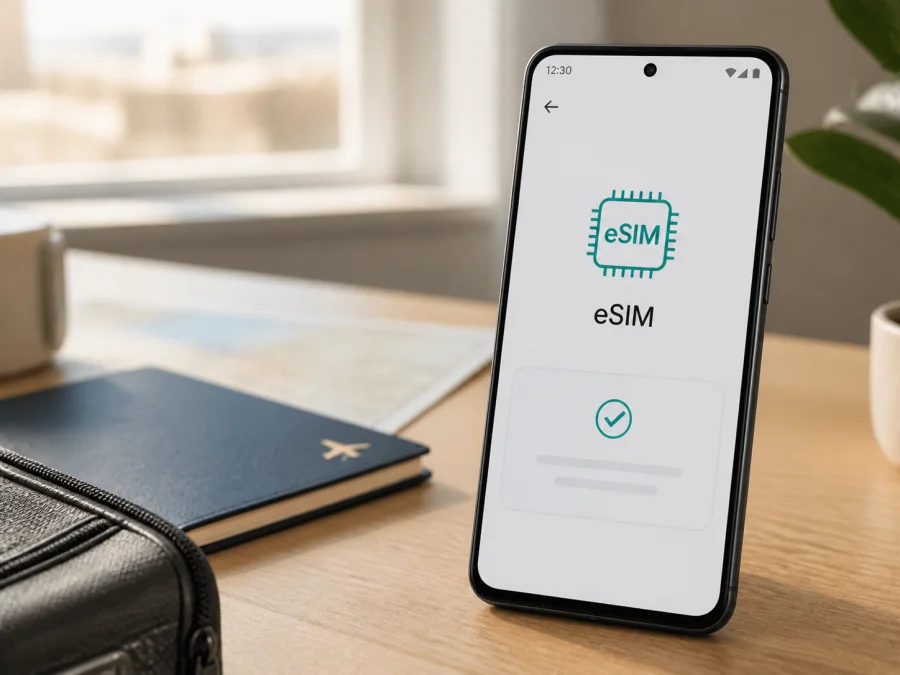
Google Pixel 10 Pro XL 12GB RAM eSIM: compatibility and setup
If you are preparing for an international trip and looking at the Google Pixel 10 Pro XL 12GB RAM, eSIM can help you arrange mobile internet without replacing your usual SIM. A digital SIM profile is downloaded to the phone, so you can keep your main number available while using a travel eSIM for data where the selected plan is valid.
The short answer is yes: the Google Pixel 10 Pro XL family supports eSIM. The exact SIM arrangement still depends on the market, sales channel, carrier and software on the particular phone. That matters for a listing called Google Pixel 10 Pro XL 12GB RAM because Google’s current published Pixel 10 Pro XL specifications show 16GB RAM. The 12GB RAM wording may be a retailer description, a regional listing or a catalogue error. It is not proof of a separate eSIM hardware version. Before buying a plan, verify the exact model, EID, SIM menu and carrier-unlock status.
What the eSIM answer means for this exact listing
Google’s official Pixel specifications identify eSIM support for the Pixel 10 Pro XL, and Pixel Help says that a Pixel needs an EID to use eSIM. The memory label remains part of the search phrase and is kept exactly as supplied. However, 12GB RAM is not one of the capacities shown in Google’s current Pixel 10 Pro XL specifications. If the phone is advertised as Google Pixel 10 Pro XL 12GB RAM, compare its box SKU and About phone details; resolve any mismatch before purchasing.
Quick specification check
| Item | What to expect | Why it matters |
|---|---|---|
| Device listing | Google Pixel 10 Pro XL 12GB RAM | The complete name must match the phone offered to you. |
| eSIM | Supported by the Pixel 10 Pro XL family | The handset must still show an EID and eSIM setup route. |
| RAM label | The listing says 12GB RAM; Google’s current specs show 16GB RAM | A mismatch can indicate a seller or market listing issue. |
| SIM arrangement | One nano-SIM plus eSIM in some markets; eSIM-only in others | The regional version changes how you keep your home line. |
| Two eSIM profiles | Possible on eligible phones when the carrier allows it | Operator support and regional configuration apply. |
| 5G | Supported by the Pixel 10 Pro XL family | 5G access depends on model, bands, plan and local network. |
| Lock status | Must permit the intended mobile service | A carrier lock can reject another eSIM. |
Regional and carrier differences
Pixel phones are not configured identically in every country. Google’s current help guidance says Pixel 10 and later phones sold in the United States, except Pixel 10 Pro Fold, can use eSIM only. Other regional specifications may describe one nano-SIM plus eSIM, while Japan can have a dual-eSIM arrangement. An eSIM-only phone has no physical SIM fallback, so check the sales market.
The operator can matter as much as the market. Google says two eSIM profiles can be used at once on eligible devices only when the operator allows it. A carrier may request IMEI, IMEI 2 or EID, restrict activation to its sales channel or require an unlocked phone.
The 12GB RAM label does not answer these questions. RAM is a memory description; it does not reveal whether the phone is a US eSIM-only unit, an international nano-SIM plus eSIM unit or another regional configuration. Check the box, model identifier, country of sale, SIM tray and Settings app together. If the seller cannot provide a precise SKU or the phone shows no EID, treat the device as unverified for a travel eSIM.
How to check compatibility before you pay
Use the exact handset whenever possible. A product title can contain the wrong RAM value or omit a regional suffix; the Settings app shows whether eSIM is present.
Find the EID
- Open Settings.
- Tap About phone.
- Open SIM status.
- Look for EID.
Google describes EID as the identifier needed for eSIM use. It may also be printed on the box. Keep it private and share it only through a secure activation flow or with support.
Look for eSIM setup
- Open Settings.
- Tap Network & internet.
- Tap SIMs.
- Tap Add SIM.
- Look for Set up an eSIM or similar wording.
Labels can change with Android updates and language settings. The important signs are an EID and a working route for adding a SIM digitally. If both are missing, restart the phone, install available updates and check the model again. If the option remains absent, ask the seller or carrier to confirm the regional model rather than assuming a reset will add eSIM hardware.
Compatibility checklist
- [ ] The handset is the exact Google Pixel 10 Pro XL 12GB RAM listing, with its model or SKU recorded.
- [ ] The 12GB RAM description has been compared with About phone and any mismatch is understood.
- [ ] An EID is visible in Settings → About phone → SIM status or on the box.
- [ ] Settings → Network & internet → SIMs → Add SIM shows an eSIM setup route.
- [ ] The phone is SIM-unlocked, or its carrier has confirmed another eSIM can be added.
- [ ] The chosen plan is valid in the country, region or route of the trip.
- [ ] Data allowance, validity period, activation conditions and top-up rules fit the journey.
- [ ] Wi-Fi or another working internet connection is available for download.
- [ ] You know whether the eSIM is data-only and have planned for ordinary calls and SMS if needed.
Before selecting a plan, check your device compatibility. This matters especially for an imported Pixel or a handset whose memory description does not match Google’s current specification.
<a id="kesim-device-compatibility"></a>
Choosing an eSIM for a trip
After the device check, use the Kaspersky eSIM Store app or website to choose an eSIM, complete the order and activate a suitable mobile-internet plan for an international trip. Destination, package size, duration and price depend on the selected direction and displayed terms. Confirm that a single-country or regional plan includes the whole route. Match the allowance to your usage: video calls, streaming, photo backup and hotspot use consume data faster than navigation or messaging. Read when validity starts because installation, profile activation and data use are not always identical; ask support if unclear.
In this travel scenario, eSIM is intended for mobile internet. It does not automatically provide a telephone number, voice calls or SMS unless the selected plan says otherwise. Keep the home SIM for calls and texts, use messaging apps over data and check home-carrier roaming charges before leaving its data enabled.
How to install and activate eSIM on Google Pixel 10 Pro XL 12GB RAM
Use reliable Wi-Fi for installation and keep the QR code or activation details on another screen. Do not delete an existing eSIM until you know whether it can be reissued.
Step 1. Prepare the phone
Charge the Google Pixel 10 Pro XL 12GB RAM, unlock it and install available Android updates. Confirm the EID and eSIM menu. Keep Wi-Fi on because the profile must be downloaded.
Step 2. Open the SIM settings
Open Settings, choose Network & internet, then SIMs, Add SIM and Set up an eSIM. This is Google’s current Pixel route. Android version and language can change the labels, but the route remains within mobile network and SIM settings.
Step 3. Add the profile
Follow the on-screen instructions. Scan the plan’s QR code when Android asks for it, or use the supported manual-entry or in-app method. Wait while the profile downloads; the process can take several minutes.
For the device-specific flow, see the Android installation instructions. The iOS installation instructions are for Apple devices, but can help someone assisting you from an iPhone.
Step 4. Name and enable the line
Give the profile a clear name such as Travel data or the destination. Select the new eSIM and enable Use this SIM. If two lines are installed, keep the home SIM as default for calls and SMS if needed, and choose the travel eSIM under Mobile data.
Only one SIM can normally be the default data line. Recheck it after every SIM change. Turn off home-line mobile data or verify that automatic data switching cannot move data back to the home SIM.
Step 5. Set data roaming when required
Some travel plans require Roaming or Data roaming for the eSIM because it connects through a partner network. Enable it only for that eSIM and only when the plan requires it. Keep it off on the home SIM when your carrier could charge for roaming data.
Step 6. Test the connection
At the destination, turn on mobile data for the travel eSIM and wait for registration. Check the signal indicator, open a small webpage and send a message in a data-based app. If first network connection starts validity, run this test when you are ready to use the package.
Practical travel scenarios
Keep your home number available
Leave the home SIM enabled for calls and SMS, select the travel eSIM for data and turn off home-line data roaming. The usual number stays available while maps and messaging use the travel package; home-carrier charges may still apply.
Use a nano-SIM plus eSIM model
On a regional version with one physical SIM and one eSIM, keep the home number on the nano-SIM while the travel profile handles data. Two active lines or two eSIMs depend on the phone and carrier. A SIM tray alone is not enough; check the EID.
Troubleshooting eSIM problems
No “Set up an eSIM” option
Check About phone → SIM status for the EID, install updates and restart. Confirm that the handset is the Pixel 10 Pro XL variant shown by the seller. If the EID and menu are absent, ask the seller or carrier to confirm the regional model.
QR code will not scan
Use stable Wi-Fi, raise the brightness on the screen showing the code and hold the Pixel at a comfortable distance. Confirm the code belongs to the intended plan and has not been used. Use manual entry if offered, and do not reinstall repeatedly unless the plan permits it.
Profile downloads but does not connect
Open Settings → Network & internet → SIMs, select the travel eSIM and verify Use this SIM and Mobile data. Check roaming, toggle airplane mode once and confirm destination, validity and unlock status.
Data works but calls or SMS do not
That can be expected from a travel data eSIM. Check the plan conditions, keep the home SIM for ordinary calls and texts, or use messaging apps over data. An eSIM is not automatically a voice line.
SIM or activation error
Record the message and check EID, IMEI and carrier-lock status. Connect to Wi-Fi, update Android and retry once. If the problem persists, contact the operator or the travel service’s support channel with order details. Avoid a factory reset first because it erases data and may not solve a regional restriction.
Frequently asked questions
Does Google Pixel 10 Pro XL 12GB RAM support eSIM?
Yes, the Pixel 10 Pro XL family supports eSIM according to Google’s current specifications and Pixel Help guidance. For this exact 12GB RAM listing, verify EID and the eSIM setup menu because Google’s current published configurations show 16GB RAM. Resolve the memory mismatch with the seller or carrier before purchase.
Does eSIM give me a normal phone number?
Not automatically. In the Kaspersky eSIM Store travel scenario, the eSIM is intended for mobile internet, and ordinary calls or SMS are not included unless the selected plan expressly says so. Use the home line or a messaging app over data.
Can I install it before travel?
Often yes, when the plan allows it and Wi-Fi is available. Keep the profile off or do not select it for data until appropriate, and read the validity terms because network connection may start the package.
Conclusion
The Google Pixel 10 Pro XL 12GB RAM listing points to an eSIM-capable Pixel 10 Pro XL family, but the name alone cannot verify the exact handset. Regional SIM design, carrier permission, software, device lock and the seller’s RAM description can all affect the result. Google’s current official specifications identify eSIM support for the family and show a 16GB RAM configuration rather than 12GB; treat that difference as a reason to verify the SKU, not as a reason to invent a variant.
Kaspersky eSIM Store is an app and website where you can choose, order and activate an eSIM with a suitable mobile-internet plan for an international trip. Destination, allowance, validity and roaming requirements come from the selected plan and associated mobile networks. Kaspersky eSIM Store is not a mobile operator, network owner or mobile-internet provider.
Final device check and travel eSIM choice
Before buying a travel plan, complete this sequence:
- Confirm the exact Google Pixel 10 Pro XL 12GB RAM device, model or SKU and sales region.
- Find the EID in Settings → About phone → SIM status.
- Confirm that Add SIM → Set up an eSIM is available.
- Check that the phone is unlocked and the intended plan is accepted for this regional configuration.
- Match destination, data allowance, validity and activation rules to the trip.
- Install over Wi-Fi, select the travel eSIM for data and enable roaming only if required.
- Keep home-line data roaming off when you want to avoid unintended home-carrier data use.
When these checks are complete, choose an eSIM in the Kaspersky eSIM Store app or website for the country, region or route of the trip. Review the displayed terms before completing the order, then follow the Pixel activation steps. If the EID, eSIM menu, RAM label or carrier status does not match the listing, resolve that discrepancy first and only then select the travel eSIM plan.