
Travel connectivity guide
Jalalabad eSIM for Mobile Internet
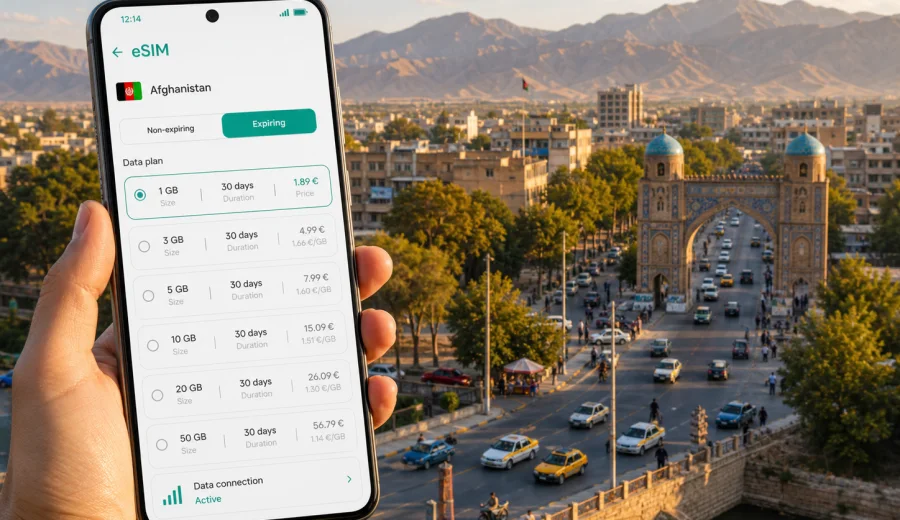
Jalalabad eSIM: mobile connection and internet for a practical city trip
Jalalabad is a city where reliable mobile internet changes the way a trip feels from the first hour. It helps you confirm a driver, share your hotel location, translate short messages, check a route toward the city center, and keep in touch with colleagues or family while plans move quickly. For many visitors, the main challenge is not finding a perfect travel app. It is getting online at the right moment without depending only on hotel Wi-Fi, a local SIM counter, or a colleague's hotspot.
An eSIM can make that first step easier. Instead of handling a physical SIM card after arrival, you prepare a digital SIM profile on a compatible phone and use a data plan for your trip. In Jalalabad, that matters because movement may include road transfers, hotel check-ins, business meetings, local markets, university areas, medical or NGO-related appointments, and short trips outside the city. Your phone becomes the practical tool that keeps addresses, maps, messages, ride coordination, and payment confirmations in one place.
This guide explains how to think about eSIM, mobile connection, and internet use specifically for Jalalabad: what to prepare before departure, where data is most useful in the city, how much traffic to plan for, what to check on your device, and how Kaspersky eSIM Store can help you choose, arrange, and activate an eSIM with a suitable data plan for travel in Afghanistan.
Why mobile internet matters in Jalalabad
Jalalabad is not a city where every travel task happens in one predictable place. Your day may start with a road arrival from Kabul, continue with a meeting near a hotel or office, move through busy commercial streets, and end with a family or team call once you are back indoors. Even if you have hosts on the ground, mobile data gives you more control over the small details that make travel smoother.
You may need internet in Jalalabad for:
- sending your live location to a driver or contact;
- checking the address of a hotel, office, clinic, campus, or guesthouse;
- translating short messages when names and landmarks are written differently;
- using maps before you start moving, then saving key locations offline;
- checking traffic or route changes before a road transfer;
- confirming meeting times through messengers;
- keeping boarding, booking, and identity documents accessible in cloud storage;
- sharing updates with your office, family, or travel coordinator.
The main value of an eSIM is continuity. You can prepare it before the trip, install it on a compatible device, and activate the data plan according to the conditions shown for the selected tariff. That does not remove the need to check coverage, device support, or local travel conditions, but it reduces one common source of friction: searching for mobile data only after you need it.
Arrival scenarios: where an eSIM helps first
For Jalalabad, many itineraries are built around road movement and coordinated arrivals. Some travelers enter the city from Kabul, some arrive from other parts of eastern Afghanistan, and some visit Jalalabad as one stop in a longer work route. The exact path can change, so it is better to prepare for the communication tasks that appear in most arrivals.
| Arrival moment | What mobile data helps with | Practical tip |
|---|---|---|
| Before leaving for Jalalabad | Confirming departure time, meeting point, and driver details | Save phone numbers and addresses before you start moving |
| On the road | Sharing location, checking messages, using offline maps with online updates when available | Download maps and documents in advance, then use data for updates |
| At the city edge | Confirming the final drop-off point and hotel name | Keep the address in English and local spelling if available |
| At check-in | Receiving codes, opening booking details, messaging your host | Do not rely only on hotel Wi-Fi for first access |
| First city movement | Comparing route options and sharing your destination | Pin the hotel and the next meeting place on your map |
If your route includes an airport segment elsewhere in Afghanistan or a managed transfer into Jalalabad, the same logic applies: the most important internet window is often the transition between the arrival point and the first trusted indoor connection. Having mobile data ready can help you avoid a chain of small delays.
City movement: hotels, offices, markets, and districts
Jalalabad's daily rhythm is practical and local. Visitors are often moving between accommodation, administrative offices, project sites, university or hospital areas, markets, and private meetings. A city-focused data plan is useful because you may not spend your day in tourist zones with predictable Wi-Fi. You may be in a car, waiting outside a building, moving between contacts, or checking details in a place where a public connection is not available.
Use mobile internet before you leave your hotel for three quick checks:
1. Confirm the exact destination with your contact.
2. Save the destination and return route in your map app.
3. Send your expected arrival time to the person waiting for you.
This simple routine is especially useful in Jalalabad because addresses can be described through landmarks, road names, neighborhoods, and local references. A data connection lets you compare what is written in a message with what your driver or contact says in the moment. It also helps when a meeting changes from one location to another with little notice.
For hotels and guesthouses, eSIM is not a replacement for Wi-Fi. It is the backup layer. Hotel Wi-Fi may be enough for large downloads, calls, and evening work, while mobile data is better for movement, arrival, and quick checks. If you need to work from a laptop, check whether your selected eSIM tariff allows hotspot use and whether your phone supports it on the active eSIM profile.
How much data to plan for Jalalabad
The right data volume depends on what you do in the city. A short business visit with messaging and maps needs much less traffic than a field visit with video calls, cloud backups, and hotspot use. Before choosing a tariff, think in scenarios rather than guessing.
| Trip style | Typical data needs | What to watch |
|---|---|---|
| One-day stopover | 1-2 GB may be enough for maps, messages, email, and ride coordination | Avoid video streaming and large app updates |
| Two to four days | 3-5 GB suits regular messaging, maps, light browsing, and occasional calls | Download documents on Wi-Fi when possible |
| Work visit | 5-10 GB is safer if you use cloud files, calls, and hotspot sessions | Check hotspot rules in the selected tariff |
| Long or flexible stay | 10 GB or more can give more room for changing plans | Track remaining balance and validity period |
Video calls, automatic photo backups, cloud sync, app updates, and high-resolution media can use data quickly. For Jalalabad, where travel days may involve long road movement or waiting time, it is easy to spend more data than expected if background apps stay active. Turn off automatic updates over mobile data, download offline maps in advance, and keep streaming for Wi-Fi.
Preparing your phone before the trip
The most important eSIM step happens before you buy a data plan: you need to confirm that your device supports eSIM and is not restricted in a way that prevents using another mobile profile. Not every phone model, regional version, or carrier-locked device works the same way. Before you choose a tariff, check your device and make sure you can add and use an eSIM profile.
Use this quick checklist:
- Your phone supports eSIM.
- The device is not locked to one carrier.
- You know where mobile data, roaming data, and SIM selection settings are located.
- Your primary SIM can stay active for calls or messages if needed.
- You have enough battery and storage for setup.
- You can access email or the app account used for purchase and activation.
- You have stable Wi-Fi available for installation before departure or at your accommodation.
An eSIM data plan usually focuses on mobile internet. It may not include a local phone number, ordinary voice calls, or SMS unless this is stated in the tariff conditions. For calls and messages in Jalalabad, many travelers use internet-based messengers. Keep your main SIM active if you still need bank codes, work verification messages, or calls on your usual number.
When to install and activate your eSIM
Installation and activation are not always the same step. You can often install the eSIM profile while you have stable Wi-Fi, then activate or start using mobile data according to the selected tariff's rules. Read the conditions before you travel, especially the validity period and when it starts.
For setup guidance, follow the official installation pages for your device: Android instructions and iOS instructions. The exact menu names can vary by phone model and operating system version, so complete the setup calmly before you are in a car, at a hotel desk, or outside a meeting.
A practical sequence for Jalalabad:
1. Check device compatibility before purchase.
2. Choose Afghanistan as the destination and compare data volume and validity.
3. Install the eSIM profile on stable Wi-Fi.
4. Keep your main SIM available if you need calls or SMS.
5. Before arrival or before city movement, select the eSIM for mobile data.
6. Enable data roaming for the eSIM if the instructions or tariff conditions require it.
7. Test a light webpage or messenger message before you leave your trusted connection.
When you are ready to prepare mobile internet for the city, you can choose a data plan for Afghanistan in Kaspersky eSIM Store and match it to the length of your Jalalabad itinerary.
Jalalabad travel situations where data is most useful
Jalalabad trips often involve coordination. A strong plan is not only about having a map; it is about being reachable when plans adjust. Mobile data is helpful in several common situations.
Road transfer from Kabul or another city
Road movement can make timing flexible. Use mobile data to keep your host updated, but prepare offline as well. Save the route, contact numbers, hotel address, and meeting point before departure. If connectivity becomes weaker on parts of the route, your phone should still contain the information you need.
Business meetings and project visits
For work travel, mobile internet supports calendar changes, document checks, translator apps, and messenger calls. If you need to present files, download them before the meeting. If you need a laptop connection, test hotspot use in a low-pressure moment and keep the session short unless you have a large data package.
Hotels and guesthouses
Use Wi-Fi for heavy tasks, but keep eSIM data active for two moments: arriving before Wi-Fi access is available and leaving for the next appointment. This is also useful if Wi-Fi requires a code you receive through a messenger or email account.
Markets and central streets
Busy areas can be hard to navigate by written address alone. Save the name of the market, nearby landmark, and return point. Mobile data can help you send a pin, check a translated message, or call through a messenger without searching for a public network.
Trips from Jalalabad
Visitors may plan movement toward places such as Darunta, rural Nangarhar districts, or the road corridor toward Torkham depending on the purpose of travel and current local conditions. For trips outside the city, do not assume continuous high-speed data. Download maps, save contact numbers, keep your phone charged, and treat mobile internet as one part of the plan, not the only safety net.
Data-saving settings for a smoother visit
The easiest way to make a tariff last longer is to control background traffic. Before you start moving around Jalalabad, check these settings:
- disable automatic app updates on mobile data;
- pause cloud photo and video backups;
- download offline map areas on Wi-Fi;
- set messenger media downloads to Wi-Fi only;
- close navigation when you no longer need active route guidance;
- use low-data mode for video calls when available;
- avoid using hotspot for laptop updates;
- check data usage once per day during a longer stay.
If you travel with two SIM profiles, name them clearly in your phone settings, for example "Home SIM" and "Travel eSIM". Then select the travel eSIM for mobile data and keep your home SIM for calls or messages if needed. This reduces the chance of using the wrong line for data when you are tired after a transfer.
eSIM versus roaming and local SIM in Jalalabad
There is no single best option for every traveler. The point is to match the connection method to your route, phone, and need for control.
| Option | Best for | Possible limitation |
|---|---|---|
| eSIM data plan | Travelers who want to prepare mobile internet before or shortly after arrival | Requires a compatible, unlocked eSIM device |
| Standard roaming | Users who want to keep their home operator settings simple | Costs and data limits may be less predictable |
| Local physical SIM | Longer stays or users who need local calling options | Requires local purchase steps and a physical SIM slot |
| Hotel Wi-Fi | Heavy downloads, laptop work, evening calls | Not useful during city movement or transfers |
For many Jalalabad visitors, eSIM works best as a practical travel data layer. It helps with maps, messaging, work coordination, and online access during movement. It does not replace every communication method, and the selected tariff conditions still matter: data volume, validity, destination coverage, hotspot support, and activation rules should all be checked before purchase.
A work-trip checklist for Jalalabad
For a business, NGO, academic, medical, or project visit, prepare your phone as part of your travel kit.
- Save contacts in more than one messenger if appropriate.
- Store hotel, office, and driver details offline.
- Keep PDF copies of bookings and invitation details on the device.
- Use cloud storage, but also keep key files downloaded.
- Set a daily data limit alert if your phone supports it.
- Carry a power bank for long road movement.
- Confirm whether your eSIM tariff allows hotspot use.
- Keep your main SIM available for verification messages.
The goal is not to use mobile data for every task. The goal is to stay able to act when the next step depends on a message, a map, a document, or a contact.
Common mistakes to avoid
The most common eSIM mistakes are easy to prevent:
- Buying before checking device compatibility.
- Installing the eSIM only after leaving stable Wi-Fi.
- Forgetting to select the eSIM as the mobile data line.
- Leaving background backups active on mobile data.
- Assuming a data-only eSIM includes ordinary calls or SMS.
- Not checking when the validity period starts.
- Relying on hotspot use without checking tariff conditions.
- Deleting an eSIM profile without understanding whether it can be reinstalled.
If something does not work immediately, do not repeatedly delete and reinstall the profile. First check the selected data line, roaming data setting for the eSIM, airplane mode, APN instructions if provided, and whether the plan is active under its conditions.
FAQ: Jalalabad eSIM and mobile internet
Can I use an eSIM for maps in Jalalabad?
Yes, if your phone supports eSIM, the selected data plan is active, and local network conditions allow service where you are. Download offline maps before the trip so you still have basic navigation if the connection changes.
Does an eSIM give me a local Afghan phone number?
Usually, travel eSIM tariffs are focused on mobile internet. They may not include a local phone number, voice calls, or SMS unless this is clearly stated in the tariff conditions. Use internet messengers for calls when mobile data is available.
Should I install the eSIM before arriving in Jalalabad?
It is usually more convenient to install the eSIM profile while you have stable Wi-Fi before departure or at your accommodation. Check the plan rules so you understand when validity starts and when data becomes active.
Can I keep my usual SIM active?
In many dual-SIM phones, you can keep your usual SIM for calls or SMS and use the eSIM for mobile data. The exact setup depends on your phone model and carrier settings.
Is eSIM enough for trips outside Jalalabad?
It can help, but do not rely on mobile data as the only tool outside the city. Save maps, contacts, and documents offline. Coverage and speed can vary by location, terrain, network load, and selected tariff conditions.
Choose an eSIM data plan for Jalalabad
A good Jalalabad mobile internet plan is practical: enough data for maps, messages, route checks, work coordination, and the unexpected waiting time that comes with real travel. Before you buy, check your device, compare the data volume and validity period, and decide whether you need hotspot use for a laptop or tablet.
Kaspersky eSIM Store is an app and website where you can quickly choose, arrange, and activate an eSIM with a suitable data plan for mobile internet in a foreign trip. For a visit to Jalalabad, select Afghanistan as the destination, review the available tariff conditions, install the eSIM on a compatible device, and keep your connection ready for arrival, city movement, meetings, and the road back.
You can prepare an eSIM data plan for your trip to Jalalabad before you travel, then use it as your mobile internet layer while you move through the city.