
Travel connectivity guide
Montanita eSIM: Mobile Internet Guide
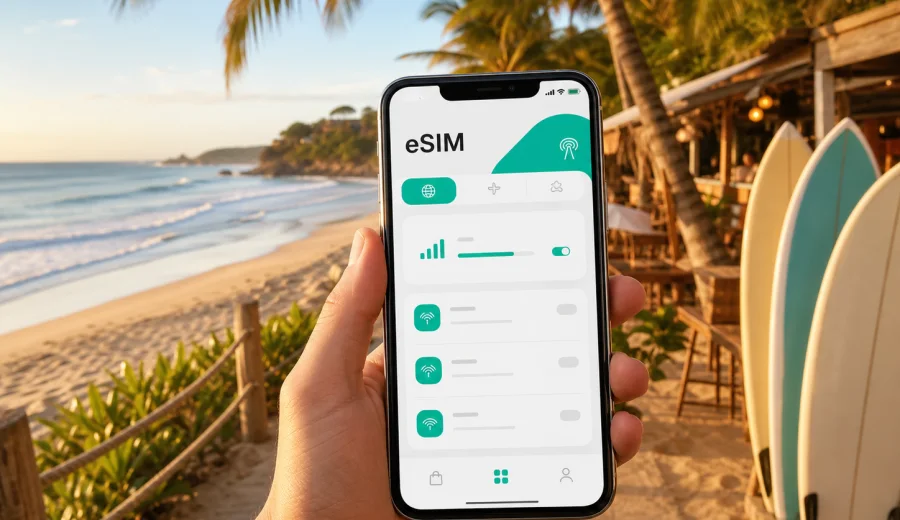
Montanita eSIM: mobile connection and internet for a smooth Ecuador beach trip
Montanita is one of Ecuador's easiest places to enjoy slowly and one of the hardest places to manage without reliable mobile internet. The town is small, informal and beach-focused, but your trip often depends on quick online decisions: checking a ride from Guayaquil, finding your hostel after dark, confirming a surf lesson, sending your location to friends, paying attention to tide and weather updates, or keeping work messages under control before you head back to the sand.
An eSIM helps you prepare mobile internet before you arrive in Ecuador, without looking for a physical SIM card after a long bus ride or negotiating data options in a shop. It is especially useful in Montanita because many useful travel moments happen outside a hotel lobby: on the beachfront, along the main streets, near surf schools, in nearby Olon, on a coastal bus route, or during a day trip along the Ruta del Sol.
This guide focuses on Montanita itself. It explains when mobile data matters, how to plan your eSIM setup, what to check before buying a tariff, and how much data different travelers may need for navigation, messaging, hotel work, surfing days, short stays and longer coastal routes in Ecuador.
Why mobile internet matters in Montanita
Montanita is compact enough to cross on foot, but it is not a place where you can assume that every task will be easy offline. Addresses may be informal, businesses can communicate through messaging apps, surf schools often coordinate by phone, and transport plans may change because of traffic, road conditions, weekends or holidays. A working mobile connection gives you more control without forcing you to depend on public Wi-Fi.
Mobile internet is useful in Montanita for:
- finding your hotel, hostel or apartment after arriving by bus or transfer;
- sharing your live location when meeting friends near the beach or main streets;
- checking surf forecasts, tide times and weather before lessons or board rental;
- using maps for nearby towns such as Olon, Manglaralto and Ayampe;
- confirming restaurant, activity and transport arrangements through messaging apps;
- working from a cafe, coworking-friendly hotel or rental when fixed Wi-Fi is unstable;
- keeping payment, banking, airline and booking apps available during the trip.
The town's travel rhythm is different from a business district or a major capital. You may spend most of the day walking, swimming or surfing, then suddenly need data for a practical task: a changed bus time, a hotel gate code, a video call, or a route to a quieter beach. Preparing an eSIM before the trip reduces that friction.
Arriving in Montanita: where data helps first
Most international travelers reach Montanita after arriving in Ecuador through Guayaquil, then continuing by road along the coast. Some travelers come from Quito, Cuenca or other Ecuador routes, but the final stage is still usually a bus, shared shuttle, private transfer or rental car. This makes the first useful moment for mobile internet happen before you even see the ocean.
During the arrival stage, mobile data helps you check:
- whether your driver or shuttle has sent an updated pickup point;
- how long the road journey may take;
- where your accommodation is located relative to the bus drop-off area;
- whether you should walk, take a local taxi or ask the hotel for pickup;
- whether late check-in instructions were sent by email or messenger;
- whether your bank, card and travel apps require confirmation.
If you land in Ecuador and immediately travel to Montanita, install the eSIM while you still have a stable home connection or airport Wi-Fi. Then activate it according to the tariff conditions and your device instructions. Some tariffs begin their validity period when they connect to a supported local network, while others may follow different conditions. Always check the tariff details before purchase.
For late arrivals, a prepared eSIM is particularly helpful. Montanita is relaxed, but the practical side of a night arrival still matters: streets can be busy near nightlife areas, lighting varies outside the center, and reception desks may rely on messages rather than formal 24-hour front desks.
Getting around town with a mobile connection
Montanita's central area is walkable. The beach, surf schools, cafes, bars, small shops and many hostels sit close together. That does not mean you will never need navigation. In a dense beach town, the problem is often not distance, but precision: which alley, which hostel entrance, which meeting point, which stretch of beach, or which local road toward a quieter stay.
Mobile internet helps with everyday movement in and around Montanita:
| Situation | Why data matters | Practical tip |
|---|---|---|
| Finding accommodation | Small hotels and hostels may be easier to locate with live maps | Save the address and a screenshot before arrival |
| Surf lessons | Meeting points can shift with tide, beach conditions or instructor schedule | Keep messaging apps available on mobile data |
| Evening plans | Groups often split between restaurants, beach bars and hostels | Share a live location instead of describing landmarks |
| Local errands | Pharmacies, ATMs, laundry and shops may not be obvious from the beach | Search nearby before walking in the heat |
| Day trips | Routes to Olon, Ayampe or nearby viewpoints need timing | Check transport options before leaving town |
Because the town is informal, your data needs are not only about maps. They are also about coordination. A small prepaid package can be enough for light messaging and maps, while travelers who upload beach videos, work remotely or rely on video calls should choose more data and a validity period that matches the full route.
Districts and travel zones to think about
Montanita is not a large city with formal districts, but travelers experience it in zones. Thinking this way helps you plan where mobile internet will matter most.
| Area | Typical traveler use | eSIM relevance |
|---|---|---|
| Beachfront | Surfing, sunset walks, restaurants, meeting friends | Messaging, weather, surf forecasts, photo backups |
| Town center | Food, nightlife, hostels, shops, tour desks | Maps, payments, ride coordination, group chats |
| Quieter edges | Guesthouses, apartments, longer stays | Route finding, calls through apps, backup when Wi-Fi drops |
| Olon and nearby coast | Day trips, calmer beach stays, food stops | Navigation, bus timing, mobile payments, translation |
| Road routes from Guayaquil | Arrival and departure transfers | Live maps, driver contact, booking confirmations |
If your accommodation is away from the central streets, do not rely only on memory after arrival. Save the location, keep the host's contact details available, and make sure your phone can connect to mobile data once you are outside Wi-Fi range.
Choosing an eSIM tariff for Montanita
Your ideal eSIM tariff depends on how you travel in Montanita. A weekend surfer, a remote worker and a backpacker moving up the coast do not use data in the same way. Before choosing, look at three practical variables: data volume, validity period and whether the destination covers Ecuador for your whole route.
Use this simple planning table:
| Traveler profile | Likely data use | What to prioritize |
|---|---|---|
| Short beach weekend | Maps, messaging, bookings, light browsing | Small or medium data package with enough days for arrival and return |
| Surf-focused stay | Forecasts, chats, photos, short videos | More data if you upload media away from Wi-Fi |
| Remote work stop | Email, calls, cloud tools, hotspot backup | Larger data volume and careful hotspot/tethering checks |
| Backpacking route | Buses, hostels, maps, translation, bookings | Validity that covers the whole Ecuador route |
| Family or group trip | Navigation, coordination, restaurant searches | Enough data for shared planning, but each phone needs its own setup |
Kaspersky eSIM Store is an app and website where you can choose, arrange and activate an eSIM with a suitable data tariff for mobile internet while traveling abroad. For Montanita, the relevant destination is Ecuador, so you can prepare mobile internet for your trip to Montanita before departure and review the available tariff details in advance.
Do not choose a tariff only by the headline data amount. Check the destination, validity period, activation rules, supported device requirements and any notes about tethering or network use. If you plan to spend time in Guayaquil before the coast, visit Olon after Montanita, or continue toward Ayampe, Salinas or Manta, choose based on the full Ecuador itinerary rather than one beach day.
How much data do you need?
There is no universal answer, but a realistic estimate prevents both overbuying and running short. Montanita encourages photo sharing, map checks and social coordination, yet many hotels and cafes also offer Wi-Fi. Treat mobile data as the connection you need when Wi-Fi is not available, not as a replacement for every heavy online task.
Approximate planning:
- 1-3 GB can suit a very short stay with maps, messaging and light searches.
- 3-5 GB is more comfortable for several days with regular browsing, photos and transport planning.
- 5-10 GB may suit a week or a mixed Ecuador route with active navigation and social use.
- 10 GB or more can make sense for remote work backup, frequent video calls, hotspot use or heavy media uploads.
To reduce unnecessary data use:
1. Download offline maps for Montanita and the Ecuador coast before traveling.
2. Save hotel confirmations, check-in instructions and bus tickets offline.
3. Disable automatic app updates on mobile data.
4. Pause cloud photo and video backups until you are on trusted Wi-Fi.
5. Use lower video quality when mobile data is your only connection.
6. Track remaining data in your phone settings and in the relevant app account.
If you are traveling as a couple or group, avoid assuming that one phone can cover everyone through hotspot all the time. Tethering can consume data quickly, drains battery, and may depend on tariff conditions. Each traveler who needs independent navigation and messaging should prepare their own device.
eSIM setup before you travel
An eSIM is easiest to handle before your trip, when you have stable Wi-Fi and time to read the conditions. You do not need to wait until you stand outside a bus stop in Montanita with luggage and low battery.
Before purchasing, make sure your device supports eSIM and is not locked in a way that prevents adding another mobile plan. You can check your device before you choose a tariff. This step matters because eSIM support depends on the exact phone model, region and operator lock status.
A practical setup flow looks like this:
1. Check that your phone supports eSIM and can use mobile data from another plan.
2. Choose Ecuador as the destination and review data volume, validity and activation details.
3. Complete the order and keep the installation information available.
4. Install the eSIM while connected to stable Wi-Fi.
5. Label the eSIM clearly, for example "Ecuador data", so you can identify it later.
6. Keep your primary SIM active only if you need your usual number for calls or messages.
7. Enable mobile data for the eSIM when it is time to use it.
If you need device-specific installation guidance, use the Android installation instructions or the iOS installation instructions. The exact screens can differ by phone model and operating system version, so follow the steps shown on your device.
What to expect from eSIM in a beach town
Montanita is a coastal destination, not a controlled office environment. Mobile performance can vary by location, network conditions, weather, building materials, local demand and the selected tariff. The busiest times may include weekends, holidays and evening hours when many visitors are online at once.
Use this expectation checklist:
- On the beach, signal can vary as you move between open sand, buildings and crowded areas.
- Inside hotels or guesthouses, thick walls or inner rooms may reduce mobile signal.
- During events or high season, local network load can affect speed.
- On roads between towns, data may be less consistent than in central areas.
- Wi-Fi in cafes and hotels can be useful, but quality is not guaranteed.
This is why it is useful to combine preparation with realistic habits. Save important documents offline, keep a power bank if you rely on maps, and do heavy uploads on Wi-Fi when possible. An eSIM gives you a practical mobile data option, but the experience still depends on the local network environment and tariff conditions.
Quick checklist before leaving for Montanita
Use this checklist a day or two before travel:
- Confirm that your phone supports eSIM and is not locked to one operator.
- Choose an Ecuador tariff with enough data and validity for the full route.
- Install the eSIM while you have stable Wi-Fi.
- Save accommodation addresses, transport confirmations and passport details offline.
- Download offline maps for Guayaquil, Montanita and nearby coastal towns.
- Pack a charger and power bank if you will use maps, photos and hotspot.
- Check whether your usual SIM must stay active for banking codes or calls.
- Read the tariff activation rules so you know when the validity period begins.
For a short stop, this preparation may take only a few minutes. For a longer trip, it prevents small connection problems from affecting several days of plans.
FAQ: Montanita eSIM and mobile internet
Is an eSIM useful if Montanita is small?
Yes. The town is walkable, but mobile data is still useful for arrival logistics, accommodation messages, surf planning, maps, payments, banking apps, travel updates and trips to nearby coastal towns.
Should I activate eSIM before arriving in Ecuador?
Install it before the trip if possible, but check the tariff rules before activation. Some tariffs start when they connect to a supported local network; others may have different conditions. Follow the instructions for your selected tariff.
Can I use eSIM for calls and SMS?
Many travel eSIM tariffs are focused on mobile data and may not include a traditional phone number, voice calls or SMS. You can often use internet-based messaging and calling apps over mobile data, but check the tariff details first.
Is hotel Wi-Fi enough in Montanita?
It may be enough for some tasks, but quality can vary. Mobile data is useful when you are moving around town, checking transport, meeting people, using maps or working when Wi-Fi is unstable.
What if I continue beyond Montanita?
Choose a tariff for Ecuador that fits the whole route, not only the town center. This is important if you plan to visit Guayaquil, Olon, Ayampe, Salinas, Manta or other stops during the same trip.
Prepare your eSIM for Montanita
Montanita is easier when your phone is ready before the first practical problem appears. With an eSIM, you can keep maps, messages, bookings, surf updates and travel apps available while you move between the beach, your accommodation, nearby towns and the road back to Guayaquil.
Before you travel, check device compatibility, review the tariff conditions and choose a data package that matches your real itinerary. Then use Kaspersky eSIM Store to choose an eSIM tariff for your trip to Ecuador and arrive in Montanita with mobile internet already planned.