Travel connectivity guide
Motorola Edge 70 Ultra 512GB eSIM Guide
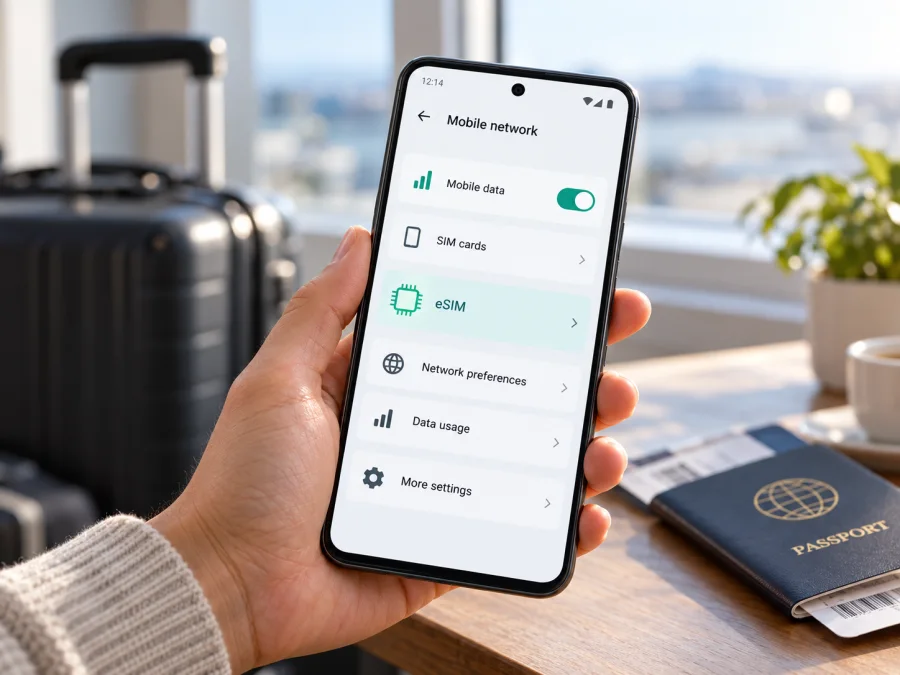
Motorola Edge 70 Ultra 512GB eSIM: compatibility and setup guide
The short answer
Does the Motorola Edge 70 Ultra 512GB support eSIM? I could not confirm that exact device name or storage variant in Motorola’s current official product information checked in October 2026. The available official Motorola page I found describes the Motorola edge 70, a different named product; it does not establish that an “Edge 70 Ultra” exists, that the 512GB configuration is an official variant, or that either supports eSIM. Do not treat specifications for another Edge phone as proof for this one.
For now, the accurate answer is unconfirmed. The name may refer to a regional retail listing, an unreleased or market-specific product, or a mistaken listing, but none of those possibilities can be assumed. The only reliable answer for a phone in your hand comes from its exact model or SKU, its settings and EID, and confirmation from Motorola or the seller for the market where it was sold. Storage capacity alone does not tell you whether eSIM is built in.
| Check | What can be confirmed |
|---|---|
| Exact device requested | Motorola Edge 70 Ultra 512GB |
| Official identity of this exact configuration | Not confirmed in the Motorola material checked for this guide |
| eSIM support for this exact configuration | Unconfirmed; verify on the actual handset before buying a plan |
| What may vary | Country or sales region, model number, software build, carrier customization and network lock |
| Safest next step | Check the model number, EID and SIM settings, then ask Motorola or the seller to verify the exact SKU |
An eSIM is a digital SIM profile stored in a compatible phone. A device can have 5G, dual SIM, ample storage or an ordinary SIM tray without supporting eSIM. Conversely, an eSIM option may be present only on some regional versions. A listing title, seller’s product photo or a generic “dual SIM” description is not enough to establish support.
Why the exact version matters
Phone names are not always consistent across retailer listings and countries. A seller may shorten a name, combine specifications from different phones, or use an informal label. Even where a product family is real, two phones with similar names can use different model numbers, SIM trays, radio hardware or software. One market may offer a physical SIM plus eSIM while another sells a physical-dual-SIM model. Carrier-branded devices can also have feature restrictions or require an eligible account before the eSIM menu appears.
The “512GB” part identifies a storage configuration in the request, but it does not identify the hardware revision. It also does not establish RAM, supported mobile bands, SIM arrangement or eSIM availability. Ask the seller for the manufacturer model code printed on the box and in the phone’s settings; compare the complete code, not just “Edge 70 Ultra,” with Motorola support for the country of sale. If the phone is second-hand, check its actual settings rather than relying on the original packaging alone.
Geographic availability and eSIM compatibility are separate questions. A model sold in one country might not be sold under the same name in another, and a particular operator market may impose additional activation or device-lock requirements. Likewise, a travel plan’s destination coverage is about the plan and its roaming partners; it does not prove that a handset can download an eSIM profile. Verify both sides: the exact handset and the plan conditions for the countries on your itinerary.
Compatibility checklist
Before you rely on this phone for travel data, confirm each point for the device in your hand:
- [ ] The model number and SKU match a Motorola listing or are confirmed by Motorola for the market where the phone was sold.
- [ ] Settings shows an EID, and Motorola or the seller confirms that the EID belongs to an eSIM-enabled configuration.
- [ ] The SIM manager offers an eSIM add or download option.
- [ ] The handset is not carrier-locked or otherwise restricted from installing a travel profile.
- [ ] The selected plan covers your destination and its activation rules fit your dates.
A missing check means compatibility is still uncertain.
How to check the phone yourself
Run these checks while connected to Wi-Fi. Menu labels can vary by Android version, language and manufacturer software, so use Settings search if a path differs.
1. Look for an EID
- Open Settings and search for EID. If search is unavailable, open About phone and inspect device or SIM status details.
- If an EID (Embedded Identity Document) is displayed, record it privately and ask Motorola or the seller whether it belongs to an eSIM-capable configuration of this exact model code.
- Do not post the full EID publicly. It is an identifier used in eSIM provisioning and should be shared only with a trusted provider when needed.
An EID is a useful clue, but it is not a complete compatibility guarantee. A listing or service can require an EID as an initial check, while the seller or a carrier may still need to confirm that the phone is unlocked and allowed to activate a profile. A missing EID is a warning sign, but a menu hidden by software or a carrier build can also make a settings-only check inconclusive. If there is no EID, ask Motorola using the precise model code before proceeding.
2. Check SIM settings
- Go to Settings and search for SIM, eSIM, or mobile network.
- Look under Network & internet, SIMs, or SIMs & mobile network for a control such as Add eSIM, Download a SIM, Download new SIM, or Add mobile plan.
- Open the SIM manager and check whether it offers adding or downloading an eSIM profile. Do not start an installation unless you have a valid QR code or activation details from the plan provider.
- If you can safely inspect the physical tray, note whether it accepts one or two physical nano-SIMs. A tray alone cannot prove eSIM support: some devices combine physical and electronic SIM options, and some use only physical cards.
Motorola Support’s published setup guidance for other edge models describes an eSIM option under Settings > Network & internet > SIMs & mobile network, with a Download new SIM action. That is a useful place to look, not a compatibility statement for the unverified Motorola Edge 70 Ultra 512GB. Motorola also advises checking with the carrier when the option is missing. Your software may use a different label or menu path.
3. Confirm the identity and lock status
In Settings > About phone, write down the model name, model number, software version and build number. Compare those details with the box label and purchase record. Contact Motorola support or the seller with the exact model number and ask these questions in writing:
- Is this complete model code an official Motorola device for this sales region?
- Does this specific SKU include an eSIM, and can it download a third-party travel data profile?
- Is eSIM disabled by firmware, a carrier customization, an account requirement or a device lock?
- Can an eSIM and the installed physical SIM be active together, and which SIM can provide mobile data?
- Is there a supported way to restore a profile if installation fails or the phone is reset?
If a seller cannot provide a verifiable model code or answers only with a generic statement about the Edge family, treat compatibility as unresolved. Before purchase, ask for a return option if eSIM capability is essential to your trip. Check whether your device is compatible before choosing a plan.
What eSIM can do on a trip
If the exact phone is confirmed compatible and unlocked, a travel eSIM can provide mobile data without removing your home SIM. This is useful for maps, rides, translation, messaging, reservations and other internet-based tasks after arrival. Kaspersky eSIM Store is an app and website where you can choose, arrange and activate an eSIM with a data plan for an overseas trip. The available destination, data allowance, validity and terms depend on the current offer shown for the selected trip; check those details before you proceed.
A data-only travel eSIM does not automatically provide a regular phone number, voice service or SMS. Keep your home line available for calls or verification messages if your operator and handset permit it, and use internet-based calling or messaging apps over data where appropriate. Check roaming charges on your home SIM and turn off data roaming for that line if you do not want it to use mobile data abroad.
A plan can cover one country, a region or a route, but the plan’s destination list and terms decide where it is intended to work. Do not infer availability from a map, nearby country, device model or the fact that a phone supports 5G. Where the plan uses a local partner network, coverage and service quality depend on that network and local conditions. Check whether tethering is allowed if you want to use the phone as a hotspot, and note when the plan’s validity begins: installation, first connection or another event may apply according to its terms.
Install and activate an eSIM
Complete compatibility and lock checks before purchase. Keep the phone connected to reliable Wi-Fi and have the provider’s instructions available on another screen or saved offline. A QR code may be single-use, so do not scan it repeatedly or delete a profile as a troubleshooting experiment.
- Choose the destination and plan. Confirm that the itinerary is covered, the plan is suitable for your expected data use, and the validity period fits your dates. Read activation timing, roaming, hotspot and reinstall conditions.
- Prepare the phone. Update Android if appropriate, charge the phone, connect to Wi-Fi and confirm that the handset is unlocked. Keep your usual SIM active until you know the travel profile is installed and working.
- Open the eSIM setup screen. In Android Settings, search for eSIM or Add SIM. On Motorola phones that expose the documented menu, the route is generally Network & internet > SIMs & mobile network; exact wording can differ. Choose the option to add or download an eSIM.
- Add the profile. Scan the provider’s QR code when prompted, or enter activation details manually if the provider supplies that method. Follow the on-screen prompts. If the QR code is on the same phone, use the provider’s supported manual or in-app installation option rather than trying to scan the display with its own camera.
- Name the line. Give it a clear label such as “Travel data” so you can distinguish it from your home SIM. Leave the home line configured as you need for calls and messages.
- Choose the data line. In SIM settings, select the travel profile for mobile data when you are ready to use it. If the plan requires data roaming, enable it for that travel profile only and review which SIM is selected for data.
- Activate at the right time. Installation and plan activation are not always the same event. Some plans start when the device first connects to a supported network; others follow different terms. Use the plan instructions and avoid turning on the travel line early if that could start validity before your trip.
- Test with care. Once in the destination and within the plan’s coverage, enable the travel line and mobile data, then wait for network registration. Open a simple webpage. If it does not connect, follow the provider’s APN and network-selection instructions before changing other settings.
For Android-specific steps, see the Android eSIM installation instructions. For iPhone users travelling with a different device, the iOS eSIM installation instructions explain that setup separately. The paths above are general Android guidance and should not be read as confirmation that this exact Motorola variant has an eSIM.
A practical travel setup
Before departure: confirm the exact model code, eSIM support and unlock status; choose a plan for every destination; and read when validity starts. Save the setup instructions and keep the home SIM available for calls or verification messages if needed. Review its data-roaming setting to avoid unintended charges.
On arrival: turn on the travel profile, select it for mobile data and enable roaming for that profile if the plan requires it. Start with automatic network selection. Once it registers, test a webpage or map before depending on it. If you cross a border, confirm that the plan includes the next country and allow time for registration.
While travelling and after return: monitor data use, since video, backups and updates can use a plan quickly. Avoid deleting the profile until the trip ends and you have checked its reuse terms. At home, switch data back to your usual SIM. Deleting a profile may remove it from the phone without cancelling the plan, so follow the provider’s removal instructions.
If you are comparing options, browse the Kaspersky eSIM Store website to check what plans are currently shown for your destination. This is the general store homepage, not a country-specific tariff page; verify the destination and current terms before arranging an eSIM.
Troubleshooting checklist
There is no EID or add-eSIM control
Restart the phone, install available updates and search Settings for EID, SIM, eSIM and mobile plan. Check the exact model code and sales region. If the controls remain absent, ask Motorola or the seller about that SKU and software build. A menu on a different Edge model does not confirm this one.
The profile will not download
Use stable Wi-Fi and check that the QR code is current and has not already been used. Select Add eSIM, not a physical-SIM option. Save the exact error message and contact the plan provider before deleting profiles or resetting network settings; some codes are limited to one installation or device.
The profile is installed but has no data
Check that it is enabled and selected for mobile data, and allow data roaming for that profile if instructed. Toggle airplane mode or restart, then confirm the plan has started and covers your location. Use only provider-supplied APN or manual-network settings; do not guess them.
The wrong SIM is using data
In SIM settings, confirm the mobile-data line. Turn off automatic data switching if it could route traffic through the home SIM, and review that line’s roaming setting. Call/SMS defaults may be set separately from mobile data.
The phone is locked or service is slow
Updates cannot remove a carrier lock or add unsupported hardware. Ask the original carrier or seller about unlocking and travel eSIM use. For weak or dropping service, check coverage, allowance and signal; buildings, terrain and congestion affect performance. 5G availability depends on the plan, local network, bands and conditions. If support cannot verify this model, carry a confirmed compatible alternative.
Frequently asked questions
Is eSIM supported by Motorola Edge 70 Ultra 512GB?
This guide could not confirm it in official Motorola information. The material located describes the differently named Motorola edge 70 and does not verify an “Ultra 512GB” version. Check the model code, EID and SIM manager, then ask Motorola or the seller about the exact regional SKU.
Does 512GB storage prove eSIM support?
No. Storage capacity does not establish SIM hardware or regional software configuration. Verify the exact variant.
Is an EID enough to guarantee a travel plan will work?
No. The phone must support eSIM, be unlocked and accept the profile; the plan must separately cover the destination and meet its terms. Check both.
Can a physical SIM and travel eSIM work together?
That depends on the phone’s hardware, firmware and dual-SIM rules. If supported, you may keep the home line for calls and route data through the travel eSIM. Confirm the options in SIM settings and control automatic data switching.
Should I install before travelling, and will it include calls or SMS?
Stable Wi-Fi makes installation convenient, but follow the plan’s activation timing: validity may begin on first connection or under other stated conditions. A travel data plan usually does not include a standard number, calls or SMS unless its terms say so. Internet calling apps can use its data; your home operator may charge for roaming.
What if the eSIM menu is missing?
Search Settings for EID and eSIM, check for updates, then confirm the model number with Motorola or the seller. Region, firmware, carrier customization or hardware can affect the menu. If support cannot be verified, treat it as unknown and prepare a confirmed alternative.
Before choosing a travel eSIM
For Motorola Edge 70 Ultra 512GB, compatibility remains unconfirmed until the specific phone’s model code and eSIM capability are verified. Check the EID and add-eSIM controls, confirm the sales region and carrier-lock status, and ask Motorola or the seller about the exact SKU. Then compare the travel plan’s country coverage, data allowance, validity start, roaming and hotspot conditions.
Once the device and plan both check out, choose the travel eSIM that fits your itinerary and install it using the provider’s instructions. If the exact handset cannot be verified, plan around a device or SIM option whose compatibility is confirmed before departure.


