Travel connectivity guide
Motorola Edge 70 Ultra 5G eSIM Compatibility
Does the Motorola Edge 70 Ultra 5G support eSIM?
If you are checking whether the Motorola Edge 70 Ultra 5G can use an eSIM, the dependable answer is: support for this exact model name is not confirmed by the official Motorola information currently available. Motorola's public device and support material includes several Edge 70 family products, but I could not verify an official product page, user guide, or model-specific eSIM specification for the Motorola Edge 70 Ultra 5G. This does not prove that a phone carrying that name cannot use eSIM; it means you should confirm the exact handset before buying a data plan.
The “5G” part of the name alone does not confirm eSIM capability. Cellular generation, embedded SIM hardware, software options, regional configuration, and carrier eligibility are separate things. Some Motorola guides describe eSIM only conditionally and explain that carrier support may also be required. Their instructions for another model should not be treated as proof about the Motorola Edge 70 Ultra 5G.
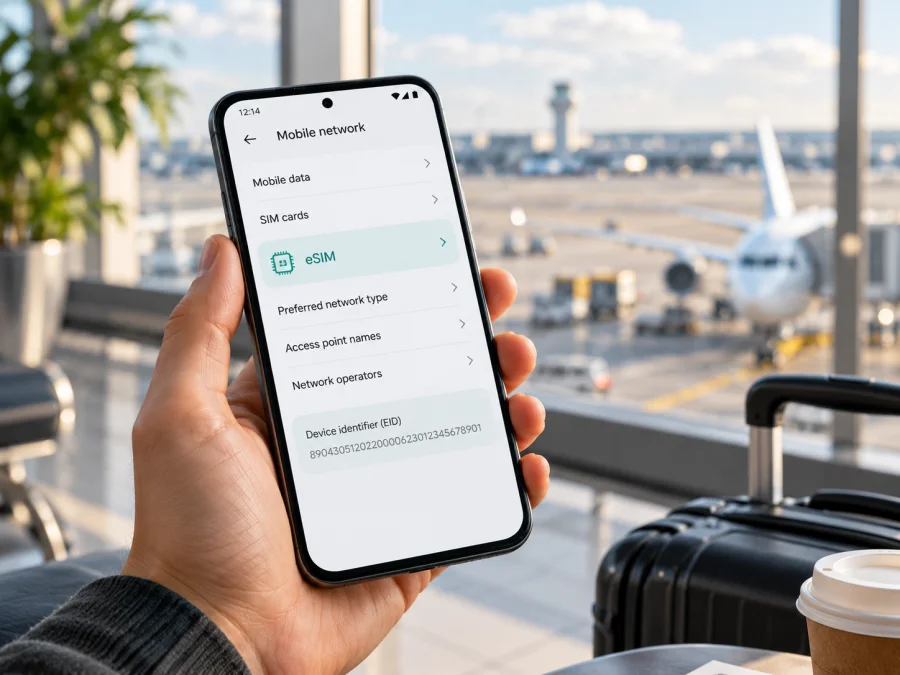
The safest check is on the phone you will actually use: look for an EID in its device information and for an option to add or download an eSIM in SIM settings. Then confirm the exact model or hardware code with the seller or Motorola support, and check that the handset is not carrier locked. If the phone is not yet in your hands, ask the seller for a written answer tied to its model code, country of sale, and firmware version.
What is verified—and what is still uncertain
| Question | Current answer for the Motorola Edge 70 Ultra 5G |
|---|---|
| Is this exact name confirmed in current official Motorola material? | I could not confirm it in the Motorola device/support material reviewed for this guide. |
| Is eSIM support officially confirmed for this exact model? | Not confirmed. Do not assume support from the name or from another Edge 70 model. |
| Does “5G” mean that eSIM works? | No. 5G capability and eSIM capability are distinct. |
| Can a regional or carrier version differ? | Yes, phone configurations and carrier eligibility can vary. Exact differences for this model are not verified. |
| What is the practical decision? | Proceed only after your own device shows an EID and an eSIM setup option, and the seller or carrier confirms eligibility. |
The task name does not identify a country, hardware code, or carrier market, and official material reviewed does not establish those details for the Motorola Edge 70 Ultra 5G. Check the model number in Settings or on the box against documentation for its country of sale.
Why versions and markets matter
A family name may cover hardware or software variations, and carrier-supplied phones can have separate eligibility requirements. These are general reasons to check the specific unit; they are not confirmed differences between Motorola Edge 70 Ultra 5G variants.
Ask the seller or carrier these questions before purchasing a travel eSIM:
- What is the exact model or hardware code printed on the device or packaging?
- Was this handset sold for the market where I plan to use it, or is it an import?
- Does this precise code have an EID and support downloading an eSIM profile?
- Is the phone unlocked, with no carrier restriction preventing another provider's eSIM?
- Does the carrier or eSIM provider accept this model and its software version?
- Can the seller demonstrate the eSIM menu on the actual device, rather than on a similar phone?
“Dual SIM” can refer to different combinations of physical SIMs and eSIMs. Ask explicitly about eSIM and an EID; a 5G logo does not confirm either.
How to check the phone yourself
Menu wording may differ by software version. These are diagnostic checks, not a claim that this unverified model supports eSIM.
- Find the device identity. Open Settings > About phone and record the model name, model number, and software version. If the phone is not set up, check its box or ask the seller to show the device information screen.
- Look for an EID. On some Motorola phones, device details are under Settings > About phone > Device details. An EID is the identifier associated with an eSIM-capable device. If an EID is shown, note it privately; do not post it publicly or send it to an unknown seller.
- Open the SIM settings. Look under Settings > Network & internet > SIMs or SIMs & mobile network for an option such as Add eSIM, Download a SIM, or Set up an eSIM. The label can vary by Android build.
- Check both signals. An EID and an eSIM setup control together are useful evidence that the phone can manage an eSIM. If one or both are missing, do not assume a profile will install. Restart the phone, update its software if appropriate, and ask Motorola or the seller to confirm by exact model code.
- Confirm the network restriction. A phone may have eSIM hardware yet be locked to a carrier or unable to use a particular provider. Ask the original carrier whether the handset is unlocked and whether eSIM activation is permitted.
- Check the plan's compatibility guidance. Before checkout, compare its device requirements with the exact hardware and country variant you own. If compatibility remains unclear, wait for confirmation rather than relying on a successful payment or a QR code.
A displayed EID is a device identifier, not a promise of service with every provider. The setup control, unlocked status, and provider acceptance matter too. Keep these checks together when you compare the exact handset against the provider’s requirements.
Use the compatibility checker as another step: Check your device. It is a helpful screen, but the final check should still be performed on the individual handset because this exact model name is not confirmed in official documentation reviewed here.
Before you choose a travel eSIM
Check these items while you still have a reliable internet connection and time to ask for help:
- Device support: EID and eSIM setup menu are present on the phone, with confirmation for its exact model code.
- Unlocked status: No carrier lock or policy prevents adding a different eSIM profile.
- Destination: The selected plan lists the country, region, or route you will visit. A plan for one destination should not be assumed to work in another.
- Purpose: The travel eSIM is intended for mobile data. Review the plan details to see whether voice calls or SMS are included; do not assume they are.
- Data and validity: Match the allowance and validity period to your expected use. Check the plan's own terms for when its validity begins and whether it expires.
- Installation connection: You have Wi-Fi or another working internet connection available to download the profile.
- Activation instructions: Know whether to install before departure and when to enable the profile or data roaming. Follow the plan-specific instructions.
- Primary SIM: Decide whether your usual SIM should remain enabled for calls or texts, and review any home-carrier roaming charges it may incur.
Check compatibility before paying. If uncertain, ask the retailer, carrier, or provider for confirmation tied to the model code; a plan cannot add eSIM hardware.
How to install an eSIM if the phone confirms support
Continue only if your phone shows an eSIM option and your provider accepts it. Motorola's guides for other models describe Wi-Fi and a SIM settings menu, but labels can differ. Follow the handset and plan instructions.
- Prepare the phone. Connect to Wi-Fi, charge the battery, and install any available system update you are comfortable applying before travel. Keep the phone online during profile download.
- Obtain the eSIM details. Open the instructions in the provider's app or account. The provider may offer an in-app install, a QR code, or manual activation details. Keep the QR code accessible on another screen or printed page if you need to scan it with the phone's camera.
- Open SIM settings. Go to the phone's mobile network or SIM menu and select the available eSIM addition option. If the option is absent, stop and check the model's support rather than selecting a similar-looking physical SIM control.
- Add the profile. Follow the handset's prompts to scan the QR code or use the provider's supplied method. Do not share a one-time activation QR code; it can contain information that allows the eSIM profile to be installed.
- Name the line. If Android offers labels, use a clear name such as “Travel data.” This makes it easier to tell the eSIM apart from your regular SIM later.
- Choose what the line does. For a data-only travel plan, select the travel eSIM for mobile data when you are ready to use it. Keep calls and SMS assigned to your regular line only if you want them and understand your home carrier's charges.
- Set roaming only as instructed. Some travel profiles require data roaming on the eSIM to connect to a partner network. Enable it for that profile only when the plan's instructions say to do so. This setting does not itself confirm that the correct plan or destination is selected.
- Check the connection. At the destination, enable the travel eSIM, select it for mobile data, and wait for network registration. If there is no connection, work through the checks below before deleting anything.
For general installation help, see Android eSIM instructions or iPhone eSIM instructions. The iPhone guide is for Apple devices; the Android guide is the relevant starting point for Motorola, while the on-screen wording can still vary by model and software version.
Using a travel eSIM on a trip
A compatible travel eSIM can provide mobile data without replacing a physical SIM. You may install it before leaving, but installation, activation, and the start of data use can be separate events; check the plan's instructions.
At departure, leave the travel profile off if the plan's directions say to wait. On arrival, turn on the eSIM, select it under mobile data, and check that the destination network appears. If the phone has a data-roaming switch for each SIM, change the travel line's setting only as the provider specifies. Keep an eye on which line is selected for data: using your regular SIM abroad could incur charges from your home carrier.
If you need calls or messages, remember that many travel eSIM data plans do not provide a regular telephone number. Internet messaging and voice apps can work over data when your accounts and services allow it. Your normal number may remain available through the physical SIM or another line, subject to the home carrier's roaming terms. Read both plans' conditions before relying on that arrangement.
For a multi-country trip, confirm every destination is covered. Service and speed depend on plan terms, local network availability, device compatibility, and conditions; a 5G label does not guarantee a particular signal.
Kaspersky eSIM Store is an app and website where you can choose, arrange, and activate an eSIM with a mobile data plan for an international trip. It does not operate a mobile network or guarantee coverage. You can browse the Kaspersky eSIM Store to check current destination options and plan conditions; this is the general English store homepage, not a country-specific plan page. Confirm compatibility before choosing a plan.
Common problems and what to check
There is no EID in the settings
Search Settings for “EID,” inspect About phone and Device details, then restart. If the EID and eSIM option remain absent, ask Motorola support or the seller to verify the model code and regional configuration; a possible software variation is not proof of support.
The eSIM option is missing
Check for an appropriate software update and ask the carrier whether eSIM is restricted. Give the seller the exact model number and do not rely on instructions for another Edge variant.
The QR code will not scan or the profile will not download
Check Wi-Fi, QR clarity, and whether the code has expired or been used. Follow the provider's alternative install steps if offered. For a single-use code, contact support before retrying or deleting a profile.
The profile is installed but there is no service
Confirm the eSIM is on, the destination is covered, and it is selected for mobile data. Check the plan's start conditions and roaming instructions, then briefly toggle airplane mode or restart. Use manual network selection only as the provider directs.
Data does not work even though a signal appears
Check mobile data, plan start, and remaining allowance. Use APN values only from the provider, and check for device data limits or VPN settings. If needed, give support the location, model code, and steps tried.
The phone says the network is unavailable
Check destination coverage, carrier lock, and local network availability. Moving to an area with better reception can help identify a local signal issue. The available network technology depends on the plan and local service.
You are worried about losing the profile
Do not erase a profile as routine troubleshooting: deletion can remove connectivity without cancelling a plan. Ask support first and keep activation details private.
A practical pre-trip checklist
Use this short check before departure:
- [ ] The exact phone model code has been recorded.
- [ ] The handset itself shows an EID and an eSIM setup option.
- [ ] The seller or carrier confirms that this specific phone is unlocked and eligible.
- [ ] The chosen plan covers every destination and fits the expected data use and travel dates.
- [ ] The installation instructions and activation method are available offline or on another screen.
- [ ] You know which SIM will handle mobile data and whether roaming must be enabled for the travel profile.
- [ ] Your regular carrier's roaming conditions are understood if you will keep that line active.
Frequently asked questions
Does the Motorola Edge 70 Ultra 5G support eSIM?
I could not confirm eSIM support for this exact name in the official Motorola materials reviewed. Check the EID, eSIM setup menu, exact hardware code, and carrier eligibility on the phone you will use. Do not infer support from 5G or from another Edge 70 family device.
Is the Motorola Edge 70 Ultra 5G available in every country?
I could not verify official availability for this exact name. Ask the seller for a model code and documentation for the country of sale.
If I see an EID, does that guarantee a travel eSIM will work?
An EID indicates eSIM hardware, but does not confirm that the phone is unlocked, accepted by the provider, or compatible with the destination plan.
Can I use my regular SIM and a travel eSIM together?
Only if the exact variant and carrier permit it. SIM combinations vary; check the phone settings and service terms for data, calls, texts, and roaming.
Does a travel eSIM include calls and SMS?
Do not assume so. Many travel plans are for mobile data only. Read the individual plan conditions. Messaging and calls through internet apps may work over data, but they are not the same as a conventional phone number or cellular voice service.
Should I install the eSIM before I travel?
Follow the plan's activation rules. Installing a profile and starting validity can be separate events, so confirm the start time and keep instructions available.
What if the seller cannot verify this model?
Wait for confirmation tied to the model code. If there is no EID or eSIM menu, ask the seller or consider a device with eSIM support documented for your market.
Final check before choosing a travel eSIM
For the Motorola Edge 70 Ultra 5G, eSIM support remains unverified for the exact model name in the official information reviewed for this guide. Check the EID and eSIM setup option on your own phone, confirm its model code and unlocked status with the seller or carrier, and make sure the plan accepts that device and covers your destination. When those checks are complete, compare the current data allowance and validity terms for your trip, then follow the provider's installation and activation instructions. If any compatibility point remains uncertain, resolve it before purchase.


