Travel connectivity guide
Tigo eSIM in Ecuador: activation guide
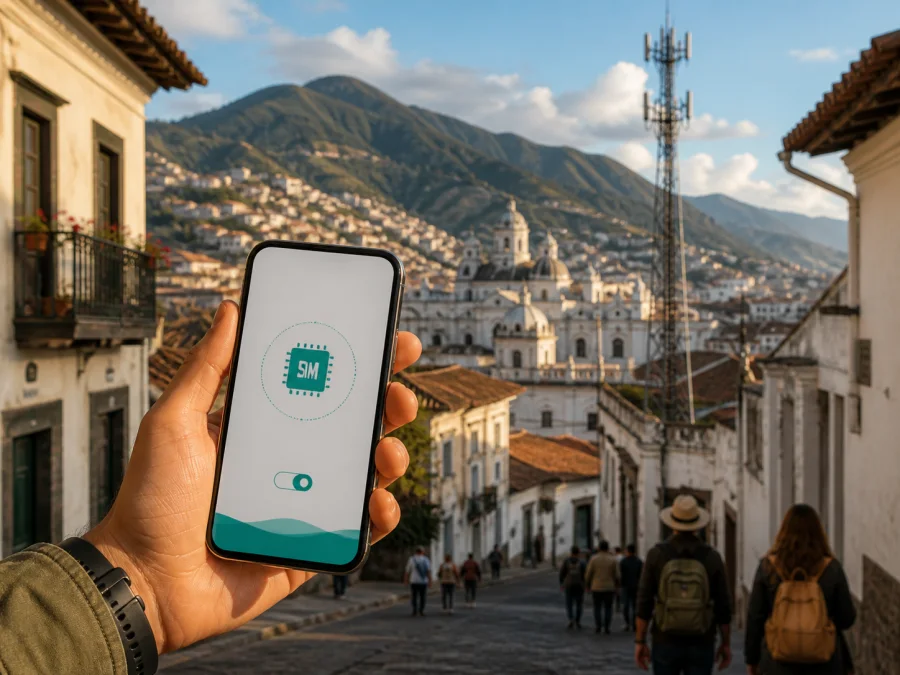
Tigo eSIM in Ecuador: activation, coverage and travel options
If you are travelling to Ecuador and searching for Tigo eSIM, start with the operator’s current brand transition. The official Ecuador web presence is introducing the Tigo name progressively, while some customer pages still use earlier wording.
This guide explains the current public information, what a traveler should check before relying on a local eSIM, and when a travel eSIM may fit a different need. It focuses on mobile internet, device compatibility and practical preparation. Conditions can change, so confirm current eligibility and service details with the operator before requesting a local line.
Kaspersky eSIM Store is not affiliated with Tigo, is not its official partner or distributor, and does not represent the operator. It is an app and website that help users choose, arrange and activate an eSIM with a suitable travel option for mobile internet. The operator and the travel service are separate ways to prepare connectivity.
Tigo’s current position in Ecuador
Tigo is establishing its commercial presence in Ecuador through a transition of the existing mobile operation. The official transition page currently says that customers will progressively see the Tigo name in communications and that their number, service and existing conditions continue during the change.
This matters when you search for Tigo Ecuador eSIM. The official Tigo Ecuador domain currently redirects to the Ecuador mobile website, while the help center is available on a Tigo-domain address and still contains pages with legacy naming. That does not mean an instruction is unusable, but it does mean that its date and context deserve attention.
This transition information was checked on September 1, 2026, on the operator’s official Ecuador transition page. The same current web presence exposes mobile support, prepaid service, eSIM assistance and a coverage-map section. The pages reviewed do not prove that every local eSIM request is already handled through a fully updated Tigo-branded flow, so use the operator’s current channel instructions as the final reference.
Is Tigo eSIM available in Ecuador?
The official Ecuador help center on the Tigo domain has an article about eSIM, or virtual SIM, for mobile phones. It explains that an eSIM is a digital profile built into a compatible device and that a mobile line can be activated without inserting a physical SIM. The article also points to an activation flow and device-specific setup guidance.
The current operator eSIM page describes four basic stages: check device compatibility, enter the online request flow and provide an email address for activation, scan the QR code from the phone’s SIM settings, and follow the device instructions to complete installation. This confirms that eSIM activation is part of the Ecuador customer journey, although some pages may still use transitional wording.
Availability is not universal eligibility. The help center says that eSIM works only on selected device models, and the eSIM page provides a manufacturer and model selector. Support can also differ by sales region, software version or carrier lock. Check the exact phone before making a request, especially if it was bought abroad or will be used with a second line.
The official help article describes a local mobile-line process rather than a simple travel purchase. It says that only the line holder can request the service and that an original identity document is required. A visitor should not assume that an unlocked eSIM-capable phone automatically qualifies for a local Tigo eSIM. Ask the operator which customer category and request channel apply to your circumstances.
Prepaid and tourist use
The official Ecuador customer site has a prepaid section, and the Tigo-domain help center lists guidance for activating prepaid eSIM. This supports a general statement that prepaid service and prepaid eSIM-related customer flows are present in the public journey.
The pages reviewed do not establish a single dedicated tourist eSIM offer with universal access for every foreign visitor. Separate three questions: is eSIM technically available, can the requested local line be issued to you, and is that setup suitable for a short stay? These questions may have different answers.
For a local line, ask about identity requirements, the request channel, the activation message, the device and what happens if you reset or replace the phone. For a prepaid route, check whether the service can be issued in your situation and how support handles a traveler who is not yet established in Ecuador. For a travel eSIM, check the destination, data-only design, installation timing and rules for the intended device.
Search results can preserve outdated customer flows during a brand transition. Use a current official operator page for local-service questions and the current travel-service page for a travel eSIM question.
How Tigo eSIM activation works
The operator’s current Ecuador eSIM page was checked on September 1, 2026. Its public process is:
1. Confirm compatibility
Use the device selector or check mobile-network settings for an option to add an eSIM. If the phone is not listed, contact the operator before requesting activation. Confirm that it is unlocked.
2. Start the official request flow
Use the current online request path or customer channel named by the operator. The instructions say that an email address is used for activation. A local request may also require the line holder and original identity document.
3. Receive the activation details
The operator sends an activation message and QR code through the stated channel. Keep the message on a second screen if the same phone must scan it, or use the method supported by the phone for a saved QR image.
4. Add the eSIM profile
Open mobile-network settings, choose the option to add an eSIM, and scan the QR code. Follow the prompts and do not repeatedly scan the code unless the operator tells you to do so.
5. Choose the data line
If another SIM is active, select which line handles mobile data. Label the profiles clearly and review data-roaming settings for the intended line.
6. Test the connection
Turn off Wi-Fi briefly and test a web page or messaging action. If the line does not connect, check that the profile is enabled, the correct data line is selected, airplane mode is off and the device has a usable signal. If the issue remains, contact official support instead of deleting the profile.
The published steps confirm a QR-based installation path, not immediate activation on every device or location. Installation can depend on the phone, profile, internet connection and local network. Complete compatibility checks and, where permitted, installation before departure if you need data as soon as you land.
Coverage and supported technologies
Coverage is a location question, not just a brand question. Ecuador includes cities, coastal areas, highland routes, rural communities and mountainous terrain. A line can be active while a particular road, building or destination has different service conditions.
The current official Ecuador coverage-map page lists 4G LTE, 3G and 2G as selectable mobile technologies. It lets users consult by province, canton, parish, coordinates, streets and roads. The map shows an update date of June 5, 2026. This is useful evidence about the technologies documented by the operator, not a promise of uninterrupted service at every point.
For a trip, check the airport and first accommodation, the city or town where you will spend the most time, the route between destinations, and any rural or high-altitude excursion. Select the technology your phone supports when the map provides that filter. The reviewed pages document 4G LTE, 3G and 2G; they do not provide enough current detail for this article to promise a particular newer technology, speed or indoor experience.
Local Tigo eSIM or a travel eSIM?
The two options answer different needs. A local operator eSIM is built around a local mobile line and the operator’s customer rules. It may suit someone who is eligible for local service, needs a local relationship with the operator, or is staying long enough for that arrangement to make sense. The request may involve identity verification, an account, a specific service channel and support in the operator’s systems.
A travel eSIM is built around preparing mobile internet for a destination or route. It can suit someone who wants to keep a physical home SIM in the phone, install a separate data profile and arrange connectivity before or soon after arrival. It usually does not replace a normal phone number. Calls and messages may continue through the home line or messaging apps, depending on phone settings and the terms of those services.
The practical comparison is about the trip, not a ranking. A local Tigo eSIM may fit someone eligible for a local line who needs a local relationship and can complete the operator’s customer checks. A travel eSIM may fit someone who mainly needs destination data, wants a separate profile and prefers to prepare online. In either case, check compatibility, coverage for the route, activation timing and whether a local number is needed.
Where Kaspersky eSIM Store fits
Kaspersky eSIM Store is an app and website for choosing, arranging and activating an eSIM with a suitable travel option for mobile internet abroad. It is not a mobile operator, does not own the Ecuador network and does not provide a local Tigo line. The underlying connectivity arrangement and the user-facing selection experience are separate roles.
The public Kaspersky eSIM Store Ecuador page describes a destination flow, a compatibility check, installation through the app or website and a QR-code route. It also explains that the eSIM is for data rather than a separate ordinary phone number. This can fit a traveler who mainly needs maps, transport, bookings, messaging and work access while keeping the home SIM available for its own functions. Do not confuse travel-service conditions with Tigo’s local customer rules.
Kaspersky eSIM Store can be useful when you want to prepare a separate digital profile, select a destination through one interface or avoid swapping a physical SIM. It is not a replacement for a local operator in every scenario. If you need a local number, local account support or a service governed by Tigo’s customer rules, address those requirements directly with Tigo.
Installing a travel eSIM for Ecuador
Follow the selected service’s current instructions, because menu names and activation behavior differ between phones and services. Confirm eSIM support and an unlocked phone, keep reliable Wi-Fi available, add the profile through the app or QR code, label it, select it for mobile data, and apply roaming only to that intended line if required. Check when activation begins before installing, then test a web page with Wi-Fi off. If data does not work, check the destination, selected line, eSIM toggle and roaming setting before contacting support. Do not remove the profile as the first step.
A travel eSIM may be data-only and may not provide a separate phone number. Messaging and internet calls can work through apps already set up on the phone. For device-specific help, see the eSIM device compatibility guide.
Questions travelers ask
Can I get Tigo eSIM in Ecuador as a visitor?
Possibly, but the public information does not establish universal tourist eligibility. The current official Ecuador eSIM help article describes a compatible-device process and says that the line holder must request the service with an original identity document. Ask Tigo which local customer path applies before relying on it for the trip.
Which technologies are documented for Ecuador?
The current official coverage map lists 4G LTE, 3G and 2G and provides a location consultation tool. Use it for the itinerary; do not treat the list as a guarantee of service in every building, road or remote area.
Is there a prepaid Tigo eSIM option?
Prepaid service and prepaid eSIM guidance appear in the current Ecuador customer journey. The pages reviewed do not establish one universal tourist offer or one set of conditions for every visitor. Confirm eligibility and activation requirements with Tigo.
Does Kaspersky eSIM Store provide a Tigo line?
No. Kaspersky eSIM Store helps you choose, arrange and activate a travel eSIM. It is not Tigo, does not own a mobile network and does not issue a local Tigo customer line.
Can a travel eSIM replace calls and SMS?
Usually not as a normal phone line. The Ecuador travel page describes the eSIM as data-only, so ordinary calling and texting do not come with a separate number. Messaging apps can use available data when their accounts are already configured.
Final takeaway
Tigo eSIM in Ecuador should be understood in the context of an ongoing brand transition. Current official pages document eSIM for compatible devices, QR-based activation, prepaid customer paths and a coverage tool listing 4G LTE, 3G and 2G. They also show why travelers should verify line-holder eligibility and identity requirements instead of assuming that a local eSIM is available to every visitor.
For travelers who mainly need mobile data, a separate travel eSIM can be an alternative to investigate. Kaspersky eSIM Store helps users choose, arrange and activate that type of eSIM, but it is independent from Tigo and is not a mobile operator or network owner. Check compatibility, destination conditions, activation timing and data-line settings before travelling, then use the option that fits your route.
When you are ready, review the Ecuador eSIM options and confirm the current conditions shown for your device and destination.