
Travel connectivity guide
Vlore eSIM: Mobile Internet for Albania Travel
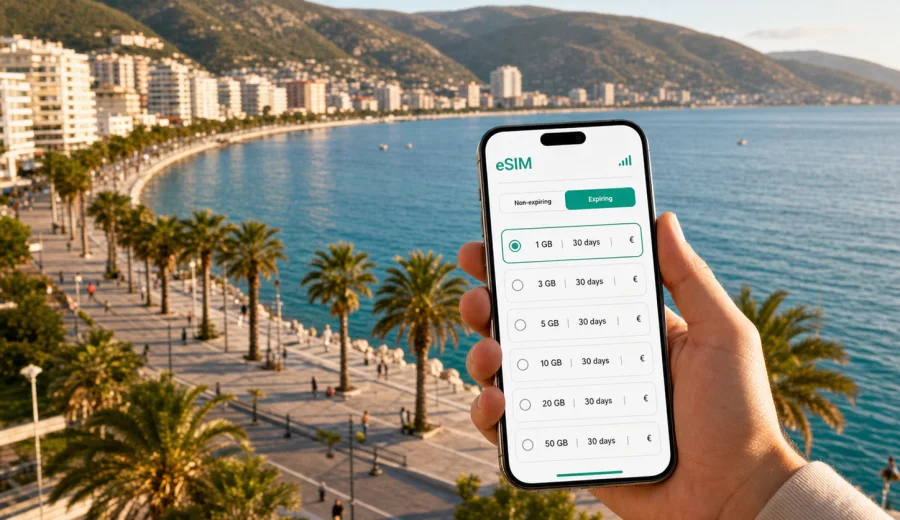
Vlore eSIM: mobile connection and internet for your Albania trip
Vlore is one of Albania's most practical coastal bases: a port city, a beach destination, a gateway to the Riviera, and a useful stop between Tirana, Orikum, Llogara, Dhermi, Himare, and other southern routes. For travelers, that means mobile internet is not only for scrolling between beach days. It helps with arrival, maps, hotel check-in, ferry or transfer messages, restaurant bookings, translation, work calls, and route changes when the weather or traffic shifts.
An eSIM can help you prepare that connection before the trip without looking for a physical SIM card after arrival. You choose a data package for Albania, install the eSIM on a compatible phone, and use mobile data when the selected tariff is active. The exact speed, coverage, data allowance, validity, and activation rules depend on the plan and local network conditions, so the best approach is to choose by itinerary rather than by guesswork.
This guide focuses on Vlore itself. Albania is the destination context because the eSIM plan is selected for the country, but the practical questions are local: how you arrive, where you stay, how you move along the Lungomare, whether you work from a hotel or cafe, and how often you leave the city for beaches, mountains, and nearby towns.
Why mobile internet matters in Vlore
Vlore is easy to enjoy, but it is not a city where every useful movement happens in one compact area. You may sleep near the Lungomare, walk to the waterfront, take a taxi toward the old town, continue south toward Uji i Ftohte, and then leave early for the Llogara Pass or the Riviera. A working data connection helps connect those pieces without relying on screenshots or public Wi-Fi.
Common uses for mobile data in Vlore include:
- finding your hotel or apartment after a road transfer or ferry arrival;
- messaging a host when check-in instructions are sent online;
- navigating between the port, waterfront, center, old town, and beach zones;
- checking taxi, transfer, bus, or car-rental details;
- translating menus, signs, and messages when needed;
- comparing restaurants, beach sections, cafes, and supermarkets;
- joining work calls or sending files during a business trip;
- planning day trips to Orikum, Zvernec, Llogara, Dhermi, Himare, or Apollonia.
Vlore also changes rhythm by season. In summer, the waterfront is busier, transfers can take longer, and hotel Wi-Fi may be under pressure at peak times. Outside the high season, services may be quieter, and mobile data is useful for checking opening times, transport arrangements, and route options as you go.
Arrival in Vlore: where connection helps first
Many international visitors reach Vlore by road from Tirana International Airport, by intercity bus, by private transfer, by rental car, or by ferry. Infrastructure and schedules can change, but the first-day need stays the same: you need your phone before you have settled into the city.
| Arrival task | Why data helps in Vlore |
|---|---|
| Transfer coordination | Drivers and hosts often share exact meeting points by message. |
| Maps to accommodation | Waterfront hotels, hillside apartments, and old-town stays can have different access points. |
| Port movement | The port is close to central areas, but luggage and heat make route planning useful. |
| Booking checks | Reservation emails and app confirmations may be needed at check-in. |
| Family or office updates | A quick message confirms that you arrived and are on the way. |
If you land in Tirana and continue to Vlore, the road journey is long enough that you may want maps, messaging, and travel updates before reaching the coast. If you arrive by ferry, connection becomes useful immediately around the port and nearby streets. If you drive in from another Albanian city, data helps with parking, one-way streets, fuel stops, and the final approach to your accommodation.
Choosing an eSIM data allowance for Vlore
The right data package depends on your habits. A visitor who mostly uses maps and messaging needs far less than someone who works from a laptop hotspot, uploads many videos, or streams in the evening. In Vlore, it is useful to separate normal city use from day-trip use because a beach or mountain route can make you depend on mobile data more than expected.
| Trip style | Typical mobile data needs |
|---|---|
| Short city break | Maps, messaging, restaurant search, occasional translation. |
| Beach holiday | Navigation, social media, photo sharing, ride coordination, weather checks. |
| Business trip | Email, calendars, cloud access, video calls, hotspot backup. |
| Road trip from Vlore | Live maps, route changes, fuel and parking searches, hotel messages. |
| Family travel | Shared locations, bookings, entertainment, and several people depending on one phone. |
For light use, a smaller package may be enough if your accommodation Wi-Fi is stable. For a week in Vlore with beach days, restaurants, photos, and navigation, a medium package is usually more comfortable. For remote work or hotspot use, review the tariff details carefully and consider a larger allowance.
Where visitors use data around the city
The Lungomare is the easiest example. It is a long waterfront area where you move between hotels, cafes, restaurants, beach sections, and evening walks. Mobile internet helps with maps, reviews, menus, reservations, and ride messages. If you stay near the water, this is probably where your data use begins and ends each day.
The old town and central streets are different. They are useful for cafes, errands, local atmosphere, and short walks, but addresses can be less obvious if you arrive after dark or with luggage. Data helps you avoid repeated calls, wrong turns, and outdated screenshots.
The port area matters for ferry passengers and for visitors using Vlore as a transit point. If an arrival time changes or you need to contact a hotel, a working data connection is more convenient than searching for Wi-Fi with bags in hand.
South of the main waterfront, toward Uji i Ftohte and the roads leading to Orikum, you may depend more on taxis, transfers, or a car. If you return late or change plans during the day, mobile maps and messaging become especially useful.
A first-day connection checklist
Your first day is when a prepared eSIM can remove small frictions. Before departure, save your accommodation address, check your arrival route, and install the eSIM while you still have stable internet. Keep the activation details ready for the moment when the plan should start according to its terms.
- Save your hotel or apartment address in your map app.
- Download an offline map as a backup, but do not rely on it for live changes.
- Keep your booking confirmation available offline.
- Tell your host or hotel your expected arrival time.
- Decide whether the eSIM will be your main data line or a backup line.
- Keep your primary SIM available if you need your usual number for calls or SMS.
- Pack a power bank if you plan a long transfer or full-day trip from Vlore.
For late arrivals, the most useful data tasks are simple: directions, messages, and ride coordination. For afternoon arrivals, mobile data also helps you plan a first walk, find a nearby restaurant, and check the next day's route before booking a car, tour, or transfer.
How eSIM fits a Vlore itinerary
An eSIM is not a separate travel goal. It is a way to make the rest of the trip easier. In Vlore, it supports three common patterns.
The first pattern is a beach stay. You stay near the Lungomare or farther south, move between cafes and beaches, and use your phone for maps, messages, weather, and payments. You probably need steady everyday data, not a complicated setup.
The second pattern is a road-based itinerary. Vlore becomes a base for Orikum, Zvernec, Llogara National Park, Dhermi, Himare, or other coastal routes. You may start early, change plans because of weather, and rely on maps between stops. This pattern benefits from more data and validity that covers the full route.
The third pattern is a work trip. You may visit Vlore for meetings, port-related business, tourism, hospitality, logistics, or a regional stop between Tirana and the coast. In this case, mobile data is a backup for hotel Wi-Fi and a way to keep communication active between appointments.
If you want to prepare before departure, you can choose an eSIM plan for your Albania trip through Kaspersky eSIM Store and match the data allowance and validity period to your Vlore plans: city break, beach stay, road trip, or business visit.
Hotels, apartments, and local movement
Where you stay changes how you use data. Near the Lungomare, you may walk more and use your phone for restaurant choices, beach locations, and evening transport. In the center or old town, you may use maps for short walks, errands, and cafes. South of the main waterfront, taxis, transfers, and car routes may become more important.
Hotel Wi-Fi can be useful, but it is not a full replacement for mobile data. You still need connection outside the room: at the port, in a taxi, on the beach, near a restaurant, or while meeting a host. Public Wi-Fi can require registration, slow down at busy times, or be unavailable exactly when you need it.
Transport in and around Vlore
Vlore rewards flexible movement. Some days are simple walks along the sea. Other days involve a taxi, bus, rental car, ferry timing, or a route outside the city. Mobile internet helps because transport decisions often happen in small moments: a changed meeting point, a restaurant farther away than expected, a parking area to check, or a bus stop that is easier to find with maps.
Useful transport tasks for mobile data:
- live navigation from the port or bus area;
- route checks between the waterfront, center, old town, and southern beach zones;
- messaging drivers, hosts, or tour organizers;
- checking weather before Llogara or a boat trip;
- comparing travel time for a taxi, walk, or bus;
- finding fuel, parking, pharmacies, or supermarkets while driving.
If you rent a car, remember that navigation can consume data during longer drives, especially if maps, traffic, and searches stay active. Offline maps are a good backup, but live mobile data is more useful when you change beaches, avoid delays, or need a new stop.
Installing eSIM before or during the trip
The simplest approach is to install the eSIM before you leave, while you have a stable connection and time to read the instructions. Activation rules vary by tariff, so follow the specific steps shown after purchase and avoid starting the plan earlier than intended if the validity period begins on activation.
Before purchase, check your device to make sure it supports eSIM and is not restricted by an operator lock. After that, follow the correct setup guide for your phone: Android installation instructions or iOS installation instructions. Keep your regular SIM active if you need your usual number for banking messages, calls, or account verification.
Basic setup sequence:
1. Choose Albania as the destination and select a tariff by data volume and validity.
2. Complete the order in Kaspersky eSIM Store.
3. Install the eSIM profile on your compatible device.
4. Name the new line clearly, for example Albania data.
5. Set mobile data to the eSIM when you are ready to use it.
6. Enable data roaming for the eSIM if the tariff instructions require it.
7. Keep your main SIM settings unchanged unless you intentionally want to change them.
Do not delete the eSIM profile unless you are sure you no longer need it. In many cases, an activated eSIM cannot simply be moved to another phone like a physical SIM card. If you change devices during the trip, check the tariff conditions and support guidance before making changes.
eSIM, roaming, and local SIM cards
Visitors usually compare three options: international roaming from a home operator, a local physical SIM card, and an eSIM data plan. The right choice depends on your phone, trip length, data needs, and tolerance for arrival-day errands.
| Option | Strength in Vlore | Trade-off |
|---|---|---|
| Home roaming | Keeps your usual SIM active and may be simple for short use. | Pricing and data limits depend on your home operator. |
| Local physical SIM | Can suit long stays or users who want a local package. | Requires time, a shop visit, and a physical SIM slot. |
| Travel eSIM | Can be prepared before arrival and used for mobile data on a compatible device. | Requires eSIM support and careful attention to tariff conditions. |
For many short and medium trips, eSIM is convenient because it reduces the number of tasks after arrival. You still need to read the plan details: data amount, validity, destination, activation rules, and whether voice calls or SMS are included. In many travel eSIM plans, the main use case is mobile data, while ordinary calls and SMS are not included unless the tariff says otherwise.
Working remotely from Vlore
Vlore can be pleasant for remote work because cafes, apartments, hotels, and sea views are easy to combine. A working day still needs a practical connection plan. You may need email, cloud documents, calls, and backup access if Wi-Fi slows down.
For work trips, check these points before relying on an eSIM:
- expected video-call volume;
- whether you need laptop tethering;
- file upload and download size;
- tariff validity for the entire stay;
- whether you must keep your primary SIM active for calls;
- support options if setup questions appear.
If you use your phone as a hotspot, track data carefully. A laptop can consume a large amount of traffic through updates, cloud sync, video calls, and large attachments. For a business visit, choose a data allowance based on the heaviest workday rather than the average evening.
Day trips from Vlore
Many people choose Vlore because it is a gateway as much as a destination. Mobile data is especially helpful once you leave the predictable route between hotel and beach.
Popular trip patterns include:
- Zvernec and Narta Lagoon: useful for maps, photo sharing, and route checks.
- Orikum: convenient for beach days, marina area visits, and southern hotel zones.
- Llogara Pass: helpful for weather, routes, and coordination, though mountain conditions can vary.
- Dhermi and Himare: longer coastal days where navigation, parking, and restaurant searches matter.
- Apollonia and Fier: cultural or business side trips where route planning helps.
Coverage and speed can vary outside dense urban areas, especially around mountains, remote beaches, or heavy seasonal traffic. Save key addresses, keep enough battery, and avoid depending on one live app for every decision.
Quick recommendations for Vlore travelers
| Traveler type | Practical approach |
|---|---|
| First-time visitor | Install eSIM before departure, keep booking details offline, use data for arrival and maps. |
| Beach traveler | Choose enough data for daily maps, restaurant searches, messaging, and photo sharing. |
| Driver | Prepare offline maps but keep eSIM data for live route changes and stops. |
| Business visitor | Choose a larger allowance if you need calls, cloud work, or hotspot backup. |
| Short stopover | Focus on easy setup, suitable validity, and simple mobile data for arrival and movement. |
The most reliable travel setup is layered: eSIM data for daily movement, hotel Wi-Fi for heavier downloads when it works well, offline maps for backup, and your regular SIM kept available if you need your normal number.
FAQ about eSIM and mobile internet in Vlore
Can I use an eSIM for normal phone calls in Vlore?
Most travel eSIM use cases focus on mobile data. Voice calls and SMS are included only if the selected tariff states that they are included. For calls, many travelers use internet-based messaging apps.
Should I install the eSIM before arriving in Albania?
Installing it before travel is often easier because you can use a stable connection and avoid setup pressure after arrival. Check the activation rules so you understand when the validity period begins.
Is hotel Wi-Fi enough in Vlore?
Hotel Wi-Fi can help with heavier tasks, but it does not cover arrival, taxis, beaches, day trips, restaurant searches, or walking routes. Mobile data is useful outside the room.
Do I need eSIM for a one-day stop in Vlore?
It can still be useful if you need maps, messaging, ferry or transfer coordination, and quick access to bookings. For a very short stay, choose a simple data package with suitable validity.
Can I use one eSIM for Vlore and other places in Albania?
For a city article, the relevant plan is selected for Albania. Check the tariff details to confirm destination coverage, data amount, and validity for your full route.
Prepare your Vlore connection before you travel
Vlore is easier when your phone is ready from the first movement: arrival from Tirana, ferry exit, waterfront hotel check-in, beach planning, dinner reservations, and road trips south. An eSIM will not replace travel preparation, but it can reduce the number of connection problems you need to solve after arrival.
Before you leave, decide how you will use mobile data in Vlore: light maps and messages, beach-holiday browsing, remote work, or a broader Albania route. Then choose a tariff with enough data and validity, install it on a compatible device, and keep the setup instructions available.
When you are ready to prepare mobile internet for the trip, you can select an eSIM plan for Albania in Kaspersky eSIM Store and set up your phone before Vlore becomes your next stop.