Travel connectivity guide
Wan Chai eSIM: Mobile Internet in Hong Kong
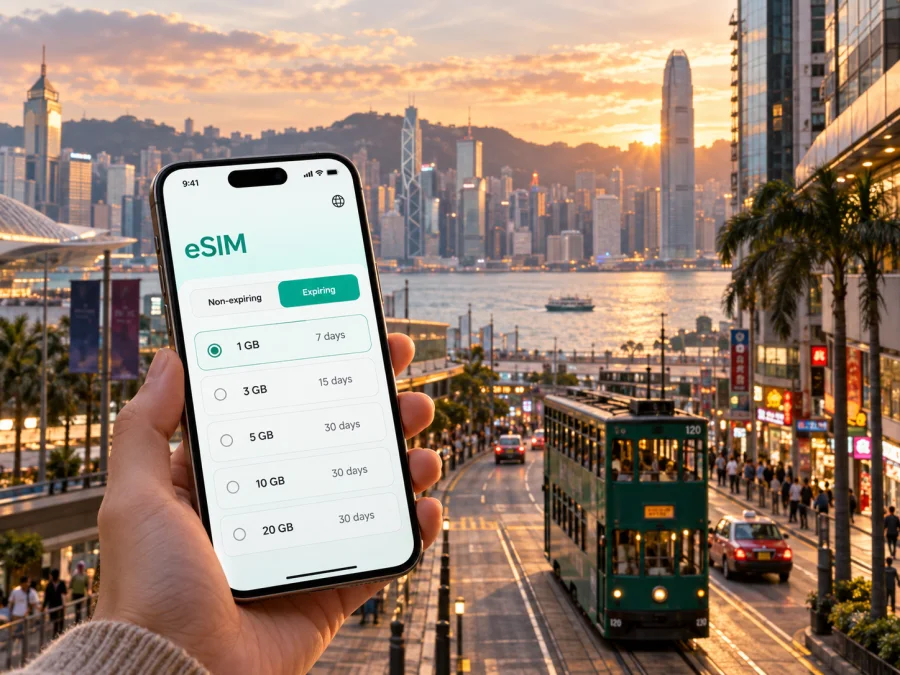
Wan Chai eSIM: mobile connection and internet for your Hong Kong visit
Wan Chai is a useful base for a Hong Kong trip when you want city transport, offices, restaurants, heritage streets and the harbour within a manageable area. The district can feel different from one block to the next: commercial towers and convention venues sit close to older shopfronts, local markets, small lanes and waterfront promenades. A mobile connection helps you join those pieces together—checking a route, finding a hotel entrance, translating a sign or sending a meeting update while you move.
An eSIM can make mobile internet easier to plan before you arrive. Instead of searching for a physical SIM counter after a flight, you can prepare a compatible phone in advance, then use data for maps, transport information and messaging according to the selected plan’s terms. It is still sensible to keep your hotel address and first route available offline in case you need them before the connection is active.
Why Wan Chai works well as a city base
Wan Chai lies on the north side of Hong Kong Island, between Central and Causeway Bay. The MTR Island Line serves Wan Chai station, and the district also has tram stops, bus routes, taxis and ferry connections in the broader harbour area. The exact option that suits you depends on where you are staying and where you are going; a hotel described as “Wan Chai” may be closer to a different station or road than you expect.
The district is especially practical for trips that combine work and sightseeing. The Hong Kong Convention and Exhibition Centre and the waterfront are close to the newer harbourfront, while the streets around Hennessy Road and Johnston Road have shops, places to eat and access to public transport. Further inland, the older neighbourhood around Stone Nullah Lane gives a different sense of the district’s history.
Think of Wan Chai as a group of connected micro-areas rather than one uniform centre. A walk that looks short on a map can include a steep uphill section, a busy crossing or an indoor passage through a large building. Check the route at street level before setting off, particularly with luggage, in rain or when you have a fixed appointment.
Arriving in Hong Kong and reaching Wan Chai
Most air arrivals begin at Hong Kong International Airport on Lantau Island. Wan Chai is on Hong Kong Island, so your transfer involves crossing the city rather than walking from the airport into the district. Common options include Airport Express followed by a local connection, buses, taxis or a pre-arranged car. Which is best depends on arrival time, luggage, number of travellers, budget and the precise hotel address. Check the current transport information on the day of travel.
If you choose the Airport Express, Hong Kong Station is a major interchange on Hong Kong Island. From there, you can continue by MTR, taxi or another local option. For a first visit with bags, compare the full door-to-door route, not only the rail journey: station corridors, exits and the distance from the nearest stop to the hotel can add time and effort.
Before leaving the airport, save your accommodation’s name and full address, a pin for its entrance, the nearest station or stop, and any booking or check-in details you may need offline.
Once your eSIM is installed and data is available, navigation and messaging can help with the last part of the journey. Keep your existing SIM settings in mind: on a dual-SIM phone you can choose which line handles mobile data, calls and messages. Review the eSIM plan instructions and your device settings before departure, and avoid changing settings you do not understand while rushing through the airport.
Getting around: use the right tool for each leg
Wan Chai has several transport choices, and they do not all solve the same problem. The MTR is useful for longer cross-island journeys and connections; trams follow the northern shore of Hong Kong Island; buses can be convenient when a route matches your destination; taxis help with luggage or a direct trip. Walking often makes sense for nearby streets, but hills and weather matter.
| Your situation | A practical starting point | What to check on your phone |
|---|---|---|
| Going from Wan Chai to Central or Causeway Bay | Compare the Island Line, tram and walking route | Station exit, direction of travel and walking distance at the destination |
| Heading to the Convention and Exhibition Centre | Check the nearest station, pedestrian links and venue entrance | The exact event entrance and any meeting point details |
| Exploring nearby streets | Walk, using a map for turns and crossings | Whether the destination is uphill or inside a larger complex |
| Travelling with luggage | Compare a taxi with a rail-and-walk route | Hotel drop-off point, building entrance and traffic conditions |
| Crossing the harbour | Check MTR, ferry or bus options for your endpoint | Departure location, transfer and current operating information |
A map may not show how comfortable a route will be. A few blocks can include an elevated walkway, a busy road or a slope. With luggage or limited mobility, inspect the walking directions before choosing the fastest option.
Trams are part of the north-island experience as well as a transport option. They run along the northern side of Hong Kong Island and connect districts beyond Wan Chai. They are slower than the MTR for many cross-district trips, but can suit a short, scenic ride when you are not in a hurry. Use stop names and direction carefully; check service details locally because schedules and fares can change.
For buses and minibuses, identify the stop and route before boarding. When several services use nearby stops, a saved destination pin helps you confirm where to get off. Mobile data is particularly useful when a route changes or when you need to compare a direct service with a rail connection. Keep an eye on the street as well as the screen: the best route may depend on the side of a large junction where you are standing.
Finding your way through Wan Chai’s different sides
Hennessy Road and Johnston Road are busy reference corridors for shops, food and transport. For a meeting, share a specific entrance or landmark rather than “near the station.” The Convention and Exhibition Centre and harbourfront are more spread out than a street-level shopping cluster; confirm the correct hall, venue entrance or hotel lobby before leaving.
For a change of pace, explore the older streets around Stone Nullah Lane. The Blue House, a historic tong lau building, is a recognisable landmark; check access arrangements before visiting. Star Street and nearby lanes offer cafés, restaurants and small shops, though individual opening hours vary. Along the waterfront, construction, events or temporary access changes can affect the best approach, so follow local signs as well as your map.
Mobile internet for arrival, movement and daily plans
In a dense district, mobile internet is most useful for practical details: checking a route, coordinating a meeting, translating a menu or adjusting plans. Before choosing an eSIM, estimate your data use. Maps and messaging need less than frequent video calls, tethering or large uploads. Compare the plan’s allowance, validity, supported destination and activation terms with the length and style of your visit.
Before choosing an eSIM plan, estimate how you will use data. A traveller who mainly checks maps and messages has different needs from someone who regularly joins video calls, uploads large files or streams media. Look at the allowance, validity period, supported coverage and activation instructions shown for the plan. The appropriate option depends on the length and style of your visit, rather than the city name alone.
Kaspersky eSIM Store is an app and website where you can choose, order and activate an eSIM with a suitable data plan for an international trip. You can compare eSIM options for Hong Kong as part of preparing for Wan Chai, then review the plan details and setup steps before travelling. The plan’s stated terms determine how and where it can be used.
Wan Chai for business trips and events
For a conference or client visit, mobile internet supports small logistics that can otherwise interrupt the day: checking a venue update, finding the correct hall, coordinating a taxi or sharing a change in meeting time. Save the event address and your colleague’s contact details before leaving. If the venue has multiple towers or entrances, include the specific building and lobby in your calendar entry.
A practical workday sequence looks like this:
- Confirm the event venue, entrance and start time from the organiser’s latest instructions.
- Check the route from your accommodation and allow for a walk inside a station or complex.
- Keep a map pin for both the venue and a nearby backup meeting point.
- Test the required meeting app, email and authentication method while you have time.
- Carry a charging option and store essential documents where you can reach them offline.
For a business stay, separate essential communication from optional usage. Email, authentication prompts and maps may be more important than video streaming or large uploads. If you expect to tether a laptop or join video calls over mobile data, check that your plan and device support the intended use and allow for that level of consumption.
Short stopovers and trips beyond Wan Chai
A short stopover works best when you choose one compact area rather than trying to cover the whole city. Wan Chai can be a convenient base for a focused walk through a heritage lane, a meal and a harbourfront pause, especially if your onward transport connects well. Keep a generous return buffer for airport or rail departures, and check your luggage arrangements before leaving the airport area.
For a half-day visit, a simple outline could be:
- Start: travel to Wan Chai and confirm your return route.
- Explore: choose one local cluster, such as Stone Nullah Lane and nearby streets.
- Pause: take a meal or rest near your next transport connection.
- Finish: return with time to spare, using current transport information.
From Wan Chai, it is also practical to visit other parts of Hong Kong Island, Central, Causeway Bay or destinations across the harbour. The right sequence depends on your interests and travel time. Rather than naming too many stops, group places by area and check the last leg back to your accommodation before you go. If you plan a longer excursion beyond the urban core, check the full journey and any service changes in advance.
Installing and activating an eSIM before the trip
Prepare the eSIM while you have a stable connection and enough time to follow the instructions. Your setup can differ by phone model and operating system version, so use the relevant walkthrough and the plan’s own directions. Keep the existing SIM active if you still need its number for calls or verification, and make sure you understand which line is selected for mobile data.
- Confirm that your phone supports eSIM and is not restricted in a way that prevents adding a travel profile. Check your device before purchase if you are unsure.
- Review the plan’s destination, data allowance, validity and activation conditions.
- Follow the Android eSIM installation instructions or the iOS eSIM installation instructions, depending on your device.
- Label the travel profile clearly so you can distinguish it from your usual SIM.
- Check the plan instructions for when to enable the profile and data roaming, if required.
- After arrival, select the intended data line and verify that mobile data is working before relying on it for navigation.
Do not delete an eSIM profile just because a connection takes a moment to appear. First check the plan instructions, mobile-data selection and network settings. If something is unclear, use the support route provided with your order rather than repeatedly changing settings.
Frequently asked questions
Is Wan Chai a good base for a first visit?
It can suit plans centred on Hong Kong Island, business venues, dining and harbour walks. Compare your hotel’s exact location with your itinerary; Central, Causeway Bay and Kowloon are separate areas, and cross-harbour trips take planning.
Can I rely on mobile maps alone?
Use maps to find routes and saved places, but also follow station and street signs. Keep important addresses offline, since a route display may not make a slope, exit or long indoor connection obvious.
Should I install the eSIM before arriving?
Setup is easier when you have time and a stable connection. Follow the plan’s activation instructions, since some plans have specific conditions for when to enable a profile or data roaming.
What if mobile data stops working?
Use saved addresses or offline maps, check that the travel eSIM is selected for data, and follow the plan’s troubleshooting steps. Keep hotel details available without internet.
Prepare your eSIM for Wan Chai
Before departure, review the destination and terms, choose an eSIM plan that fits your visit, and complete setup when you have time to check each step. Kaspersky eSIM Store helps you choose, order and activate an eSIM for mobile data during an international trip. Explore eSIM options for Hong Kong and prepare for your time in Wan Chai.