Travel connectivity guide
Xiaomi 13 Pro 512GB eSIM: Compatibility & Setup
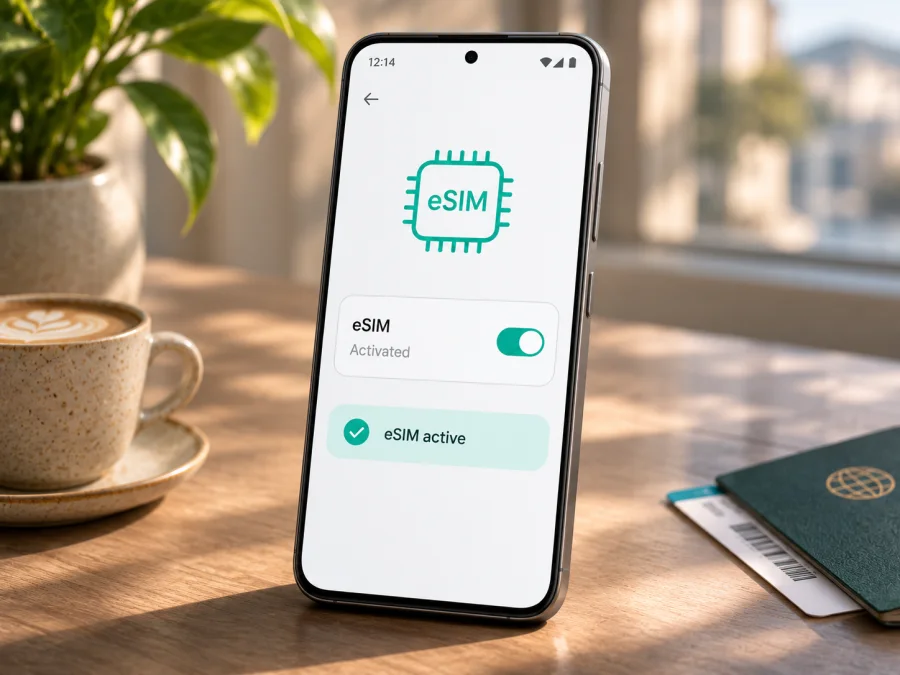
Xiaomi 13 Pro 512GB eSIM: compatibility and setup guide
If you own a Xiaomi 13 Pro 512GB, the short answer is: some versions support eSIM, but the storage capacity does not tell you which version you have. Xiaomi’s international product specification lists a 12GB + 512GB configuration and a dual-SIM option of nano-SIM + eSIM. Xiaomi’s India specification describes a nano-SIM + nano-SIM phone, while Xiaomi’s China specification also lists two nano-SIM slots. The market and exact device variant matter more than the “512GB” label.
Xiaomi 13 Pro 512GB eSIM support at a glance
| Item | What to know |
|---|---|
| Exact device name | Xiaomi 13 Pro 512GB |
| Storage configuration | 512GB is one storage option; it does not identify the sales region or SIM hardware by itself |
| International version | Xiaomi lists nano-SIM + nano-SIM or nano-SIM + eSIM on its international specifications page |
| India version | Xiaomi’s India specifications list Dual SIM: Nano + Nano; do not assume eSIM is available |
| China version | The mainland China specification describes two Nano SIM slots; do not assume it has the international eSIM function |
| Final compatibility check | Look for an EID and an eSIM option in the handset settings, then confirm the exact model and carrier conditions |
| Travel use | A compatible, unlocked handset can use a supported travel eSIM for mobile data, subject to the selected plan and local network availability |
The evidence supports a qualified answer: the international Xiaomi 13 Pro platform supports eSIM, including a 512GB configuration, but “Xiaomi 13 Pro 512GB” alone is not enough to certify every handset. A 512GB phone imported from another market can have different SIM capabilities, software, and network bands. Even two phones sold under the same commercial name can behave differently if their hardware or regional software differs.
Why the sales region matters
Xiaomi publishes region-specific product pages. Those pages can list different memory configurations, mobile bands, SIM arrangements, or features for devices with closely related names. For the Xiaomi 13 Pro, the international specification includes 12GB + 512GB and describes dual SIM as either two nano-SIM cards or one nano-SIM plus an eSIM. Its eSIM footnote says availability may vary by country or region and carrier. This is the basis for saying that an international 512GB model can support eSIM, not a guarantee about every phone sold worldwide.
Xiaomi’s India page lists Dual SIM: Nano + Nano, while its China-market specification describes two Nano SIM slots and includes a 12GB + 512GB option. These are useful contrasts: the exact storage capacity exists in a configuration whose published SIM arrangement differs from the international one. The India page lists a different memory configuration, also with Nano + Nano. In both cases, do not assume that the international eSIM function is present.
Retailers may import devices and listings can combine specifications from different markets. For a used or imported phone, check the model information and box label, then test the actual handset. A “global ROM” listing, language setting, 5G support, or SIM tray does not prove eSIM hardware; a software change cannot be assumed to add it. Carrier support, destination availability, and phone compatibility are separate checks. A locked phone may reject another provider’s profile even when an eSIM menu is visible.
Check compatibility on your own phone
Check the handset itself rather than relying only on its name. Menu labels vary by MIUI or HyperOS version and language, so use Settings search if needed.
- Connect to Wi-Fi. Keep internet access available while checking or installing an eSIM. Do not delete an existing mobile profile as a troubleshooting shortcut.
- Open Settings. Search for “eSIM,” “SIM cards,” or “Mobile networks.” On supported Xiaomi software, start with Settings → SIM cards & mobile networks.
- Look for an eSIM control. Check for Use eSIM, Manage eSIM, Add eSIM, or Discover eSIMs. If the phone shows a switch to enable eSIM, open the management screen and check whether it offers to add a profile.
- Find the EID. In Manage eSIM, look for a menu such as View device EID or EID. The EID is an identifier for the embedded SIM. You may need to enable the eSIM control before the EID appears.
- Check the model number. Open Settings → About phone and record the model or model number. Compare it with the box label, invoice, or manufacturer support information for the country where it was originally sold.
- Check carrier lock status. If the phone was purchased through a mobile operator, ask that operator whether it is unlocked for another eSIM plan. A visible eSIM menu does not remove a network lock.
Compatibility checklist before you choose a plan
- [ ] The phone’s settings include an eSIM management option.
- [ ] You can view an EID on the handset, or Xiaomi confirms that the exact model number has eSIM hardware.
- [ ] The phone is not locked to a carrier that blocks the plan you intend to use.
- [ ] The phone is running current, official software for its region, and has been restarted after any system update.
- [ ] The eSIM plan supports the phone and the country or region you will visit.
- [ ] You have a stable internet connection, access to the activation details, and enough time to complete installation before departure.
For example, before a short city break you might keep your home SIM for calls and use a travel eSIM only for data; on a longer route, you may need to compare a country plan with a regional plan. In either case, decide which line should carry mobile data before leaving, and check how the plan starts and where it works. These choices affect how you configure the phone, but they do not change whether the handset itself supports eSIM.
Check your device before choosing a tariff. If you are unsure how to interpret the menu, ask Xiaomi or the retailer to confirm the full model number and original sales market. An EID and working “Add eSIM” flow on your handset are more useful than guessing from its name.
If the first two checks fail, pause before buying. Treat “no EID” or “no eSIM option” as a reason to verify the exact unit with Xiaomi or the seller, not as a prompt to keep retrying QR codes. If a seller claims that an update or a different ROM will enable eSIM, ask for written confirmation tied to your complete model number. Do not pay for a plan on the assumption that a menu will appear later.
Install and activate an eSIM
Only start after confirming compatibility and reading the plan’s terms. Some activation codes can be used only once, some plans start their validity at installation or first network connection, and the provider’s instructions determine the exact sequence. Keep the QR code or activation details available on another screen or printed securely; the phone usually cannot scan a QR code displayed on its own screen.
- Prepare the phone. Connect it to reliable Wi-Fi, charge it, and install available official system updates if practical. Confirm that you can sign in to the account that contains the eSIM details.
- Review the plan. Check the destination, data amount, validity period, activation rules, supported networks, and whether the plan is data-only. Do this before installing the profile because installation and plan validity are separate steps in some offers.
- Open eSIM management. Go to Settings → SIM cards & mobile networks → Use eSIM → Manage eSIM. Depending on the software version, the wording or order may differ. If no eSIM management choice appears, return to the compatibility check instead of continuing.
- Add the profile. Choose Add eSIM or the available equivalent. Scan the provider’s QR code, or enter the activation details manually if that method is provided. Follow the on-screen confirmation prompts.
- Wait for installation. Keep Wi-Fi on and do not close the settings screen while the profile downloads. Installation can take a few minutes and may pause if the connection is unstable.
- Name the profile. Give it a clear label such as “Travel data” so you can distinguish it from your home SIM. Avoid deleting or disabling your regular SIM unless you specifically want to do so.
- Choose the data line. In the SIM settings, select the new eSIM as the mobile-data line when you are ready to use it. Keep calls and texts assigned to your usual SIM if that is what you want, and confirm any home-operator roaming charges before travel.
- Enable data roaming for the travel eSIM if required. Some travel plans need roaming enabled on that profile to connect to a partner network. Follow the plan’s instructions, and make sure you change the setting for the travel eSIM rather than enabling roaming for your home SIM by mistake.
- Test the connection. When the plan is meant to start, turn Wi-Fi off briefly and check that the phone shows a mobile network and can load a simple webpage. If you are still at home and the plan activates only at the destination, wait until arrival before judging whether it connects.
For Xiaomi’s general Android steps, see the Android eSIM installation instructions. The iOS installation instructions are useful only if you are helping someone set up an Apple device; they do not apply to Xiaomi 13 Pro. Follow the plan-specific instructions if they differ from these general menu labels.
An installed eSIM profile is not necessarily the same as an active data connection. The profile may be present while its plan is not yet in its validity period, the travel eSIM may not be selected for mobile data, or the destination network may not be available at your current location. Check the status and terms before removing and reinstalling anything. Repeated installation attempts can consume a one-time activation code or make support harder to troubleshoot.
Use Xiaomi 13 Pro 512GB for mobile data while travelling
A travel eSIM is useful when you want mobile data without swapping out your physical SIM. If your international Xiaomi 13 Pro 512GB has eSIM enabled and is unlocked, you can keep your regular nano-SIM installed and add a travel profile for data, subject to the selected plan’s conditions. Which SIM handles data, calls, and messages is controlled in the phone settings; review those choices before departure.
You can leave your home SIM available for calls or verification messages if its terms allow it, while selecting the travel eSIM for mobile data. Check home-operator roaming charges first. If needed, turn off roaming on the home SIM separately from roaming on the travel eSIM.
Kaspersky eSIM Store is an app and website where you can choose, arrange, and activate an eSIM with a suitable plan for mobile data on an overseas trip. Before choosing, confirm that the destination is included, check the listed data allowance and validity period, and note when the plan begins. Plans may be limited by a country, region, partner network, or specific usage conditions. The local network and service quality depend on the plan and the networks available where you travel; no phone can guarantee coverage in every location.
If you want to review the currently listed travel destinations and plan options, browse the Kaspersky eSIM Store. This is a general store link for checking available destinations, not a country-specific tariff. Choose your destination and review the current details before arranging a plan. The service is focused on mobile data for travel; do not assume that a data plan includes a regular local phone number, voice calls, or SMS unless the plan terms explicitly say so. Internet-based messaging and calls may work through apps over the data connection.
Install the profile before flying only if the provider’s instructions allow it. Check when validity begins: if installation starts the plan, wait until near departure or use a delayed-start option if offered; if it starts on first connection in the destination, you may be able to add it earlier. At arrival, enable the eSIM, select it for data, and allow a few minutes to register. Follow the plan’s network-selection instructions and avoid deleting the profile because the first connection is not immediate.
Common problems and what to check
There is no “Add eSIM” option
Check the model number and region, search Settings for EID and Manage eSIM, then restart and check for official updates. If the options remain absent, ask Xiaomi or the seller to confirm the unit. Storage, 5G, and a dual-SIM tray do not prove eSIM support.
The QR code will not scan or the profile will not download
Display the full QR code on another screen or use a clear printout. Connect to stable Wi-Fi and use manual entry only if the plan supports it. Check whether the code is single-use or was already activated before retrying or deleting a downloaded profile.
The eSIM is installed but shows no service
Confirm the plan is active, the destination is covered, the eSIM is enabled and selected for mobile data, and its roaming switch is on if required. Toggle airplane mode once or restart, then wait. Use manual network selection only as the plan directs. If it still fails, contact support with your location and phone model.
The phone connects, but apps do not load
Turn Wi-Fi off briefly and verify that the travel eSIM is selected for data, has remaining allowance, and has roaming enabled if required. Check data restrictions. Change APN settings only when the provider gives exact values.
The home SIM is using roaming data
Open the SIM manager and check the line selected for mobile data. Set the travel eSIM as the data line, and turn off data roaming on the home SIM if you do not want it to use roaming. Keep in mind that call, text, and voicemail charges can follow separate rules from data. Review your home operator’s terms rather than assuming that disabling mobile data disables every roaming charge.
You cannot use the profile on a replacement phone
Transfer and QR-code reuse rules vary. Before resetting or replacing the phone, check whether the provider can reissue the profile. A normal device backup may not restore an eSIM.
Frequently asked questions
Does every Xiaomi 13 Pro 512GB support eSIM?
No. Xiaomi’s international specification lists eSIM as an option alongside two nano-SIMs, but the published India and China configurations describe nano-SIM-only arrangements. Check your unit’s EID, eSIM settings, full model number, and original sales market. The storage capacity does not settle the question.
Can I use two SIMs at once?
The international configuration is described as nano-SIM + nano-SIM or nano-SIM + eSIM. Active lines depend on software and carrier; check your SIM manager.
Does 5G mean that eSIM will work?
No. 5G describes a mobile-network capability; it does not confirm that the phone has an enabled embedded SIM or that a carrier will activate it. Check the eSIM menu and EID separately, then verify the selected plan and destination network.
Do I need an EID to install an eSIM?
The EID is useful evidence that an embedded SIM is present, and a carrier may ask for it when issuing a profile. Some travel plans provide an activation QR code instead. If you cannot find an EID, confirm compatibility with Xiaomi or the seller before purchasing a plan.
Will the eSIM give me a phone number?
Do not assume so. Travel eSIM plans are commonly designed for mobile data, and plan details determine whether calls, SMS, or a regular number are included. Check the exact terms. Messaging and calls through internet apps can use the data connection when those apps and services are available.
Should I install the eSIM before leaving?
Usually you can prepare in advance, but validity may begin on installation or on first connection. Follow the plan instructions and keep access to the activation details until setup is complete.
Can I leave roaming enabled?
Enable roaming only on the line that needs it and only when the selected plan’s instructions require it. Travel eSIMs may need roaming to reach a partner network. Check that your regular SIM is not selected for mobile data if you want to avoid using its roaming allowance.
Final check before your trip
For the Xiaomi 13 Pro 512GB, treat eSIM compatibility as a property of the exact handset variant, not of its storage size. The international version is listed by Xiaomi with a nano-SIM + eSIM option, while the India and China specifications describe nano-SIM configurations. Confirm the EID and Add eSIM controls on your own phone, match its model number to its sales region, and ask the seller or Xiaomi if anything is unclear.
Once the device passes that check, confirm that it is unlocked, that the travel plan supports eSIM use in your destination, and that you understand the plan’s data amount, validity, activation timing, and network conditions. Set the intended SIM for mobile data and check roaming separately for each line. These steps help you prepare a reliable travel setup without assuming that every regional version behaves the same way.


