Travel connectivity guide
Xiaomi 13T 256GB eSIM: Compatibility & Setup
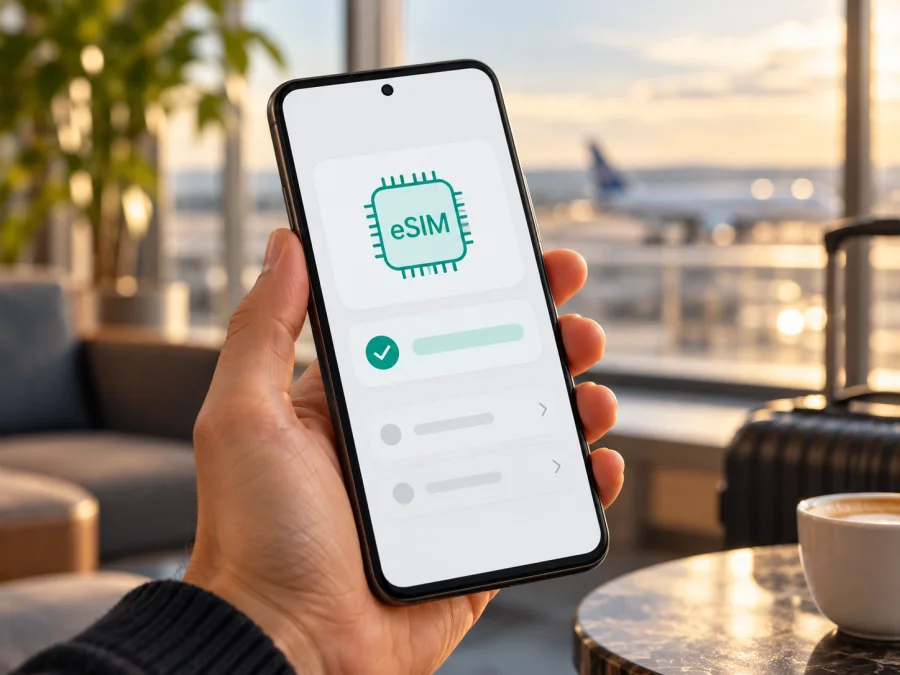
Xiaomi 13T 256GB eSIM: compatibility and setup guide
Short answer: Xiaomi’s official product specifications list eSIM as an option for the Xiaomi 13T, including regional product pages that describe dual SIM as either two nano-SIMs or one nano-SIM plus one eSIM. That supports a qualified “yes” for the Xiaomi 13T 256GB: the model family has eSIM-capable versions, but the storage label alone does not identify the phone’s exact regional hardware, software or operator status. Check the particular handset before choosing a travel plan.
| Item | What to know |
|---|---|
| Device in this guide | Xiaomi 13T 256GB |
| Storage | 256 GB; official regional specifications list this storage with more than one RAM configuration, so “256GB” does not uniquely identify the full SKU. |
| eSIM on the model family | Listed by Xiaomi on regional Xiaomi 13T specification pages as an available dual-SIM configuration. |
| Physical SIM arrangement | Depending on the supported configuration, two nano-SIMs or nano-SIM plus eSIM. |
| What can vary | Country or region of sale, local operator support, device software and any carrier restriction. |
| Best confirmation | On the exact phone, look for “Use eSIM,” “Manage eSIM,” “Add eSIM” and a device EID in SIM settings. |
Does Xiaomi 13T 256GB support eSIM?
The most accurate answer is: it can, but confirm the exact unit. Xiaomi’s product specifications for markets including Germany and Peru list the Xiaomi 13T’s dual-SIM options as nano-SIM plus nano-SIM or nano-SIM plus eSIM. Xiaomi also notes that eSIM availability can differ by country or region and mobile operator. This confirms eSIM for supported versions, not every handset sold under the same name.
The “256GB” part describes storage capacity. It does not say where the handset was sold, which regional SKU it is, whether its firmware exposes eSIM settings, or whether a carrier has restricted it. Xiaomi’s regional specifications list 256 GB alongside different RAM configurations in at least some markets. A product listing that says only “Xiaomi 13T 256GB” is not enough to settle the eSIM question for a particular unit.
It also helps to separate three checks that are often mixed together:
- Device version: Does this exact handset have eSIM hardware and software enabled for its sales region?
- Issuing operator: Can the carrier or eSIM service you plan to use issue a profile for this phone and its market? A carrier-locked handset may reject another provider’s profile.
- Travel destination: Does the selected plan include the country or region you will visit, and can its partner network connect there? eSIM support in the phone does not itself promise coverage in a destination.
Why regional and operator versions matter
Xiaomi’s current specifications are useful evidence, but they are regional product pages, not a guarantee for every import or carrier-branded unit. Xiaomi explicitly says that eSIM availability varies by country or region and operator. This is the relevant geographic distinction: the phone’s original sales market determines which variant and software it may have; the local mobile operator determines whether it will issue or accept an eSIM profile; and the visited country is a separate question about the travel plan’s included destinations and network arrangements.
Do not infer the handset’s eSIM status from its current location, language, SIM tray shape, or 256 GB storage. A phone bought abroad can retain its original regional configuration after being brought home. A model number or seller’s invoice is more useful, but the on-device settings are the practical confirmation. If buying used or imported, ask the seller for the exact model/SKU and country of first sale, and ask whether the phone is carrier-unlocked. If eSIM is essential, request a demonstration of the eSIM menu on that phone before paying.
A SIM tray does not settle the question: supported units can use a physical nano-SIM and embedded eSIM together, while two physical SIM positions do not prove that eSIM is enabled. Settings and EID are stronger checks than appearance.
Check compatibility on the actual phone
Start with settings. Menu labels can differ between MIUI and HyperOS versions, and translations may vary. On a supported Xiaomi configuration, Xiaomi’s eSIM guidance describes an “Use eSIM” control under SIM or mobile-network settings, followed by “Manage eSIM.” The phone may also show “Add eSIM” or “Discover eSIMs.” If those controls are available, open the EID screen as well. The EID is the identifier for the embedded SIM; it is not the same as an IMEI and should not be posted publicly.
Try these checks while the phone is unlocked and connected to Wi-Fi:
- Open Settings.
- Tap SIM cards & mobile networks or Mobile networks. The wording depends on the software version.
- Look for Use eSIM. If it is off, switch it on and confirm the prompt if one appears.
- Open Manage eSIM and check for Add eSIM or Discover eSIMs.
- In the eSIM management screen, open the menu and choose View device EID if that option appears. Record it only for a carrier or support request that specifically needs it.
- Return to SIM settings and verify that the eSIM can be selected for mobile data after a profile has been installed.
Menu labels can change after an update. A visible EID together with an add-eSIM control is a strong indication that the phone exposes eSIM functionality. If the handset was imported, modified, refurbished or bought through a carrier, confirm its model and market with Xiaomi or the operator.
If the EID and eSIM options are missing, do not buy a plan on the assumption that an update will add them. Restart the phone, install pending official system updates over Wi-Fi, and check the settings again. Then confirm the full model number and original sales region with the seller or Xiaomi support. If the official configuration for that market does not offer eSIM, or the menu remains absent, treat the device as unconfirmed and use a compatible alternative or a physical local SIM where appropriate.
Check your device before choosing a plan. This additional compatibility check is useful when the phone’s settings are unclear, but the on-device EID and eSIM menu remain the key confirmation for this exact Xiaomi 13T 256GB.
Compatibility checklist before purchase
Before payment, confirm that the phone shows an eSIM menu and EID (or that Xiaomi confirms its regional SKU); that it is unlocked; and that Wi-Fi and the QR code or installation details will be available. Check that the plan includes every destination and that its data, validity, activation and hotspot terms fit your trip. Confirm whether data roaming is required for the eSIM.
Device support, carrier eligibility and destination coverage are separate. A travel data eSIM may not include a number, regular calls or SMS; check the specific plan terms.
Install and activate an eSIM
Install over reliable Wi-Fi and follow the plan’s timing rules: downloading a profile and starting its validity may be different events. Some QR codes are single-use, so do not delete the profile or scan repeatedly unless the provider confirms it can be reissued.
Step-by-step on Xiaomi 13T 256GB
- Confirm eligibility: check the eSIM menu and EID, and make sure the phone is unlocked.
- Connect to Wi-Fi: keep the QR code on another screen or use a supported in-app setup.
- Open settings: go to Settings → SIM cards & mobile networks or Mobile networks. Enable Use eSIM, if shown, then open Manage eSIM.
- Add the profile: select Add eSIM, scan the QR code or enter the supplied details, and follow prompts.
- Label the line: for example, “Travel data.”
- Choose when to use it: follow the plan’s activation instructions; installation may not start usage.
- Select mobile data: choose the travel eSIM when ready. Keep data roaming off for your home SIM if you want to avoid using it abroad.
- Enable roaming only if required: verify that the travel profile is selected before switching it on.
- Test when appropriate: turn Wi-Fi off briefly and check registration and a simple webpage. First connection may start plan usage.
See the Android eSIM installation instructions. For a separate Apple device, see the iOS eSIM installation instructions. Follow the current on-screen prompts and your plan’s terms.
Before you leave home
Keep the QR code and instructions accessible without the new eSIM, and make sure you can sign in to your account. If advance installation is allowed, download the profile over Wi-Fi and wait to use it until the plan’s start point. If setup fails, note the error and contact the provider before deleting the profile; its code may not work twice.
Use the eSIM for mobile data while travelling
On arrival, select the travel eSIM for mobile data and check that it registers on a supported network. Keep a home SIM available for calls or account messages if useful, but review its data-roaming setting to avoid unintended charges. Choose the data line in settings; do not assume both lines use data simultaneously.
Label the lines (for example, “Home” and “Travel data”). A travel plan may not provide a phone number or standard calls and texts; messaging and voice apps can use its data connection.
For multi-country travel, check every stop against the exact plan’s destination list and terms. Kaspersky eSIM Store is an app and website for choosing, arranging and activating a travel eSIM plan for mobile data; service depends on the selected plan and its network arrangements.
Three travel scenarios
- City break: install over Wi-Fi if allowed, then switch data to the eSIM on arrival; monitor background usage.
- Work trip: keep your physical SIM for calls if needed, use the eSIM for data, and check that home-SIM data roaming is off. Home-line calls or texts may still incur charges.
- Several countries: confirm every stop is included. eSIM support does not guarantee service in every country.
After connecting, check data use in the plan account; the phone’s counter may differ. Disable automatic updates or backups over mobile data if you need to conserve the allowance.
Common problems and what to check
“Add eSIM” is missing
Search Settings for “eSIM” and “EID,” check official updates, then verify the exact SKU and original sales region with Xiaomi or the seller. A regional version may not expose eSIM. Do not assume an unofficial ROM will add support.
The QR code will not scan
Raise the display brightness, clean the camera lens, and confirm the code is for this order and has not been used. Display it on another screen or enter manual details if offered. Ask the provider about an expired or used code.
The profile downloads but there is no service
Check that the eSIM is enabled and selected for data, that the plan covers your destination, and that its start condition is met. Toggle airplane mode or restart and allow a few minutes. Enable roaming only for the travel eSIM if required; use APN settings only when supplied by the provider.
Data uses the wrong SIM
Verify the preferred data line in SIM settings. Disable roaming on the home SIM if you want to avoid using it abroad.
The operator says the phone is not eligible
Check the EID, full model number and unlock status. Confirm that the provider supports eSIM for this model and market. Xiaomi says availability depends on region and operator.
The profile is installed but the plan is not active
Check whether usage begins at purchase, installation, scheduled activation or first connection at the destination. Review account status and do not remove the profile while the provider investigates.
Frequently asked questions
Does every Xiaomi 13T 256GB support eSIM?
No blanket guarantee follows from storage capacity. Xiaomi lists eSIM for the model in regional specifications but says availability varies by market and operator. Check the EID and menu on the actual phone.
Can I use a nano-SIM and eSIM together?
Supported configurations are listed as two nano-SIMs or nano-SIM plus eSIM. The arrangement depends on the regional unit; choose one data line in settings.
Where do I find the EID?
Open SIM or mobile-network settings, enable Use eSIM, open Manage eSIM, and look for View device EID. Labels vary; if the option is absent, verify the SKU and region.
Does a travel eSIM include a phone number?
Often it is data-only. Check its terms for calls or SMS; internet apps can use the data connection.
Will it work everywhere I travel?
No. The handset version, provider eligibility and destination coverage all matter. Check the exact route before purchase.
Should I remove it after the trip?
Check the terms first. Some profiles can be reused; others are single-use or tied to one device.
Final check: your Xiaomi 13T 256GB and the next trip
Treat Xiaomi 13T 256GB as eSIM-capable where the exact regional version exposes the feature, not as a guarantee based on storage capacity. Check Use eSIM, Manage eSIM, Add eSIM and the device EID. If an option is missing, verify the full SKU, country of sale, software and carrier-unlock status with Xiaomi, the seller or relevant operator before paying.
Separately confirm that the plan includes every destination and that its data, validity, activation point and roaming requirements suit your trip. Once those checks are clear, browse current destination options in Kaspersky eSIM Store to choose and activate a travel eSIM plan for mobile data. Service depends on the selected plan and its network arrangements.


