Travel connectivity guide
Xiaomi 15T Pro 8GB RAM eSIM: compatibility & setup
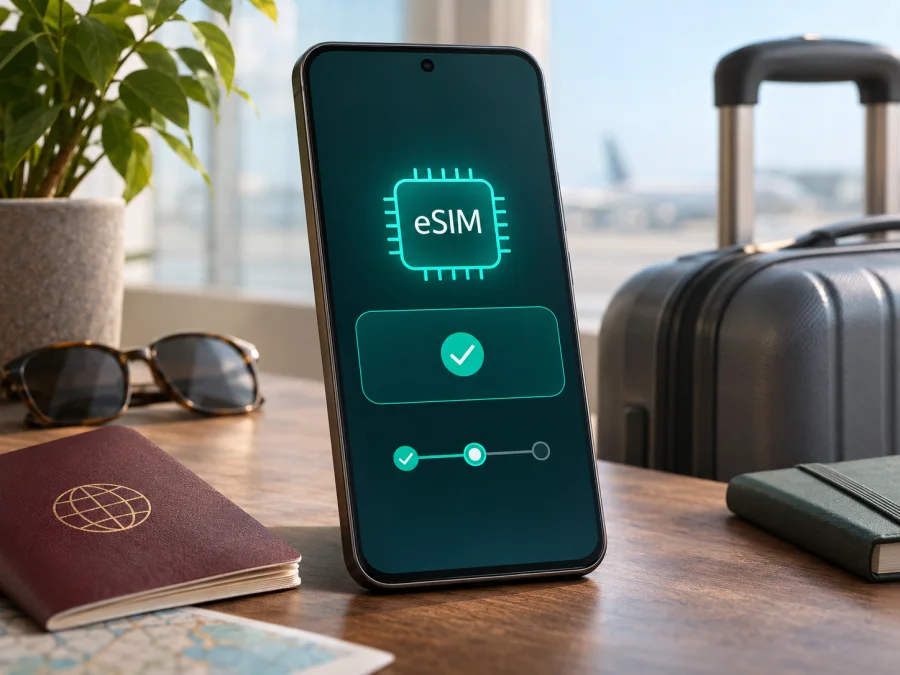
Xiaomi 15T Pro 8GB RAM eSIM: compatibility and setup
Short answer: Xiaomi’s official support information confirms that the Xiaomi 15T Pro supports eSIM and has an EID (the identifier used by an eSIM). However, the exact Xiaomi 15T Pro 8GB RAM configuration in this query is not verified as an official hardware variant: Xiaomi’s published global specifications list 12 GB RAM configurations. Treat the eSIM capability as confirmed for the 15T Pro model family, but check the actual phone’s model code, EID and eSIM menu before buying a plan. Region, firmware and the particular mobile operator can affect availability.
That distinction matters when shopping across markets. A listing can use “8GB RAM” to describe physical memory, virtual memory expansion, or a retailer’s own description. Those are not interchangeable. The name in this guide stays Xiaomi 15T Pro 8GB RAM because that is the requested variant; it should not be read as proof that Xiaomi sells an 8 GB version or that every handset with a similar listing has the same SIM hardware.
Does Xiaomi 15T Pro 8GB RAM support eSIM?
Xiaomi’s product-specific support FAQ for Xiaomi 15T Pro says the model supports eSIM and EID. The same FAQ describes possible dual-SIM arrangements as nano-SIM + nano-SIM, nano-SIM + eSIM, or eSIM + eSIM. Xiaomi also notes on its general eSIM support page that availability depends on the country or region and carrier. These statements support eSIM on the model family, but they do not verify an 8 GB RAM SKU in every market.
The practical answer is therefore: yes for the Xiaomi 15T Pro model family according to Xiaomi’s support information; confirm the exact handset before relying on eSIM for a trip. Do not infer support from the RAM label, the seller’s title, the presence of two SIM slots, or the fact that another regional version has an eSIM menu. An imported phone may have a different model code, software build, or carrier restriction.
| Check | What is known | What to verify on your handset |
|---|---|---|
| eSIM on Xiaomi 15T Pro | Xiaomi’s product FAQ says eSIM is supported. | Confirm the phone exposes eSIM settings and can add a profile. |
| EID | Xiaomi’s product FAQ says the model supports EID. | Look for an EID in Settings or by entering *#06#. |
| Requested 8 GB RAM variant | Not listed in the global Xiaomi 15T Pro specification checked for this guide; it lists 12 GB RAM configurations. | Ask the seller for the full model code and whether “8 GB” means physical or expanded memory. |
| SIM arrangements | Xiaomi’s FAQ lists configurations including nano-SIM + eSIM and eSIM + eSIM. | The combinations enabled on your individual phone may depend on its market and software. |
| Carrier and destination | Xiaomi says eSIM availability varies by country/region and carrier. | Check the specific operator and plan for the country where you will use mobile data. |
Why the 8 GB label needs a closer look
Memory capacity and eSIM capability are separate questions. Xiaomi’s global specification page lists the Xiaomi 15T Pro with 12 GB RAM paired with 256 GB, 512 GB or 1 TB storage. Xiaomi’s product FAQ also describes an 8 GB memory extension for the 256 GB configuration; this is storage-based expansion, separate from the listed 12 GB physical RAM. A shop could use that figure in a confusing title or describe a different regional product, so confirm which memory figure it means. None of those possibilities should be assumed without seeing the model label and the device itself.
Before paying, request a photo of the box label or the phone’s “About phone” screen showing the full model code, RAM and storage. Ask the seller to confirm whether the phone is new, which sales region it is intended for, and whether it is carrier-unlocked. If it is already in your hands, use the compatibility checks below. They are more useful than relying on a generic product listing because they test the specific handset and installed software.
A regional SKU can differ even when its retail name looks identical. The available cellular bands, eSIM provisioning, supported carriers, dual-SIM behavior and menu labels can vary. A carrier may also lock a handset or limit eSIM activation to its own subscribers. That restriction is separate from whether the phone contains eSIM hardware. Xiaomi’s carrier support information is the reference for supported country/operator combinations; the mobile operator must still confirm that the particular plan and customer account can be activated on the phone.
What to check before buying an eSIM plan
Do these checks while you still have reliable Wi-Fi and time to contact the seller or operator. If one item is uncertain, resolve it before purchasing a plan that may start its validity period during installation or first connection.
- [ ] Confirm the exact device. Read the model code from Settings → About phone and compare it with the packaging or invoice. Keep the full code when asking Xiaomi or the seller about eSIM.
- [ ] Look for EID. Open Settings and search for “EID” or “eSIM”; on many Android phones,
*#06#also displays device identifiers. The menu and dialer behavior can differ by software build. Do not share your EID publicly. - [ ] Look for an add-eSIM option. In Settings, open SIM cards/mobile networks or search Settings for “Add eSIM” or “Download a SIM”. The wording can change between HyperOS versions and regions.
- [ ] Check for a carrier lock. Ask the original seller or operator whether the handset is unlocked and can add a travel eSIM while retaining your usual SIM. A visible eSIM menu does not remove a network lock.
- [ ] Check the destination and operator. Confirm that the plan is intended for the country or region you will visit, that the operator can provision eSIM for this device, and that its network bands and service conditions fit your itinerary. Do not assume that a listing for one country covers a neighboring country or a transit stop.
- [ ] Read the plan conditions. Check data allowance, validity, eligible countries, when the validity clock starts, and whether tethering or top-ups are allowed. A travel data plan may not include an ordinary phone number, voice calls or SMS unless its terms expressly say so.
- [ ] Prepare internet access. Downloading a profile requires a working internet connection, usually Wi-Fi. Keep the activation QR code or manual details available on another screen or printed copy if you plan to scan it.
- [ ] Update carefully. Install available stable system updates before travel if practical, then restart and check the SIM settings again. Avoid experimenting with unofficial firmware just to reveal a menu.
If you want another device check, check your device’s eSIM compatibility before selecting a plan. Device compatibility, carrier eligibility and destination coverage are separate checks; all three need to fit your trip.
Find EID and eSIM settings on Xiaomi 15T Pro 8GB RAM
HyperOS menu names can differ by region and version. In Settings, search for “EID”, “eSIM” or “SIM”, then open SIM cards & mobile networks and look for Add eSIM, Manage eSIM or Download a SIM. If Settings search finds nothing, enter *#06# in the dialer; an EID may appear with the IMEI numbers. Some builds also show identifiers under About phone or Status.
An EID is the identifier of the embedded SIM component. It is not an IMEI, phone number, QR code or activation code. Keep it private and share it only with Xiaomi, the seller or an operator when checking compatibility. If the EID is present but no add-eSIM option appears, restart after official system updates, search again, and ask support to check the full model code and regional software. An EID supports the compatibility check but cannot guarantee that a particular carrier will activate its plan.
How to install an eSIM on Xiaomi 15T Pro 8GB RAM
Install the profile while connected to stable Wi-Fi, preferably before leaving home. Keep the QR code from the plan instructions on a second device, since the phone cannot scan a code displayed on its own screen. Some providers allow manual activation details or in-app installation instead; follow the method included with your plan. For a visual walk-through, see the Android eSIM installation instructions. The iOS instructions are for Apple devices and are included as a separate reference, not as steps for this Xiaomi phone.
- Check eligibility first. Confirm that eSIM is visible in Settings, the handset is unlocked, and the plan supports the destination and this phone. Read whether the plan begins at installation, activation or first network connection.
- Open the SIM settings. Go to Settings → SIM cards & mobile networks, then choose Add eSIM or the equivalent option. If asked, accept the system’s eSIM terms and continue.
- Choose the installation method. Scan the provider’s QR code with the on-screen scanner, or enter the activation details manually if the provider supplied them. If activation happens through an app, follow its prompts and approve the request on the phone.
- Wait for the profile to download. Keep Wi-Fi connected and do not close the setup screen until the phone confirms that the profile has been added. A profile download can take a few minutes. Avoid repeatedly scanning the same QR code if the first attempt is still processing.
- Name the profile. Use a label such as “Travel data” or the destination name so you can distinguish it from your home SIM. This is a convenience label and does not change the plan or its network.
- Choose what each SIM does. Keep your usual line assigned to calls and texts if you need it, and select the travel eSIM for mobile data when appropriate. Check the mobile-data toggle and preferred data SIM in the SIM settings.
- Follow the plan’s activation instructions. Some eSIMs should be installed before departure but switched on only at the destination; others activate as soon as they connect. Use the plan’s stated activation trigger instead of guessing.
- At the destination, enable the eSIM. Turn on the travel profile and select it for mobile data. Enable data roaming for that profile only if its instructions require it. Roaming settings can be necessary for a travel eSIM to connect, but the right setting depends on the plan. Keep roaming off for your home SIM if you want to avoid unexpected charges.
- Test service. Wait briefly for a network, then open a simple webpage. If it does not load, check the troubleshooting steps below before deleting or reinstalling the profile.
An eSIM profile can be difficult or impossible to transfer after activation, and some QR codes are single-use. Do not delete a working travel profile as a first troubleshooting step. Contact the plan provider before removing it, resetting the phone, or changing devices.
Use eSIM for mobile data while travelling
Before departure, check that your plan explicitly includes every country where you expect to use data, including transit stops. A regional plan name alone does not guarantee coverage in every place. The phone’s eSIM capability does not establish whether a particular operator provides service at your destination; check the plan’s current eligible countries and network information.
A common setup is to keep your home SIM available for your usual number and select the travel eSIM for mobile data after arrival. Whether both lines can remain active depends on the handset’s regional configuration and operator rules. Check your home plan’s charges, and turn off data roaming on that SIM if you do not want it to use data. For the travel profile, enable data roaming only if its instructions require it. The correct setting depends on the plan.
Estimate your data needs from your use: maps, messaging and email usually need less than video, cloud backups or hotspot sharing. Verify whether tethering is allowed, check validity and the moment it starts, and download maps or tickets on Wi-Fi. Monitor data in Settings and disable automatic downloads if you need to conserve the allowance.
Kaspersky eSIM Store is an app and website where travellers can choose, arrange and activate an eSIM with a suitable mobile-data plan for an international trip. It is not a mobile operator and does not own networks. You can browse the current eSIM options for your destination and review the destination and conditions shown for each offer. The homepage is a starting point for checking current options, not confirmation of coverage for a specific operator market; availability, partner networks, prices and conditions depend on the offer and can change.
Common problems and what to check
No EID or eSIM menu
Search Settings again, check the exact model code and install official updates if available. Xiaomi’s global specification lists 12 GB configurations, so ask the seller to explain the “8GB RAM” description and confirm the regional SKU in writing. Contact Xiaomi or the seller if the EID and menu remain absent. Avoid unofficial firmware or region-switching workarounds; they do not prove that your model or carrier is supported.
QR code will not scan or profile will not download
Show the QR code on another screen or print it, increase brightness and keep it flat in view. Confirm Wi-Fi works, complete any public Wi-Fi sign-in page, and check automatic date and time. If the code may be single-use, ask the provider before scanning again or deleting a partly downloaded profile. Use manual activation details only if the provider supplied them.
Profile is installed but there is no service
Make sure the profile is switched on and selected for mobile data. Check that the plan is active, has data remaining and includes the current country. Follow its instructions for roaming, APN and network selection; do not guess an APN. Toggle airplane mode, wait for registration, then restart if needed. If automatic network selection fails, ask the provider which partner network to choose. A carrier lock, unsupported bands or a local outage can still prevent service.
The wrong SIM uses data or home roaming charges appear
Confirm the selected data line in SIM settings and turn off data roaming on the home SIM if appropriate. Disable automatic data-line switching if your build offers it and you do not want the phone to switch lines. A travel data eSIM does not automatically disable calls, texts or background data on another enabled SIM, so check your home operator’s terms and usage.
FAQ
Is Xiaomi 15T Pro 8GB RAM an officially confirmed 8 GB configuration?
The global Xiaomi specification checked for this guide lists 12 GB RAM configurations. The “8GB RAM” listing could refer to a seller description or expanded memory, but that cannot be confirmed from the name alone. Ask for the full model code and physical RAM details.
Does Xiaomi 15T Pro support eSIM?
Yes. Xiaomi’s product FAQ says Xiaomi 15T Pro supports eSIM and EID. For the exact Xiaomi 15T Pro 8GB RAM handset, check its own EID or eSIM-add setting and confirm the regional variant and operator.
Can I use a physical SIM and eSIM together?
Xiaomi lists nano-SIM + eSIM among possible configurations. Availability on your phone and with your operator can depend on market and software. Check the SIM manager before travel.
Does a travel eSIM include a phone number, calls or SMS?
A travel data plan generally provides mobile data only unless its terms say otherwise. Your home SIM may continue to handle your usual number, subject to dual-SIM support and roaming charges. Internet messaging apps can be used over data.
Should I install the profile before departure?
Often this is convenient over Wi-Fi, but follow the plan’s activation rule. If validity starts at installation, account for that timing; if it starts at first connection in the destination, installing earlier may be suitable.
Does eSIM guarantee service in every destination?
No. The handset, plan, destination and local partner network must all be compatible, and coverage varies by place and conditions. Check the current country list and network information for the plan.
Final checklist: verify, then choose
Before choosing a travel plan for Xiaomi 15T Pro 8GB RAM, confirm the full model code and physical RAM, find the EID or eSIM-add option on the actual handset, and check that it is not carrier-locked. Then verify the specific destination, eligible network, data allowance, validity start and roaming instructions for the plan. Xiaomi confirms eSIM support for the Xiaomi 15T Pro model family, while the precise 8 GB listing and any particular operator-market combination still need handset- and destination-level confirmation.
Once compatibility is clear, check your device before choosing an eSIM plan, then browse eSIM options for your trip and compare the current destination and plan conditions. Kaspersky eSIM Store helps you choose, arrange and activate a travel eSIM for mobile data; your chosen plan’s terms and local network determine where it works. Keep your home SIM’s roaming settings and charges in mind, install the profile as instructed, and test data before you depend on it for navigation or messages.


