Travel connectivity guide
Xiaomi 17 Ultra 512GB 5G eSIM Guide
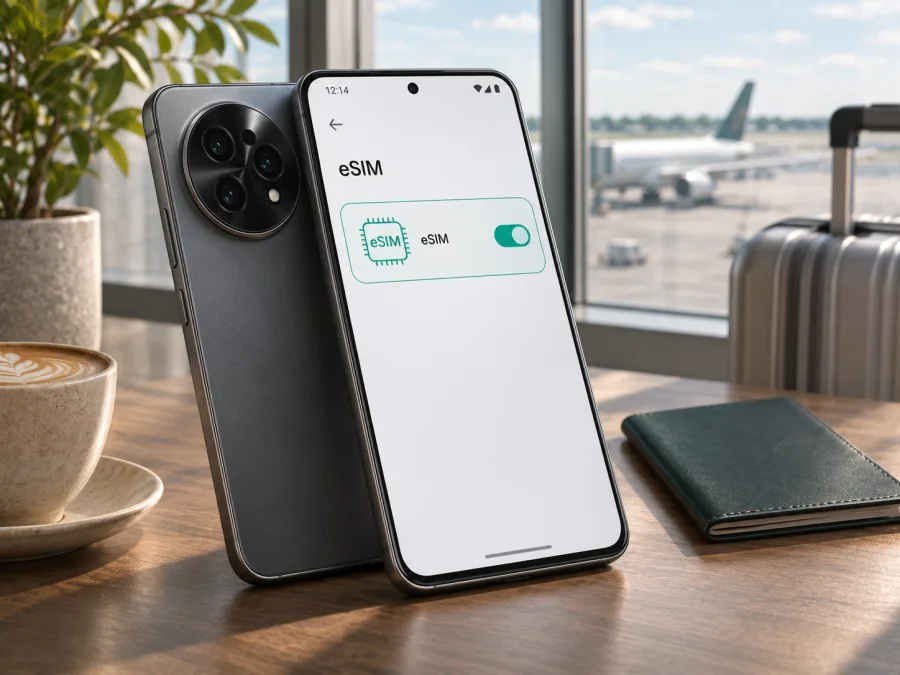
Xiaomi 17 Ultra 512GB 5G eSIM: compatibility and setup guide
The Xiaomi 17 Ultra 512GB 5G can use eSIM on the regional version documented by Xiaomi’s global product FAQ. That FAQ lists nano-SIM + eSIM and eSIM + eSIM configurations, and says the Xiaomi 17 Ultra supports dual eSIM. However, the task name does not identify the handset’s sales market, full model code, or carrier. Xiaomi cautions that dual-SIM availability can vary by region, and eSIM service also depends on the country and mobile operator. Treat the global listing as evidence for that version, not a guarantee for every phone sold under the same family name.
Before paying for a travel plan, check the actual handset: look for an EID and an option to add or manage an eSIM in its settings. If neither is present, confirm the exact model code and sales region with the seller or Xiaomi support. The “512GB 5G” wording describes the requested variant; it does not by itself establish that a particular unit has eSIM enabled.
Does the Xiaomi 17 Ultra 512GB 5G support eSIM?
Yes, the Xiaomi 17 Ultra supports eSIM in the regional version covered by Xiaomi’s current global product information. Xiaomi lists several dual-SIM arrangements, including one nano-SIM with one eSIM and two eSIMs. Its FAQ also states dual-eSIM support for the Xiaomi 17 Ultra. The product specifications list a 16GB + 512GB storage option, so the named 512GB capacity is consistent with an official configuration. Those facts support eSIM capability for the documented version; they do not identify every retail unit marketed as Xiaomi 17 Ultra 512GB 5G.
| Item | What is confirmed | What you should still check |
|---|---|---|
| Device name | Xiaomi 17 Ultra | The exact model code and sales region on your unit |
| Requested storage | 512GB is listed in Xiaomi’s global specifications | The seller’s SKU and the memory configuration shown in Settings |
| Mobile generation | Xiaomi’s FAQ lists 2G, 3G, 4G and 5G support | Whether local carrier bands and 5G service match your destination |
| eSIM | The global FAQ lists nano-SIM + eSIM and eSIM + eSIM | Whether your specific regional firmware exposes eSIM and shows an EID |
| SIM combinations | Configurations can include two nano-SIMs, nano-SIM + eSIM, or eSIM + eSIM on the documented version | Which combinations are enabled in the particular market and by your operator |
| Operator status | Carrier service is required for a mobile plan | That the phone is unlocked and accepts the intended travel profile |
Regional versions and carrier availability
For the version described on Xiaomi’s global pages, eSIM is documented. Xiaomi’s regional product specifications repeat that dual-SIM options vary with regional availability, while its help materials advise checking whether both the device model and local carrier support eSIM. This means you should not transfer a claim about one market to another automatically. It also means an eSIM menu on the phone does not prove that every operator will activate a profile: the operator’s rules and plan eligibility still apply.
Carrier market matters separately from the phone’s origin. The local provider for your home number may need to support eSIM issuance, and the provider behind a travel data plan must support the device and destination network. A phone that can install an eSIM may still be carrier-locked, restricted by a contract, or incompatible with a specific network band. Check the carrier’s device requirements and the travel plan’s coverage terms before purchase. 5G availability depends on the destination network, local bands, plan, and conditions; 5G printed in the device name does not guarantee 5G service on every trip.
Xiaomi’s global FAQ says Dual SIM Dual Active is supported only in Hong Kong, India, Singapore, and Thailand. This is a geographic qualification for that dual-line mode, not a list of places where eSIM itself works. Check eSIM eligibility separately with the specific local operator or travel-plan provider for your destination.
If you are buying the phone, ask the seller to confirm in writing that the unit has eSIM capability in your intended country, and request the full model code and country of origin. If you already own it, use the checks below. A missing eSIM control is a reason to pause and investigate, not to assume that a QR code or a different app will enable unsupported hardware.
Compatibility checklist before buying a travel eSIM
Check each item on the phone you will actually take with you:
- [ ] Find an EID. An EID is the identifier for the embedded SIM component. Xiaomi’s support instructions describe viewing the device EID from the eSIM management area when that feature is available.
- [ ] Look for eSIM controls. In Settings, inspect the SIM or mobile-network section for “Use eSIM”, “Manage eSIM”, “Add eSIM”, “Download a SIM”, or a similarly named command. Labels can differ across HyperOS versions and regions.
- [ ] Confirm the exact variant. Compare the model code and region shown in Settings or on the box with Xiaomi’s official regional product information. Do not rely on “Xiaomi 17 Ultra 512GB 5G” alone.
- [ ] Check carrier lock status. Ask your home carrier or seller whether the phone is locked to a network. A locked phone may reject another provider’s profile even when the eSIM hardware is present.
- [ ] Check the specific destination and operator. Confirm that the service plan covers your destination and that its provider accepts the phone and its regional variant.
- [ ] Confirm your connectivity before installation. Downloading a profile generally requires an internet connection. Keep reliable Wi-Fi or another working data connection available until setup finishes.
- [ ] Read plan conditions. Check data allowance, validity, supported country or region, activation timing, tethering rules, and any restrictions before completing a purchase.
How to check the EID and eSIM menu
Menu wording and placement may change with software updates, but Xiaomi’s support article gives this general route for a supported phone: open Settings, select SIM cards & mobile networks, enable Use eSIM if it appears, then open Manage eSIM and choose View device EID. On another firmware build, the setting may appear under Mobile networks, SIMs, or Network & internet instead.
You can also search Settings for “EID” or “eSIM”. If the phone has an EID, record it privately for the provider if requested; do not post it publicly. If the menu exists but is switched off, read the on-screen information before enabling it. If the menu and EID are both absent, restart the phone, install available official system updates, and check again. Then ask Xiaomi or the seller whether that exact regional model supports eSIM. Do not infer support from a 5G indicator, the number of SIM slots, or a generic phone specification table.
For a quick compatibility pathway, check your device. If your result is unclear, verify the model code with Xiaomi or the seller before purchasing a plan.
How to install and activate an eSIM
Install the profile while you have dependable internet access and enough time to finish the prompts. Keep the QR code or activation details available on a second screen or printed copy if the phone cannot scan its own display. Many eSIM activation codes are single-use, so do not delete a profile or scan the code repeatedly if setup fails. Contact the plan provider for next steps.
- Confirm compatibility and unlock status. Check the EID and Add eSIM control on your Xiaomi 17 Ultra. Confirm that the intended provider accepts the phone and that it is not restricted to another carrier.
- Choose the plan for your route. Select the country or region you will visit, then compare the plan’s data allowance, validity period, activation rules, and network conditions. Read whether activation starts on installation, at a scheduled time, or when the eSIM first connects, as this varies by plan.
- Prepare an internet connection. Connect to stable Wi-Fi or use another line that already has data. Keep the device charged and avoid starting installation if you are about to lose connectivity.
- Open eSIM management. In Xiaomi Settings, go to the SIM or mobile-network controls, then choose Add eSIM or Manage eSIM. If the labels differ, search Settings for “eSIM”.
- Add the profile. Scan the QR code supplied after purchase, or enter the activation details manually if the provider supports that method. Check the displayed plan details before confirming.
- Wait for installation to finish. Keep the phone online and leave the eSIM settings open until the profile is added. Installation and network registration can take several minutes.
- Name the line. Use a clear label such as “Travel data” so you can distinguish it from your regular SIM when choosing mobile data.
- Choose when to use it. If you are preparing before departure, keep the travel profile installed but follow the plan’s activation instructions. Do not turn on data roaming or select it for mobile data until you are ready, unless the plan’s instructions say otherwise.
- Select the travel eSIM for mobile data. When you reach the destination and are ready to connect, open SIM settings and choose the travel profile as the mobile-data line. Keep your usual line selected for calls or texts if you need it and understand its roaming charges.
- Set data roaming for the correct profile. If the plan provider requires roaming, turn it on for the travel eSIM only. Confirm that the home SIM is not selected for data roaming if you want to avoid charges from your home carrier.
- Check the connection. Allow a few minutes for registration, then open a webpage or a map. Review the plan’s remaining data in the service app or website.
For Android device guidance, see the Android eSIM installation instructions. The guide is written around Samsung menu labels, so Xiaomi’s Settings names may differ. For iOS instructions for another device, use the iOS eSIM installation guide.
Using the Xiaomi 17 Ultra for mobile data on a trip
Once you arrive, open the SIM settings and select the travel eSIM for mobile data. If your phone has two active SIMs, keep the roles clear: one line can remain your usual number for calls or SMS, while the travel profile handles data, subject to the phone’s dual-SIM behavior and the plan’s conditions. Xiaomi documents different dual-SIM configurations, but which combination works in practice can depend on the regional device version and carrier.
Review the settings before leaving Wi-Fi:
- Set the travel eSIM as the mobile-data line.
- Enable data roaming for that eSIM only if the plan’s instructions require it.
- Disable data switching between SIMs if your phone offers that option and you do not want data to fall back to your home line.
- Check that the home SIM’s data roaming is off unless you intend to use your home carrier’s roaming service.
- Confirm that the selected plan includes your destination and is within its validity period.
- Check the APN instructions provided with the plan. Most profiles configure network details automatically, but if the provider gives a specific APN and data does not work, enter it exactly as directed.
A travel eSIM is useful for maps, ride-hailing, bookings, messaging, translation, and email when local data service is available. It can reduce dependence on finding public Wi-Fi, but performance and availability still depend on the partner network, local coverage, congestion, and the phone’s supported bands. No setting guarantees a signal in every location. Keep offline copies of essential bookings, addresses, and maps where appropriate.
Kaspersky eSIM Store is an app and website where you can choose, arrange, and activate an eSIM with a plan for mobile data on an international trip. Before selecting a plan, compare the destination, data amount, validity, activation timing, and any stated network limitations. Availability and prices can change, so check the current details for your own route. The service’s travel eSIM is intended for mobile data; it does not provide a regular phone number, voice calls, or SMS unless a particular plan explicitly says otherwise. Internet-based calls and messages can work through apps you already use, subject to their requirements.
Common problems and what to check
There is no Add eSIM option
First search Settings for “eSIM” and “EID”, then review the SIM and mobile-network sections. Restart the phone and install official software updates. If the option remains missing, check the exact model code and market with Xiaomi or the seller. The global Xiaomi 17 Ultra documentation confirms eSIM capability for its documented version, but it does not establish support on every regional unit. Do not buy a plan until the actual phone passes the compatibility check.
The phone shows an EID but the profile will not install
Confirm that the phone is connected to the internet, the QR code is clear and belongs to the intended plan, and the eSIM has not already been installed on another device. If the camera cannot scan the code, increase screen brightness or use manual entry if provided. Do not repeatedly delete and re-add a profile: a one-time code may no longer be usable. Ask the provider whether the code is still valid and whether the model or carrier is eligible.
The eSIM installs but shows no service
Check that the profile is enabled, the plan is valid for the country you are in, and the eSIM is selected for mobile data. Turn Airplane mode on briefly and off, then restart if needed. Allow time for network registration. Check whether the provider requires data roaming or an APN, and apply only the settings supplied for that plan. If there is still no service, try automatic network selection first; use manual selection only if the provider recommends it. Contact the plan provider with the error message and device model code.
Data does not work although the phone shows signal
Confirm that mobile data is assigned to the travel profile rather than the home SIM. Check data roaming on the travel line if required, the APN, remaining allowance, and the plan’s start date and destination. A signal icon alone does not prove that the data connection is configured. Disable Wi-Fi briefly to test mobile data, then check another app or webpage. If the home SIM is active for data, adjust the selection to avoid unexpected home-carrier usage.
The profile connects to 4G instead of 5G
5G depends on the provider’s roaming arrangements, destination coverage, local network bands, plan, and the device variant. The Xiaomi 17 Ultra family supports 5G, but that does not mean every travel plan or local cell will provide it. Check the plan details and carrier requirements, then verify that 5G is allowed in network settings. If 4G is available and data works, the issue may be coverage or plan support rather than eSIM installation.
The phone is carrier-locked
A lock can prevent an eSIM from another provider from being added or used. Ask the carrier or seller to confirm the lock status and its unlocking process. Do not attempt unofficial unlocking methods. Compatibility with eSIM hardware does not override a carrier restriction.
A profile was deleted or the phone was reset
Do not assume that a deleted travel eSIM can be restored by scanning the same QR code. Some activation codes are single-use or tied to one device. Contact the plan provider before purchasing another plan or attempting a reset. Ask whether reinstallation is possible and whether the original profile can be recovered.
FAQ
Does Xiaomi 17 Ultra 512GB 5G support eSIM?
The Xiaomi 17 Ultra is documented as supporting eSIM on Xiaomi’s global product pages, including nano-SIM + eSIM and eSIM + eSIM configurations. The named 512GB 5G description does not specify the regional SKU, so check the EID and Add eSIM menu on your actual phone before purchase.
Can I use a physical SIM and an eSIM at the same time?
The global FAQ lists nano-SIM + eSIM as a supported configuration. Whether both lines can be active together and how they behave depends on the device’s regional version, software, and carrier. Check SIM settings and operator requirements for your unit.
Does a travel eSIM include calls and SMS?
A travel data plan usually supplies mobile data only unless its specific terms say otherwise. Messaging and calls through internet apps may work over the data connection; ordinary cellular calls and texts require a suitable voice or SMS service.
Check your phone, then choose a plan for the trip
The Xiaomi 17 Ultra 512GB 5G has documented eSIM support in Xiaomi’s global product information, but the exact regional unit still matters. Confirm the EID, find the Add eSIM control, check carrier-lock status, and verify that the plan provider accepts your model for the destination. Then choose a plan by its coverage area, data allowance, validity, activation rules, and network conditions.
Kaspersky eSIM Store’s app and website let you browse current options, choose, arrange, and activate an eSIM plan for mobile data on an international trip. If you have not settled on a destination yet, browse the Kaspersky eSIM Store website to check the current options; this is the general store homepage, not a tariff page for a particular country. Confirm the phone and plan match before purchase, and keep your regular line’s roaming settings under control while travelling.


